
The Benefits of Beans

Beans are becoming an important source of protein in more crop rotations and getting the agronomy right is key to consistent performance. Todd Jex from Agrii gives his insights for success.
Why grow beans?
The old adage that ‘you’ll never get rich growing beans’ is now out of date, as farmers look for alternative sources of nitrogen in the rotation and supply chains move away from imported soya as a source of protein in animal nutrition.
Higher prices for manufactured fertiliser nitrogen and the growing pressure on imported soya mean the market and use of beans in the rotation are likely to grow. The crop also allows the opportunity to control grass weeds and improve soil health, and in my experience, the agronomic challenges that have followed on from the ‘legume fallow’ option in the Sustainable Farming Incentive have meant that, at a rotational gross margin level, a productive bean crop is a profitable option.
The positives for beans
Legumes work well in arable and grassland rotations as they are not reliant on nitrogen fertiliser to achieve good yields. The key agronomic advantages include:
- One of the best break crops/first wheat entries:
- No carried over pest burden of slugs or aphids
- Freely available nitrogen to aid establishment
- Effective at improving soil structure
- Opportunity to control difficult grass weeds:
- Winter beans and winter oilseed rape are the only arable crops with opportunity to use propyzamide
- Propyzamide is the only active ingredient currently available to which there isn’t any insensitivity or resistance in grass weed control
Other merits of beans include:
- An excellent source of pollen and nectar for pollinators
- Demonstrated to increase farmland bird numbers
- Reduce nitrogen fertiliser use – helpful if engaged in carbon trading or in areas affected by the Environment Agency Nitrate Leaching Tool
- Help meet government targets to reduce imported soya
- Help meet retailers’ targets to remove genetically modified soya from animal diets and use more sustainable, local protein
Controlling grass weeds
For many arable farmers the challenges with grass weeds are increasing. Black grass has been a problem for many decades with most farm populations showing resistance and insensitivity to a wide range of active ingredients and modes of action.
Last autumn, details of the first glyphosate-resistant weed population were published which, to some people’s surprise, was identified in Italian ryegrass rather black grass. Although generally not grabbing the headlines as often as black grass, IRG is a far larger problem globally, and in the UK is a much more difficult weed to control.
Propyzamide is one of very few active ingredients still available, in combinable crops, to which IRG and BG show no signs of resistance. Five or so years ago the prevalence of winter oilseed rape helped keep populations in check but the sharp decline in acreage, due to Cabbage Stem Flea Beetle and other issues, has meant many have lost this valuable tool. This can be replaced by growing beans.
Achieving consistency
Consistency and yield performance are often levelled against beans, but there is plenty we can do to maximise chances of success.
Like all crops, the start matters, and the rotation and state of the soil are key. To avoid building up soil-borne diseases and nematodes, a rotation gap of at least four years should be maintained.
Soil health: physical
Optimising soil health is important for all crops but peas and beans can often act as ‘the canary in the coal mine’, certainly when it comes to soil physical health. Compaction is too often underestimated or overlooked, yet the Processors and Growers Research Organisation’s (PGRO) data would suggest up to 40% yield losses due to soil compaction.

The simple solution is a subsoiler when conditions are right for fracturing at depth, but you need to know at what depth the compaction is present. I encourage all growers to invest £150/£200 in a penetrometer, which is a simple and easy-to-use way of assessing compaction. The magic number is 2000kPA (kilopascal) since a pressure reading higher than this means the force required for roots to penetrate deeper is too high. The impact of low disturbance subsoiling (LDS) on soil compaction. The magic number is 2000kPA (kilopascal) since a pressure reading higher than this means the force required for roots to penetrate deeper is too high.
Soil health: chemical
In terms of chemical soil health, the basics are important including pH (6.5 is optimal) and nutrient availability (the latter also being driven by the biological health of the soil). Organic matter has a very high ability to hold on to plant nutrients and provides more water-holding capacity in dry times, whilst helping infiltration during very wet periods. There’s good data that demonstrates root nodulation in legumes is far greater in soils with higher OM content and that means more fixed nitrogen.

Establishment
The next step in achieving success is establishment which can be split into four key areas:
- Variety – we’ve grown Tundra for many years but have moved to Vespa, which seems to be a step up in terms of yield. Lynx continues to be our spring variety of choice.
- Drilling date – we’ve seen large yield improvements to earlier drilling for both winter and spring crops. In 2024, the difference between January drilling and March drilling, on a chalk farm, was more than 2t/ha.
- Seed rate – I’d recommend 20-30 seeds/m2 for winter crops and 55-65 seeds/m2 for spring. Check your thousand seed weight, as there’s often a big variation year to year, and make use of the PGRO’s or Agrii’s online seed rate calculator.
- Establishment – success of the crop is not bound to whether it’s a full inversion tillage situation or, at the other end of the spectrum, a zero till system. The objective is an even planting depth and plant population in a seedbed that isn’t suffering from compaction and that won’t become waterlogged. Generally, we aim for 40mm seed depth.
Crop protection
Broad leaved weeds can be very competitive, especially those of the Brassicaceae family like runch and charlock. Options are limited and the best results will always come from a well applied pre-emergence herbicide.
Chocolate spot is the key disease, but bean rust and downy mildew can also feature and shouldn’t be ignored. Mildew is linked to manganese levels in the plant, so I’d encourage regular tissue testing.
Nutrition
Beans should be managed in the same way as any crop – tailoring all inputs to match crop requirement. Testing is a helpful tool whether that’s grain analysis post-harvest, soil testing predrilling or sequenced tissue testing in season.
Beans are capable of fixing up to 400kg/ha of N but it’s generally much lower at 150-200kg/ha. The level of fixation is driven by a whole range of factors including soil temperature, nutrient availability, sunlight and most importantly nodulation. Maximising nodulation will always be a fundamental factor in the success of the crop. Again, this is driven by a range of factors, some of which we can influence, others less so:
- Root exploration
- Temperature
- Nutrient availability (P, Ca, B, Co)
- Compaction, drought and waterlogging will reduce nodulation
The target GAI (green area index) for beans is 3-4 which is equivalent to 90-120kg/ha of N being fixed by the crop.
Late season, when the crop starts to fill the seeds, beans will remobilise stem soluble carbohydrates from leaves to fill seeds. This process often brings on senescence faster meaning yield potential is lost. We’ve been using tramline and plot trials, over the last five years, to see if we can prolong photosynthetic area with foliar nitrogen and endophytes.
The data on foliar nitrogen seems to present a very clear message with an average yield improvement of 0.4t/ha over the five years on the three sites. Yield improvement from the endophyte is even more impressive but that’s from only one year’s worth of data on what was a challenging year for beans.
And we mustn’t forget sulphur. This nutrient is important in protein formation in the crop and optimising yield, and our data clearly shows that applying sulphur improves root nodulation.
Key facts about beans
- Excellent break crop
- Opportunity to control difficult grassweeds
- Maintain rotational gap of at least four years
- Look to improve soil health
- Eliminate compaction
- Keep seed rates up
- Drill early
- Optimise plant nutrition
- Don’t forget sulphur


Todd Jex is agronomist and national technical adviser for regenerative farming for agronomy company, Agrii, which is heavily involved in UK crop trials, including as part of the NCS (Nitrogen Climate Smart) Project, which seeks to displace soya in favour of UK-grown legumes. Todd was winner of Farmers Weekly Awards Arable Advisor of the Year 2023 and National Arable and Grassland Awards Young Agronomist of the Year 2024.

You may also be interested in

Peas and Beans Article
In recent years, due to price volatility and increasing focus on environmental factors, many of our customers have turned to us to help them process and preserve home-grown or locally-sourced proteins in order to become more self-sufficient, try to increase their profitability and reduce their carbon footprint.
Learn more
Improving beef ration with wholecrop beans
Home-grown spring beans have cut the cost of the beef ration on a Northumberland farm by halving the use of straw and cutting out feed-grade urea.
Learn more
Who’s who in the NCS project
Earlier this year saw the launch of a project which promises to have a profound effect on the way UK farmers feed their livestock. Called the Nitrogen Efficient Plants for Climate Smart Arable Cropping Systems (NCS), the project aims to increase pulse cropping in arable rotations to 20% across the UK (currently 5%) and to develop and test new feed rations.
Learn moreCrimpmaster Applicator
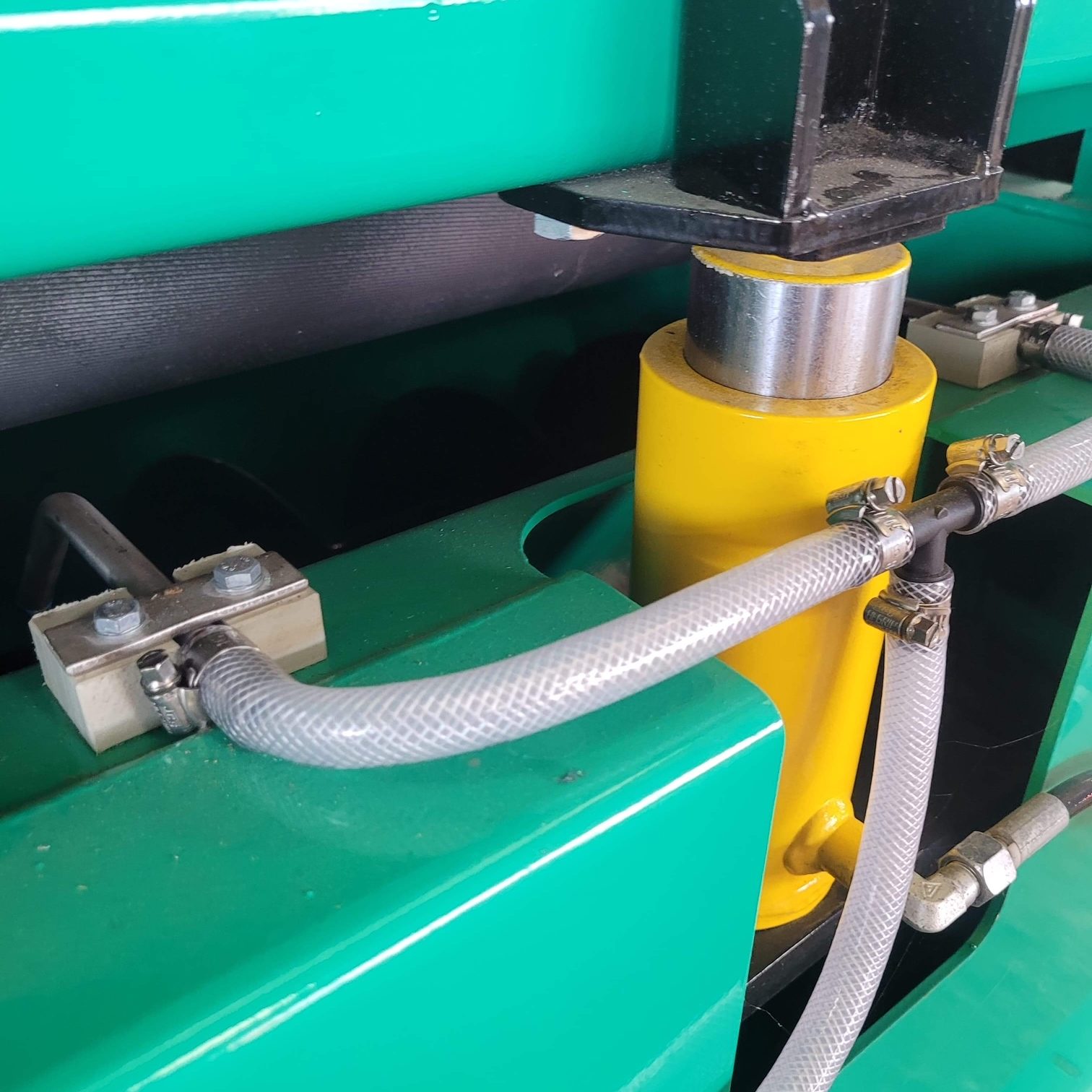
- Stem pump with foot filter
- Controlled flow meter
- Waterproof switch pack

Murska 1000HD
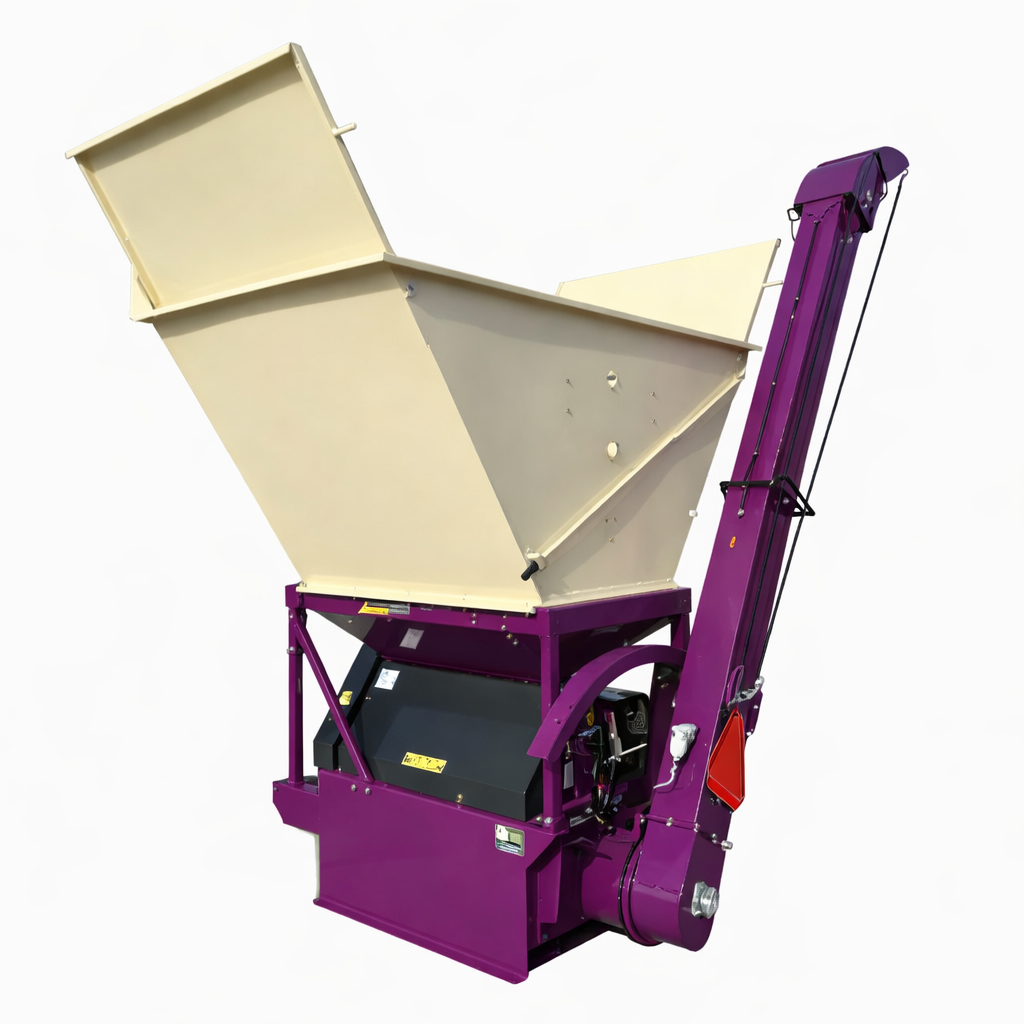
- Output 15-20 tonnes/hour
- 2mm fluted rollers process all cereal and pulses down to 45% moisture
- 3m chain and flight discharge elevator