
Growing soya replacements for a farm in better heart

Arable and beef producers, Peter and Richard Barker, have radically changed direction on their North Yorkshire family farm. And despite switching away from palm kernel and soya, and moving on to a home-grown ration, they have massively increased daily liveweight gain.
When Richard Barker looks back on the operation of his family’s mixed arable and livestock farm, he tends to think he was fighting with nature. His father, Peter, was both a renowned livestock producer and cropsman, always following best-practice, and running both the livestock and arable operations with skill and efficiency. The arable enterprise was operated in the traditional, chemical-based way and the rotation was based on wheat, barley and oilseed rape.
But times have changed since the reins were handed to Richard, and he is now at pains to run the 300-acre (121ha) holding at North Lingy Moor Farm near Richmond with fewer and more local inputs; more farmer-to-farmer trading; and generally at one with nature and on a more holistic basis than in the past.
“We felt we were spending too much on the crops in their tight rotation – two years of wheat, two of barley and one of oilseed rape – and our heavy clay soil was getting difficult to work,” says Richard. “We were fighting with nature; not working with it.”
Continuing to work with his father, plus nephew, Harry White, and stockman, Jeremy Clarkson (really!), he describes his realisation of the need for change as
an epiphany.
Moving its focus away from intensive, chemical-based production, the team looked towards regenerative practices including direct drilling; integration of livestock with the arable rotation; feeding the stock largely from home-grown ingredients; and nurturing the soil using more considered methods and crops, including legumes, green-cover and catch crops, plus plenty of animal manure.
Transformation in DLWG
The results have been beyond all expectations, and rather than accept lower performance with the less intensive system, the 1,000 or so head of Aberdeen Angus-cross dairy cattle finished every year now grow faster and enjoy better health than ever before.
“Our cattle have never performed better,” says Richard, citing the current average daily liveweight gain (DLWG) across all stock of 1.65kg.
“We are over the moon with that. Prior to the change we worked on 1.35kg to 1.4kg and we were perfectly happy with that.
“Now we realise we shouldn’t have been. And even better – we have cut the cost of producing each kilogram of beef.”
Selling at an average liveweight of 680kg, (deadweight 365kg), the average age at finishing is 24 months.
The farm’s carbon footprint per tonne of beef produced has also declined, while profits are also up.
Replacing soya and palm kernel
Changes to many individual processes have contributed to these results, key amongst which has been a switch away from bought-in feed ingredients – including palm kernel and soya – to feeds such as home-grown crimped cereals and wholecrop beans, with co-products sourced from local manufacturers.
“We sell our cattle through Dovecote for Waitrose, and they don’t allow any soya in the rations,” explains Richard, although he needed no encouragement to make this change. “We can also see the writing on the wall for palm kernel, so we’ve scrapped that too – we want to get ahead of the game.”
It was in searching for a product to replace the protein from these imported ingredients that Richard’s interest was drawn to wholecrop beans.
“We’d been working with Kelvin Cave [for crimping cereals] for many years so I spoke to Michael Carpenter [technical director] about growing a replacement protein crop,” he says.
“His suggestion to try wholecrop beans was the best advice we’ve had. It’s allowed us to expand our crop rotation while cutting our growing costs; to drop oilseed rape as a break crop and try to reduce blackgrass and herbicide-resistant ryegrass issues. And it’s drastically improved the health of the soil.”
Now in their fourth year, the beans are generally drilled in spring, ideally in March but this year not until May.
“Despite their lower yields than a winter-sown crop, spring beans are cheaper to grow and, if conditions allow, you can over-winter a cover-crop before them,” says Richard. This could be something like a mix of stubble turnips, black oats, vetch and phacelia for winter grazing a neighbour’s sheep and which would now qualify for grant payments through the Sustainable Farming Incentive (SFI).
“We might also grow beans with a companion crop,” he adds. “We’ve tried peas but found oats work particularly well. You encourage more biodiversity with a second crop and there may be an element of disease prevention.
“It’s very low cost as we just mix the beans and oats on the floor and drill them together from one hopper,” he says. “We may try peas again as they spread and cover the ground, which helps with weed suppression early in the season, and then they climb up the scaffold provided by the beans, which keeps them standing later on.”
Also noting that they don’t need nitrogen fertiliser and little in the way of agrochemicals compared with other crops, he says a pre-emergence herbicide plus another in late May is the extent of the spraying for the spring beans. This is said to play an important part in ridding the farm of the grass weeds which are hard to tackle in cereal crops.
Michael Carpenter’s suggestion to try wholecrop beans was the best advice we’ve had.
Richard Barker
Carbon footprint
Reducing inputs has also played a part in cutting carbon footprint according to Anthony Ellis, senior soil and carbon advisor with Farm Carbon Toolkit, who has assessed the farm. This has shown a reduction in carbon dioxide equivalent per tonne of beef of 11.5%.
“This has been achieved by reducing cropping inputs on the beans and subsequent crops – reducing tillage and agrochemical use – and because Richard’s cattle have grown faster,” he explains. “With an increase in livestock numbers, which these figures include, this also represents a significant increase in efficiency for the farm.”


Transitioning to the bean ration
Moving the cattle brought to the farm on to the bean-based ration is a transitional process, with all stock – generally bought as stores from regular, private suppliers at 350-450kg – going into quarantine away from the main herd for two weeks. Lighter animals are fed silage and introduced slowly to the TMR, while heavier animals are introduced more quickly, with a side-serving of barley straw.
“Transitioning their nutrition carefully is important as we know they’ve all come from a grass silage-based ration so we only gradually move them on to our total mixed ration,” he says.
The TMR itself now comprises home-grown crimped wheat and barley, wholecrop beans, grass silage, waste bread and brewers’ grains, plus 2% inclusion of a protein blend.
“The blend is to bolster other protein sources and may not be needed in the future,” he says.
The ingredients in the ration are tested every month, and the ration adjusted accordingly to ensure crude protein remains at around 14% and metabolisable energy is consistent and close to 12MJ/kg DM.
Practicalities of crimping
The crimped cereals have been a staple of the ration for at least 25 years, and are said to bring both agronomic benefits and improvements in livestock performance.
“Crimp is just very easy,” explains Richard. “We get the crop off early, there are no worries about its moisture content, and we don’t have to dry it.
“In fact, everything about it is right,” he believes. “The stock love it; they’re extremely content on it; and you can see we are still doing it after all these years!”
Also praising the quality of straw, he says: “People worry about the straw from the earlier harvested crop but it is very waxy – it has a raincoat on it – so it dries and wilts really well and makes good quality bedding or feed.
“Like the crimp itself, it is dust-free – which is great for both people and stock. And the chemical we use to preserve the crimp [CrimpSafe 300], is also good to handle,” he adds.
However, he says a lesson learnt from the early years of crimping is to harvest early.
“If you think it’s right to cut, you should have been combining yesterday. The feed quality is far superior at 35% moisture than 25%,” he says, remarking that the agronomic benefits also start to be lost if crimp is harvested too late.

Crimp is just very easy. We get the crop off early, there are no worries about its moisture content, and we don’t have to dry it.
Richard Barker
“When you’re using the preservative, CrimpSafe 300, you can safely preserve grain at 25-45% moisture,” adds Michael Carpenter. “Any drier, and you’d have to use a different preservative, but Richard aims for around 35%.”
Feed rates of the moist product can also be higher than dry grain, as crimp is known to be better for rumen health and digestion.
Weed issues with crimp
“There’s also a weed benefit from harvesting and preserving grain at the crimping stage, which has been demonstrated in black-grass trials carried out by ADAS,” continues Michael. “These have shown that crimping the crop with CrimpSafe 300 renders black-grass seeds completely unviable for germination – and this is in addition to the likelihood that fewer viable weed seeds will be shed in the harvesting process.”
Eventually, this is expected to reduce the weed seedbank on a farm which repeatedly harvests early for crimp, and will be one of the benefits experienced by Richard, who now chooses to crimp the entire 180 acres of wheat, barley and oats he grows.
WhatsApp bean group
Similarly pleased with how the bean silage is performing, Richard says: “By the time we were considering alternative proteins, we’d had a long track record with Kelvin Cave and trusted what they told us would be correct. They also had a WhatsApp group of farmers growing beans so we can always speak to other producers – that’s been very useful.”
Advised to preserve the wholecrop bean silage with Safesil Pro, Richard observes: “This was definitely the right choice. We pack the crop down well, keep it well covered and weight it down – just simple things – and the feed stays cool, has no spoilage or waste, and the stock love the ration.”
Sheeting for both the crimp and beans comprises 150-micron side-sheets and O2 Barrier 2-in-1 over the top of clamps, with the bird-proof cover, ClampShield, securing the lot.
However, admitting to untidy management at feed out, Richard has recently switched from a grain bucket to a shear bucket, and says it will probably pay for itself through the clean-cut face in its first year of use.
Farm in better heart
The willingness to embrace change at North Lingy Moor Farm has led to a newfound feeling of optimism and hope. The farm is in far better heart than just a few years ago, with its soil structure in particular continuing to build the bedrock for future performance.
“We have massively improved our soil structure,” says Richard. “It is a better
colour; it’s more friable and workable;and it has both better water retention and filtration – it’s really surprising how quickly we’ve seen these changes occur.”
Insulated from world feed markets by largely growing their own, the farm is also in far better financial shape.
As former pig farmers, the business had previously fallen victim to the notoriously cyclical nature of the pork market but is now much more stable since it moved towards self-sufficiency and the more sustainable system.
“I’m a big believer in having more than one string to your bow – with complementary enterprises running both on and off the farm – and I feel this is serving us well.
“We have the next generation now coming through and I feel we have a strong financial security – even with the uncertainty of farming,” he says.

North Lingy Moor Farm Facts
- 300-acre (121ha) mixed livestock and arable holding in North Yorks
- 130 acres (61ha) wheat and barley; 50 acres (20ha) wholecrop beans; 30 acres (12ha) oats; 82 acres (33ha) herbal leys (SAM3)
- Wholecrop beans analyse at approx 20% protein and ME 11MJ/kg DM
- Fatstock (Angus x dairy) bought privately and sold to Dovecote for Waitrose
- 300-400 head on farm for three to six months (ap 1,000/year throughput)
- Buy at 350-450kg; sell finished at ap 680kg liveweight (360kg deadweight)
- Switched from traditional chemical-based practices to regenerative farming
- Now have less bare land, more green cover, more organic matter and new cropping rotation
- Legumes and herbal leys have helped cut fertiliser use and improve soil quality
- Crimping is carried out with the farm’s Murska 700 or a neighbour’s Korte 1400
- Wholecrop beans (winter or spring) are ensiled with Safesil Pro
- Wheat, barley and oats are preserved with CrimpSafe 300
- Multi-cut silage is baled and preserved with Activator+CA
Request a call back
You may also be interested in

Bean silage and crimp drive profits in beef
Brothers, Martin and Richard Grix, have found a niche in the beef industry involving finishing cull cows as they leave the suckler herd. But the profitability of the enterprise depends entirely on sourcing cattle well from markets across northern Britain and quickly and cheaply moving animals through the system.
Learn more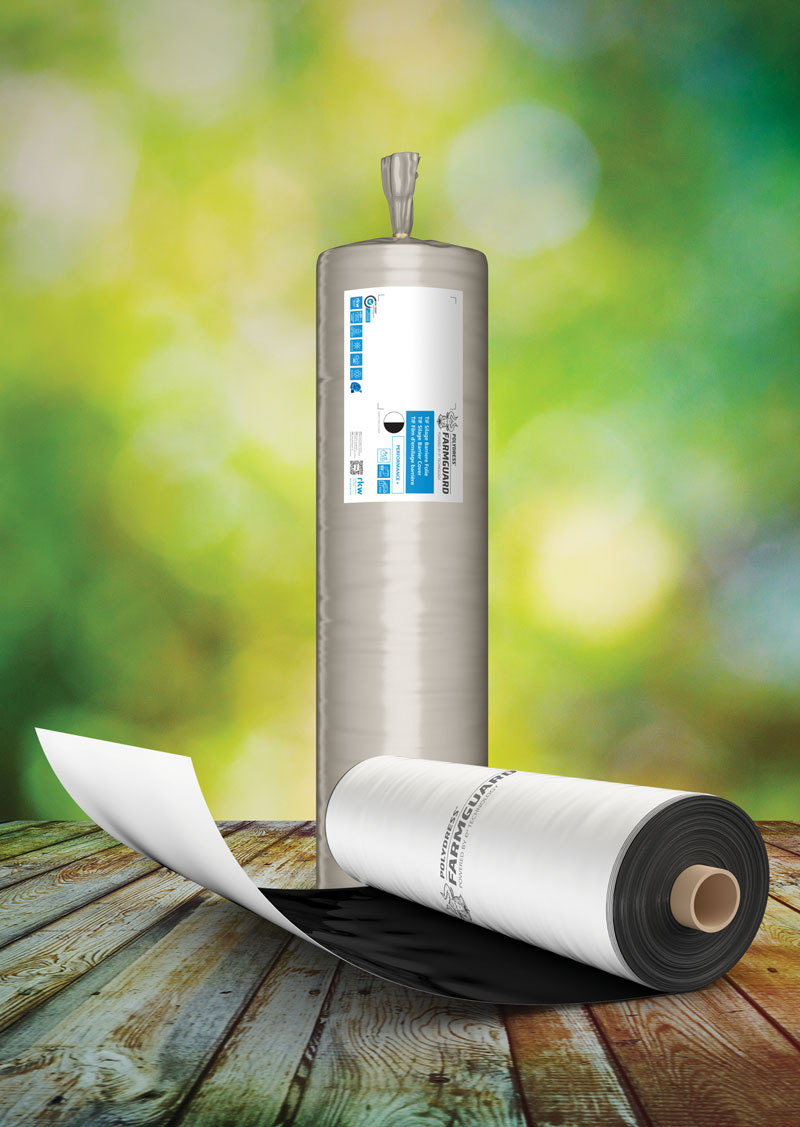
Clamp sheeting range strengthened by Farmguard
A new high-strength, recyclable clamp sheeting has been launched by Kelvin Cave Ltd, offering added protection for silage or crimped grain clamps this season.
Learn more
Crimped peas and beans cut out all bought-in feed
Last year, Pembrokeshire farmer, Eurig Jones, harvested 20 acres (8ha) of peas and beans he’d grown as part of a Farming Connect trial. The mixed crop was calculated, through the Welsh Government/EU-sponsored project, to have cost him just £117 per tonne to produce.
Learn moreRelated products
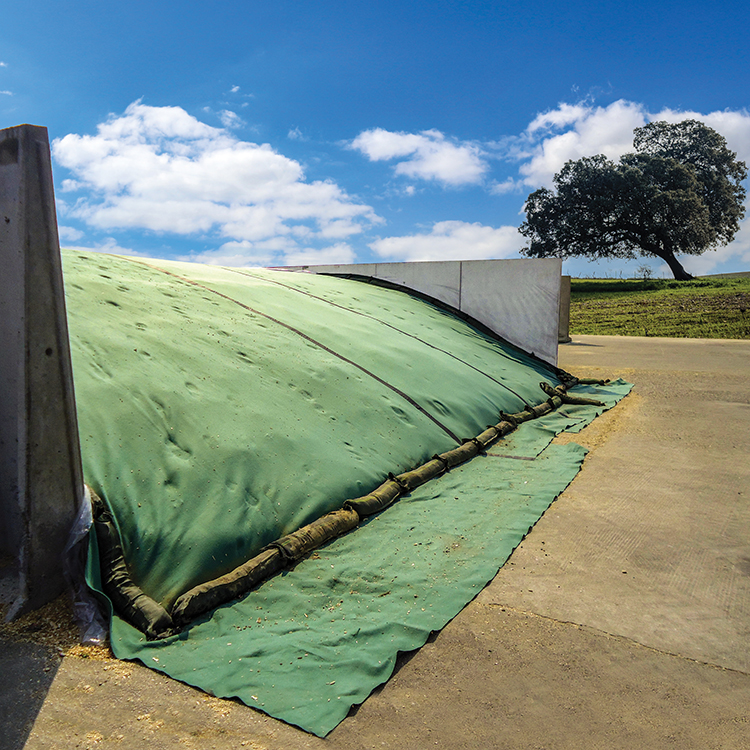
O2 Barrier 2 in 1

- 40% lighter than conventional clamp sheeting
- Reduced fermentation losses
- Reduced recycling and disposal costs
