
Feeding wholecrop beans in a TMR for calves

An on-farm trial investigates the impact of a beans-based ration on growth rates, performance and profits in calves.
In a previous edition of KnowHow (Autumn 2024), we featured Yorkshire beef and arable producer, Richard Barker, and described how he had transformed his farm by ditching soya and palm kernel and using home-grown ingredients in their place. In particular, he’d started growing beans and using them wholecropped for beef.
In this article, we report on some on-farm trials he subsequently carried out at his North Lingy Moor Farm near Richmond. In these trials – undertaken as part of the Nitrogen Climate Smart (NCS) Project – he used wholecrop beans as part of a total mixed ration and fed it to calves from about four months of age. This was an age group which hadn’t previously been fed wholecrop beans. Their performance was compared with a group fed a ration based on herbal ley silage.
Balancing the ration
Both groups were fed one of two total mixed rations, with the two rations balanced for protein and energy. They were each formulated by independent beef nutritionist, Lizz Clarke (LC Beef Nutrition), who is a partner in the NCS Project and oversaw these trials. They were formulated to have a metabolisable energy (ME) as close to 11MJ/kg DM and protein as close to 15.5% as practicable, with the ingredients available on the farm. This resulted in the ration in Table 1.
As Lizz explains: “The energy and protein are the important components to balance in cattle rations when comparing one with another. Inevitably, one ration was higher in starch, partly thanks to the high starch content of the wholecrop beans [see Table 2 for analysis of wholecrop beans and herbal ley silage], and partly because extra cereals were needed to make up the energy of the wholecrop-based ration.”
Table 1
Kg freshweight fed per head per day | TMR based on wholecrop beans | TMR based on herbal ley |
Wholecrop beans | 4.25 | |
Herbal ley | 11.5 | |
Crimped barley | 2 | |
Crimped wheat | 2 | 2 |
Protein blend | 0.3 | 1.1 |
Diet specification | ||
Starting Dry Matter Intake (kg/day) | 5.2 | 5.2 |
ME (MJ/kg/day) | 11.1 | 11.1 |
Protein % | 15.4 | 15.5 |
Starch % | 37.5 | 14.8 |
Sugar % | 6 | 6 |
Table 2
Wholecrop beans | Herbal ley silage | |
Dry matter % | 59.4 | 27.4 |
ME (MJ/kg DM) | 9.4 | 10.0 |
Crude protein % | 17.3 | 9.5 |
Starch % | 18.7 | 1.8 |
Sugar % | 0.90 | 6.71 |
The diet was pre-mixed through a mixer wagon and fed to appetite. 140 Angus cross calves were randomly split into two groups of 70 and the average age at the start was 118 days (156.2kg) for the herbal ley-fed group and 120 days (149.2kg) for the bean-fed group. The calves were on the trial for 83 days, weighed before the trial and had three further weights taken during the trial. Any animals with health issues were removed from its group, housed separately and treated if necessary, in accordance with good husbandry and to avoid bullying. However, their data remained part of the trial.
Results
Despite commercial challenges along the way – most notably a part-way change in composition of the herbal ley silage – results showed a clear pattern of performance, with calves in the bean-fed group having a daily liveweight gain (LWG) of 1.2kg, compared with 0.92kg for the herbal ley-fed group. This resulted in a weight gain during the trail of 67% and 49% respectively, with final weights coming in some 22.8kg more in the bean-fed group than those fed the herbal TMR.
However, Lizz observes: “There are several factors to explain this difference besides the beans themselves, including the higher quantity of crimped grain in the beans-based diet and the lower dry matter of the herbal ley ration.” This lower DM meant the calves had to consume a freshweight of 14.6kg/day to achieve adequate dry matter intake of the herbal ley diet compared with 8.55kg/day for the beans-based group.
Emphasising the importance of continued research, she says: “Further trials are required to assess wholecrop beans, as with all forages, it very much relies on the season and clamp management for the nutrient quality of the forage.”
Costs
With performance clearly improved in this trial on the beans-based diet, it was important to assess its cost implications. Using ingredient costs calculated on farm by Richard Barker (see Table 3), the cost per tonne freshweight of the TMR was calculated. This showed the beans-based diet to be more expensive at £125 per tonne, compared with £82 per tonne for the herbal ley (freshweights). However, combining this information with estimated average intake figures for a 150kg calf and the actual liveweight gains achieved in the trial, showed the cost per kilogram of LWG was more favourable for the beans-based group at 62p, compared with 89p (see Table 4).
Table 3
Feed ingredients | Cost per tonne offreshweight |
Herbal ley | £35 |
Wholecrop beans | £48 |
Crimped wheat | £200 |
Crimped barley | £180 |
Protein concentrate | £360 |
Table 4
Ration | Diet cost/t FW | FW intake/h/d (kg) | DLWG (kg) | Cost/kg LWG |
Herbal ley-based TMR | £82.09 | 10.08 | 0.92 | 89.13p |
Wholecrop beans-based TMR | £125.38 | 5.94 | 1.20 | 62.05p |
Carbon footprint
The improved growth rates also impacted carbon footprint which, although calculated to be very similar in total for each group, was better (lower) per kilo of liveweight gain for the beans-based group thanks to the calves’ improved growth rates. Carbon footprint was calculated as 3.89 CO2e/kg LWG for the bean TMR group and 5.10 CO2e/kg LWG for the herbal ley group.

Observations
Overall, it was observed that the group fed beans looked fuller and showed improvements in skin health and dung. Manure samples suggested more efficient nitrogen use with slightly lower ammonium nitrogen levels, in turn suggesting better protein digestion.
Pleased with their performance, Richard says: “Beans will continue to be part of the diet for all our beef animals now. We like growing them, and alongside the herbal leys they have given us options to improve the performance and sustainability of the farm.”
He also notes they don’t need nitrogen fertiliser and little in the way of agrochemicals compared with other crops, and that their nitrogen fixing properties are a bonus for the following cereal crop.
They also provide the opportunity for the control of grass weeds which are hard to tackle in cereals.
He says: “We’ve been working with Kelvin Cave for many years and their suggestion to try wholecrop beans was the best advice we’ve had. It has allowed us to expand our crop rotation while cutting our growing costs; to drop oilseed rape as a break crop and try to reduce blackgrass and herbicide-resistant ryegrass issues. And it’s drastically improved the health of the soil.”
The beans are generally drilled in March, depending on season, and despite their lower yields than a wintersown crop, spring beans are cheaper to grow and, if conditions allow, a cover-crop can be over-wintered before them.
“We might also grow beans with a companion crop,” he adds. “We’ve tried peas but found oats work particularly well. You encourage more biodiversity with a second crop and there may be an element of disease prevention.
“It’s very low cost as we just mix the beans and oats on the floor and drill them together from one hopper,” he says. “We may try peas again as they spread and cover the ground, which helps with weed suppression early in the season, and then they climb up the scaffold provided by the beans, which keeps them standing later on.”
The NCS Project
The NCS Project brings together research organisations and commercial companies who are working together to increase awareness of the use of pulse crops and cut the UK’s tonnage of imported soya. Kelvin Cave Ltd is one of 16 partners in the Innovate UK funded project and is involved in investigating preservatives for both wholecrop and crimped pulses. Several articles featuring farmers taking part have been published in previous issues of KnowHow including a farm feature on Richard Barker as well as features on Luke Gardner and Luke Medd. All can be found by searching the Kelvin Cave website.

You may also be interested in

An Overview of the Place for Beans – Starting and Finishing with Your Policy
It was, however, CAP reform that started some mixed farmers thinking about how best to make the most of the greening regulations to maximise their home-produced protein and reduce their outgoings. Since then the national crop area of beans, practices of home feeding, and utilisation within the feed industry in general have increased.
Learn more
Improving beef ration with wholecrop beans
Home-grown spring beans have cut the cost of the beef ration on a Northumberland farm by halving the use of straw and cutting out feed-grade urea.
Learn more
Propcorn NC beans cut out bought-in protein
William Maughan has made a saving of well over £130 per tonne by switching from bought-in to home-grown protein and now says Propcorn NC-treated beans will remain a mainstay of his beef ration.
Learn more
CrimpSafe Hi-dry
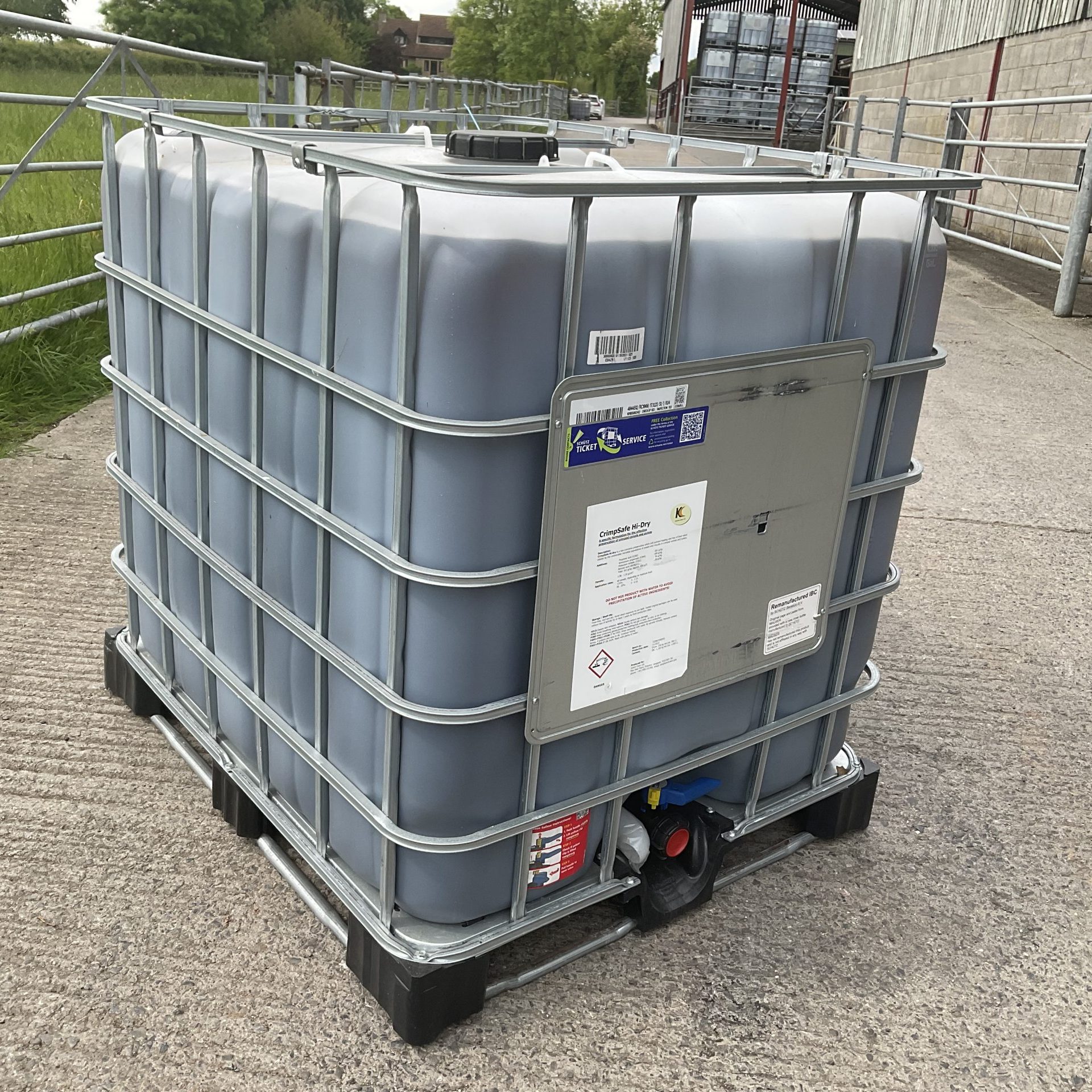
- For crimped grain drier than 30% MC
- Will flow through hoppers
- Can be clamped outside
Crop Protect

- Versatile grain protectant
- Prevents contamination from insects
- Pyrethroid formulation