
Bean silage and crimp drive profits in beef

Brothers, Martin and Richard Grix, have found a niche in the beef industry involving finishing cull cows as they leave the suckler herd. But the profitability of the enterprise depends entirely on sourcing cattle well from markets across northern Britain and quickly and cheaply moving animals through the system.
Such has been the success of the venture on their Northumberland farm that today, it is considered a key part of the family’s overall business and matches the 750 acre (300ha) arable enterprise in the generation of profit. It does this by finishing the cows in as little as 60 (and up to 100) days and feeding them at a daily cost of £1.65/head.
But this achievement has only been possible by growing and carefully processing key feed ingredients at home in Morpeth on Hillhead Farm.
When the beef enterprise was started in the mid-2000s, it placed a heavy emphasis on by-products and dried rolled cereals grown on the farm, but the brothers soon discovered there were drawbacks in their choice of feeds.
Martin says: “When you use by-products, you can suddenly get that phone call which leaves you high and dry.”
This was the case when the supply of waste fruit – which had been a key ingredient of the ration for many years – suddenly dried up.
“Our supplier lost the contract and the fruit we fed to the cows now goes to anaerobic digestion,” he says.
Equally, while dried, rolled cereals may seem an obvious choice on an arable farm, he says they have their limitations. There is the acidosis risk of feeding dry cereals – a particular problem with some older cows which have spent their lives on forage – and there’s the cost of drying and rolling grain.
“The cost of diesel was going up, there was the glyphosate for desiccation, the gas for drying the cereals and we had to roll the grain throughout the year,” he says. “There was also the rent for the shed to store the dried grain, although even here, it was vulnerable to vermin.
“The more we thought about it, the more illogical it seemed, as we were basically drying the grain to 15% moisture to subsequently mix it with a wet ration.”
Aware of the possibility of preserving moist cereals they first sought advice from Kelvin Cave’s Michael Carpenter, who had been recommended by a friend from Cumbria.
“Michael advised us that we could harvest our cereals between 30 and 45% moisture, crimp the grain using a specialised crimping preservative, and store it in a clamp,” he says.
The attractions of this option were numerous, including the earlier harvest around three weeks before dried cereals; a higher dry matter yield and feed value, as the crop would be harvested at its maximum nutritional value and before it starts to deteriorate; less acid loading on the rumen than conventional cereals; and easy storage on the farm.”

The brothers took the plunge with crimping in 2011 and say the process met their expectations in every way.
“We expected a higher tonnage and we’re definitely getting an extra tonne to the acre; it gives us a longer harvest window and the earlier harvest allows us time for muck-spreading and to make a good start with cultivations for winter cereals or rape; and it’s definitely more animal-friendly,” says Martin.
The outcome he says is a much cheaper ration, no acidosis and easy storage on the farm, while the earlier harvested straw – which dries on the field for five to seven days before baling – is said by the brothers to make better quality feed than drier straw.
Buoyed by the success of the crimping process, which cut the cost of the ration by around five percent to £1.93/head/day, the brothers saw there was scope to further reduce the bought-in feeds, particularly those with the highest cost which increased the ration’s protein.
“We had been feeding a ration based on the crimped barley, potato mash, wheat straw, pot ale syrup and feed-grade urea, but we were convinced by Michael that we could make further improvements while also reducing the cost,” says Martin.
Taking Michael’s advice to try spring beans for harvesting as whole-crop silage, the brothers trialled the idea by buying a small standing crop in 2016.
“Michael felt that bean silage would suit our system well, as it would provide forage and protein which could replace some of the straw and the feed-grade urea we were buying in,” says Martin.
“We liked what we saw from the little we had and felt the cattle on the bean ration came through with a better finish,” he says. “So, we seeded 58 acres (23ha) in April 2017, and harvested it as whole-crop on 17 October.”
The brothers opted to use Safesil Pro to preserve the whole-crop silage, as it is formulated specifically for high dry matter forages, and they wanted to be certain of killing harmful bacteria and eliminating the activity of fungi and moulds.

“I recommended they used this chemical-based preservative rather than an inoculant because a high dry matter, stemmy and fibrous whole-crop, harvested late in the season, is amongst the most challenging of forages to compact and ensile,” said Michael. “Some bacterial additives can give variable results, and we saw no point in taking that risk.
“The Safesil Pro, used by the Grixes, contains the human food-grade ingredients, sodium benzoate, potassium sorbate and sodium nitrite, which facilitates a rapid fermentation and gives the best aerobic stability of any product we know,” he says.
The brothers opened the clamp for feeding around three weeks after harvest and introduced the beans to a newly formulated ration. This is mixed in a Keenan feeder equipped with an InTouch controller to ensure precise and consistent feeding.
The farm’s Keenan nutritionist, Chris Lord, reduced the straw in the ration by over 50 percent and removed the urea altogether (see table). Pot ale syrup was also cut down as this had been an important source of protein.
“I’d always wanted to reduce the straw because it was diluting the energy in this ration, but we needed to find an alternative source of structural fibre,” says Chris Lord. “Whole-crop beans not only bring physical structure and fibre to the ration but they are also a great source of protein and starch.”
The bean silage analysed at 71 percent dry matter and 19 per cent protein and was included in the ration at 6.4kg/head/day (fresh weight).
Hillhead Farm facts
- Two brothers run 330 ha (750 acres) arable and 1,500 head of cull cow beef
- Buy cows from up to nine markets/week in Scotland and northern England
- Sell approx 1,500 head direct to abattoir every year
- Cows are on farm for 60 to 100 days
- Low-cost system with no weights or growth rates monitored
- Early emphasis was on by-products and dried rolled cereals
- A move to crimp, now using Crimpsafe 300, increased feed value and cut costs
- Whole-crop beans increased fibre and protein and further cut costs
- Crude protein of straw-urea component of former ration was 11.07% (DM basis)
- Crude protein of whole-crop bean component of current ration is 18.9% (DM basis)
- Beans harvested at 16 tonnes/ha (6.5t/acre)
- Cost per tonne of bean silage in clamp, £42.77 (freshweight), £60.32/t DM
The overall total mixed ration was costed at £1.65/head/day compared with £1.93/head/day when straw and urea were part of the TMR (last year’s feed prices, with straw, costed at £80/tonne). With cows on the farm for a maximum of 100 days, but ideally somewhat less, this has the scope to cut as much as £28 per head from finishing costs, equating to £42,000/annum for the 1,500 head which passes through the system every year.
This saving, from the introduction of bean silage, is on top of that made through changing to crimp and is likely to be higher this year as straw increases in price to upwards of £100 per tonne.
The brothers have sown beans again for 2018 and increased their acreage to 90 (36ha).
“We’ve found they suit our system well,” says Martin. “They give us another entry into first wheats [used for biscuit making] which is really useful for the arable rotation and the extra nitrogen the beans have left in the soil gives our wheat yields a lift.
“If, as a bonus, we can eliminate the need to purchase extra straw, it will also greatly reduce the risk of importing blackgrass to the farm,” he says.
Hillhead Farm cull cow beef rations:
Ingredients | Ration 1 with crimpkg/head/day (freshweight) | Ration 2with crimp and beanskg/head/day (freshweight) |
Wholecrop beans | - | 6.40 |
Wheat straw | 3.91 | 1.50 |
Potato mash | 8.25 | 7.00 |
Beef minerals | 0.12 | 0.12 |
Crimped barley | 10.40 | 8.90 |
Pot ale syrup | 3.90 | 1.80 |
Feed grade urea | 0.07 | - |
Nutrients | Ration 1 with crimp kg/head/day (freshweight) | Ration 1 with crimp and beanskg/head/day (freshweight) |
DM intake (kg/day) | 15.30 | 15.40 |
Forage DM intake (kg/day) | 3.40 | 5.80 |
ME (Mj/kg DM) | 11.90 | 11.90 |
Protein (% DM) | 12.80 | 13.30 |
Starch (% DM) | 40.10 | 38.50 |
Sugar (% DM) | 3.30 | 3.70 |
NDF (% DM) | 25.30 | 25.90 |
Cost of ration (p/kg) | 12.60 | 10.70 |
Cost of ration (£/cow/day) | 1.93 | 1.65 |
Request a call back
You may also be interested in

When to harvest cereal crops for wholecrop and crimping
Andy Strzelecki our Technical Director was invited by EBLEX (link is external) to record some guidance videos demonstrating the ideal stages to harvest cereal crops for wholecrop and crimping. We hope you find them helpful:
Learn more
Arable farmer ditches combine in favour of forage
A Yorkshire farmer has turned a difficult situation following this summer’s drought to everyone’s advantage in a move which could be replicated across the country to help alleviate the forage crisis.
Learn more
21st century silage feeds Jurassic beef
Eric and James Sealey could never be accused of failing to grasp opportunities as they arise. Quick to see trends on the horizon and fast to respond, the father and son team have built a business which began life with meat sales from the back of a van; grew its turnover to £2.3 million by mid-2022; and will reach £2.5 million and rising by the end of this year.
Learn moreRelated products
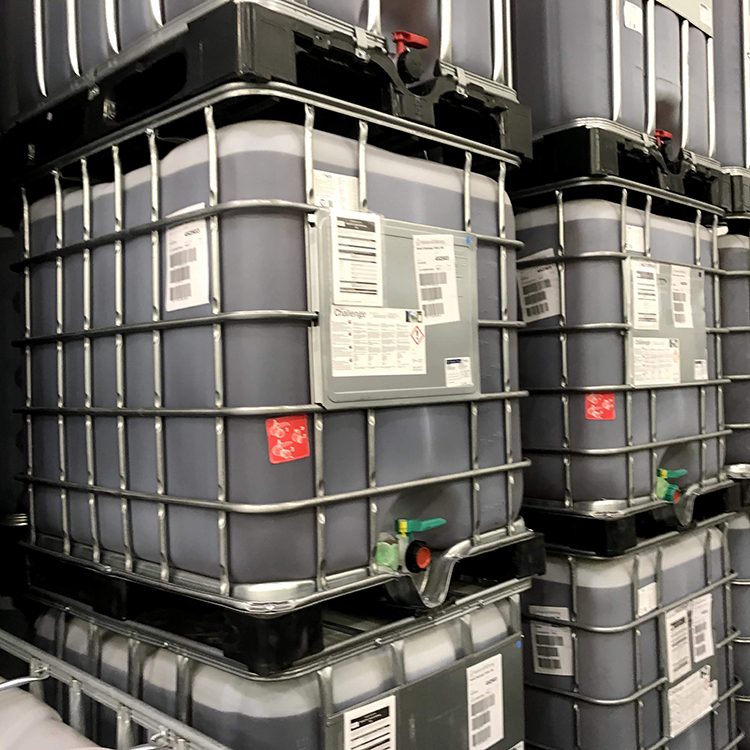
Safesil Challenge
- For lower DM grass silage
- Human food-grade preservative
- Suitable for clamps, bales and ag-bags
