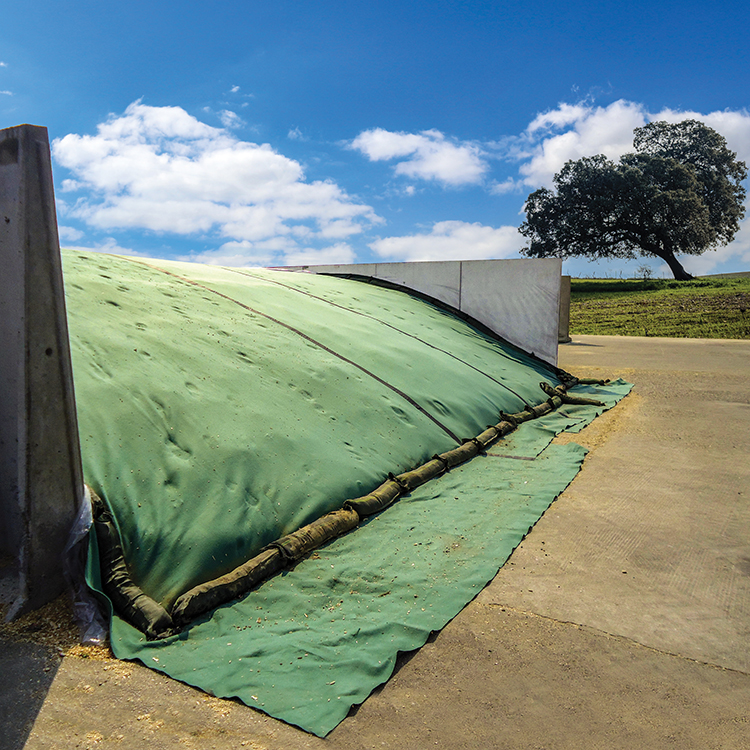
- Use side sheets with a surplus of at least 1 to 2 metres on each side
- When ordering your top sheet ask for a size that will give you at least 1 to 1.5 metres surplus on each side
- Cover the clamp with the O2 Barrier 2in1 or Farmguard, draping the surplus sheet over the clamp walls on top of the side sheets
- Place gravel bags tight to the edge of the clamp on top of the sheeting
- Now bring the side sheet AND top sheet together and fold inwards over the gravel bags and weight down both sheets with ClampNet and further gravel bags
- This creates your Warner Corner – a complete airtight seal
Turning the Corner in Clamp Protection

David Warner, our Southern Area sales manager, has come up with what we think is a very simple, but highly effective way of making a covered clamp really airtight, with O2 barrier 2in1 or Farmguard.
This simple method of sealing a clamp with top quality silage sheet, O2 Barrier 2in1 or Farmguard, ensures full contact between the sheet and the silage, right to the edge of the clamp. It also stops almost all the rain water from the top of the clamp from running down between the side sheet and the clamp wall (water is channelled to the front of the clamp), providing a level of protection to your valuable feed crop that really doesn’t get any better.
We’ve christened this method of sheeting the ‘Warner Corner’.
Give it a try for yourself and let us know what you think.
The Making of a Warner Corner
Request a call back
Call us on 01458 252281 or email us using the form.
You may also be interested in

Don’t delay harvest in maize thats under stress
Growers who are suffering with dead or dying maize crops have been advised to harvest the crop at the earliest opportunity. Waiting for a later harvest in the hope of higher yields and more starch is likely to be counterproductive.
Learn more
Using beans for finishing cuts two-thirds from costs
Northumberland sheep and beef producer, Steven Smith, says he will never go back to feeding purchased concentrates to his lambs, having slashed the cost of fattening them from £2.25 to 78p per head per week. This reduction in their finishing costs of almost two-thirds has been achieved by buying a standing crop of spring beans for wholecropping on the farm and growing the other feeds he can at home. The change has come with the unexpected bonus of improvements in health and grades, while also helping compliance with environmental schemes.
Learn more
Cutting the cost of feeding for robot-milked Jerseys
Home-grown crimped concentrate feed and high-quality silage slash feed costs on Somerset farm.
Dairy farmer, Laurence Wadman, continually strives to make more milk from home-grown feeds on his family’s Somerset farm.
Learn more