
Top grade organic lamb finished without concentrates
Organic farmer, Matt Ridley, has finished his lambs without concentrates for the past seven years. He explains how high quality silage, preserved with organic-approved Activator + CA, is the basis of this process.

Finishing lambs without a single grain of concentrate feed is impressive by any standards, but doing so under an organic system demands even more care with sheep forages and breeds. All going to plan, Northumberland farmer, Matt Ridley will achieve this for his 2020 lamb crop, just as he has done for the past seven years.
Mr Ridley keeps 2,000 ewes in his hefted flock at the top of the Coquet Valley in the Cheviot Hills. But it is his 1,000 head lowland flock, kept on the home farm at Aydon North, Corbridge in the Tyne Valley, which is produced to organic standards.
Growing as much feed as possible on the farm is a key priority, and he says: “As anyone who has tried to buy organic protein knows, the price is horrendous.”
To this end, he concentrates on growing swards containing high protein red or white clover, producing silage with minimal waste while maximising nutrient retention, and introducing sheep breeds which are proven to do well on forage and grass.
Almost all lambs hit the target grade of U3L or E3L, and the average carcase weight is 20kg.
Lambing starts this year, as it did in 2019, from 20 March and runs for just one month. The earliest single lambs are drawn off for sale in July and a gradual flow of twins and triplets is usually sold through to mid-December.
The first focus to meeting these targets is maintaining the condition of ewes, considered essential in giving the lambs the best possible start.
“Sheep in good condition can cope better with whatever situation they face, including the weather,” says Mr Ridley. “We certainly don’t want lean sheep in late pregnancy as you can’t put weight on them after that when they’re putting everything into their lambs.”
He has therefore fine-tuned his system, moving ewes from grazed grass and on to high quality silage through the winter months, as conditions dictate.
“The ewes will be out on silage from tupping, depending on the weather and the amount of grass,” he says. “This winter we switched to silage later – in around mid-December – because we had plenty of autumn grazing.”
The key to maintaining their condition during pregnancy is said to be presenting them with quality, palatable silage which the ewes will eat in quantity and with ease.
“We used to treat silage as belly-fill and made it from old pastures and into big bales,” he says. “But the sheep didn’t use it efficiently, rushing for it when it was brought out, spending a lot of time clambering on top of the bales to pull out the silage, and probably using lots of energy in the process.”
Since then he has switched to short-chopped clamp silage but has spent several years searching for the most effective method of preservation which conforms to organic standards.
“I really wanted to use the salts-based preservative, Safesil, as we know it gives the most stable fermentation but we were unable to use this under an organic system,” he says. “So, we continued to try several bacterial inoculants which are organic-approved, but unfortunately, they’ve tended to give us disappointing results.
“The silage would often heat up and some had mould at the surface and there was usually some rejection by the stock,” he says.
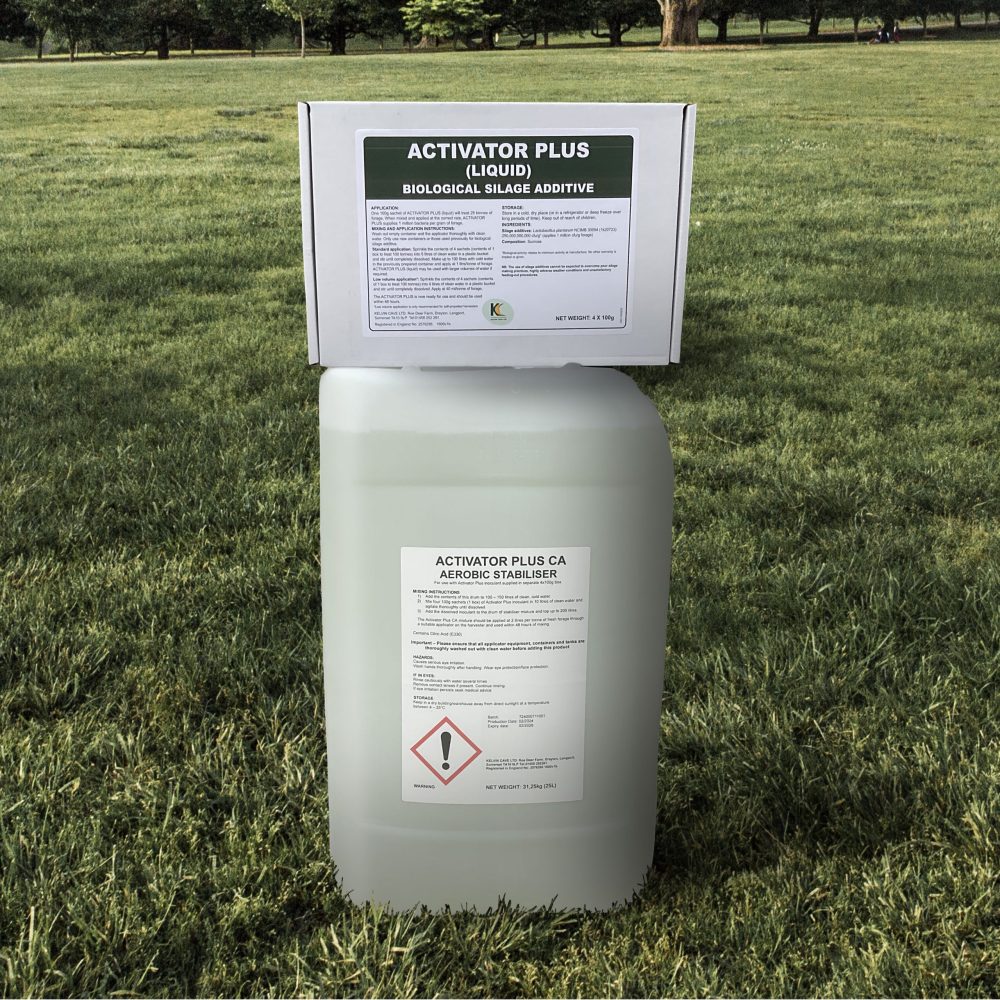
Having exhausted many options, Kelvin Cave Ltd suggested he tried Activator + CA, an inoculant containing a specific strain of Lactobacillus plantarum in combination with a specific, organically certified, citrate which produces powerful yeast and mould inhibitors and improves the aerobic stability of silage (see panel).

Activator + CA: How it Works
Activator + CA comprises the same elite strain of Lactobacillus plantarum used in Activator Plus, with the addition of a specific citrate which provides an additional food source for the bacteria, leading to the production of powerful yeast-inhibiting compounds. This makes Activator + CA ideal for use on higher DM grass silages (28%DM+), wholecrop cereal and arable silages, maize silage and crimped cereals, all of which can be prone to aerobic spoilage by yeasts, which are present on the crop at harvest.
As they grow, the yeasts consume lactic acid and sugars, causing significant loss of nutrient value and raising the silage pH to a point at which moulds can grow. These cause further losses and increase the risk of raised mycotoxin levels which can hit animal health, performance and fertility.
Activator + CA has been independently demonstrated to give substantially better aerobic stability than Activator Plus. The product is organic-approved.


Request a call back
You may also be interested in

21st century silage feeds Jurassic beef
Eric and James Sealey could never be accused of failing to grasp opportunities as they arise. Quick to see trends on the horizon and fast to respond, the father and son team have built a business which began life with meat sales from the back of a van; grew its turnover to £2.3 million by mid-2022; and will reach £2.5 million and rising by the end of this year.
Learn more
Why beef cattle need good silage too
Making the most of forage in beef diets, and therefore reducing the requirement for home-produced or bought-in concentrates, not only gives protection from market volatility, it also reduces food miles and carbon footprint, through reducing fertiliser per kg of beef produced.
Learn more
Bean silage and crimp drive profits in beef
Brothers, Martin and Richard Grix, have found a niche in the beef industry involving finishing cull cows as they leave the suckler herd. But the profitability of the enterprise depends entirely on sourcing cattle well from markets across northern Britain and quickly and cheaply moving animals through the system.
Learn moreRelated products
Activator +

- Contains lactobacillus plantarum
- Supplies 1,000,000 bacteria per gram of forage
- Suitable for organic farmers
Safesil Challenge
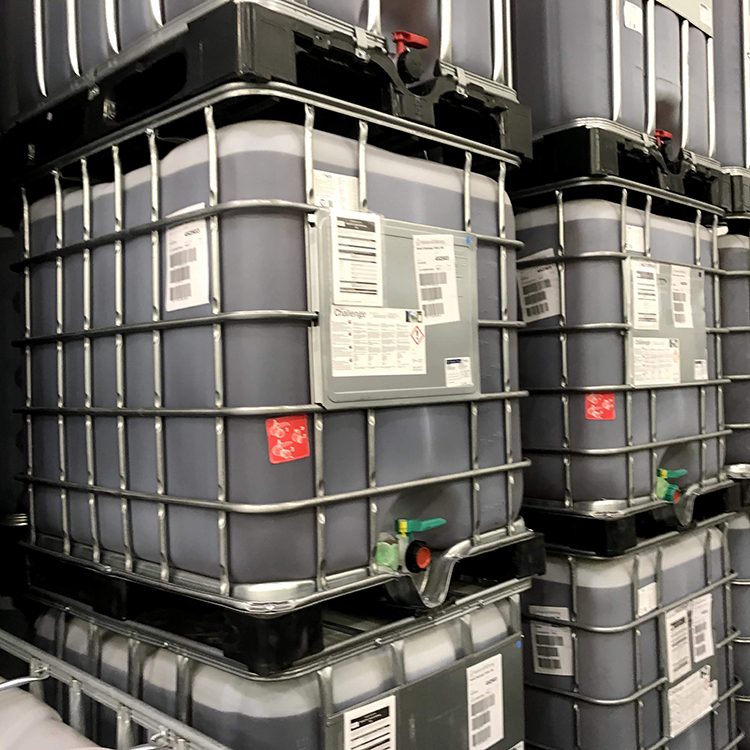
- For lower DM grass silage
- Human food-grade preservative
- Suitable for clamps, bales and ag-bags