
Teamwork helps hit home-growth goals

Fresh from the success of our Lionesses football team, we’re all feeling a sense of pride as we reflect on what can be achieved when a team works cohesively together. And whilst we at Kelvin Cave Ltd can’t claim to have achieved the same adulation, we are all very firmly focussed on how we can work as a team both with and for our customers.
We have always been keen to supply far more than just a product, rather seeking a whole system solution, helping growers recognise how their land can produce exactly what their livestock (or customers) need and often finding contractors who can help make this happen. Our goal is to ensure the best home-grown feed – whether forage or concentrate – is always preserved and stored at the highest possible nutrient value.
This is illustrated in our case study in which Lancashire farmer, John Norris, describes his reservations about switching from wholecrop to crimped wheat (Switching from whole crop to grain in England’s wet northwest). However, by working with Kelvin Cave Ltd, whose team has helped him identify and arrange three local contractors to fulfil different functions, the family has overcome its concerns. Today, the Norrises produce crimped wheat as a high value concentrate feed in place of wholecrop forage from their entire cereal acreage. This has slashed the amount of purchased grain coming on to the farm and cut the cost of rations for dairy and beef. For this family, 2025 has been their most productive ever cereal-growing year.
Dry conditions and late silage
Despite good growing conditions reported in Lancashire, Cumbria and southwest Scotland, elsewhere across the UK, drought conditions continue for many, with the west midlands and southeast seemingly hardest hit. Some forage yields are down to such a low level that we have heard of wheat for wholecrop changing hands at £1,000 an acre! We’re also seeing abnormally dry grain, a severe lack of straw, especially in spring crops, and some very poor maize establishment.

In continued drought conditions, some growers have had to whole crop cereals originally destined for crimping and are now looking for alternative concentrates. Despite the obvious option, of reaching for the traditional compound feed, there may be more cost-effective and carbon-friendly alternatives, including buying from other farmers.

Trading crimped grain maize
Growing numbers of arable farmers are introducing grain maize to their rotations and selling it to livestock farmers. The article, Crimped maize takes its place in major agribusiness, explains how one such producer, A T Bone & Sons, is crimping grain maize and striving to produce a consistent, high-quality product throughout the year which can be delivered to farmers nationwide.
Late cut silage
For those who continue to suffer from forage shortages, there may be a chance to take a late cut of silage when the rains come. However, the process is likely to be carried out in less-than-ideal conditions. Our chemical preservative, MultiMax, has been uniquely formulated and tested to deal with high levels of soil contamination, and can be depended on to ensure a successful fermentation in such conditions. Some top tips for making late season silage can be found in our article Making the best quality silage from autumn-cut grass.
Forage maize
The independent work on forage maize preservation featured in our Summer 2025 issue of KnowHow (New research confirms some silage additives are no better than untreated control) continues in this issue in the article Ongoing research raises extra concerns over some additives on maize and highlights the significant benefits of using Safesil Pro. This is corroborated on farm by father and daughter team, Martin and Elaine Sedgewick, who have introduced maize to an area that’s marginal for this crop in County Durham and have treated it with Safesil Pro (Pushing the boundaries with maize). So impressed have they been with this preservative, it is now used on every forage on the farm, including wholecrop beans for the first time this year.
Whatever the feed or forage you are seeking to grow and preserve, the team at Kelvin Cave Ltd – from those in the backroom who ensure your products and spares are delivered, to the independent scientists we work alongside to trial and test the products we recommend – are all pulling together to meet your goals. Our aim is to make sure home-grown feeds are a cornerstone of your business so you can hit the back of the net for performance and profit.
You may also be interested in

Options for improving the protein content of grass silage
With pressure on input costs and the supply chain gearing up to remove imported soya in diets, the content and quality of protein in home-grown forages is gaining importance. Dr George Fisher looks at grass-based production itself and what we can do to improve the protein situation there.
Learn more
The moment everything just clicks into place
There’s logic to producing your own home-grown feeds.
Ever-more challenging and unpredictable weather conditions, combined with volatile feed and fertiliser markets mean self-sufficiency is not only a smart move, but one that will keep you on top of your game.

Ultimate protection for your valuable forage crops
ClampShield 500 and BaleShield 160: ultimate protection for your valuable forage crops from Kelvin Cave’s product range
Learn more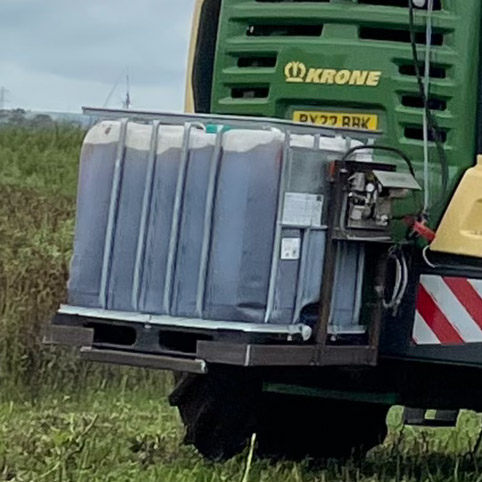
MultiMax
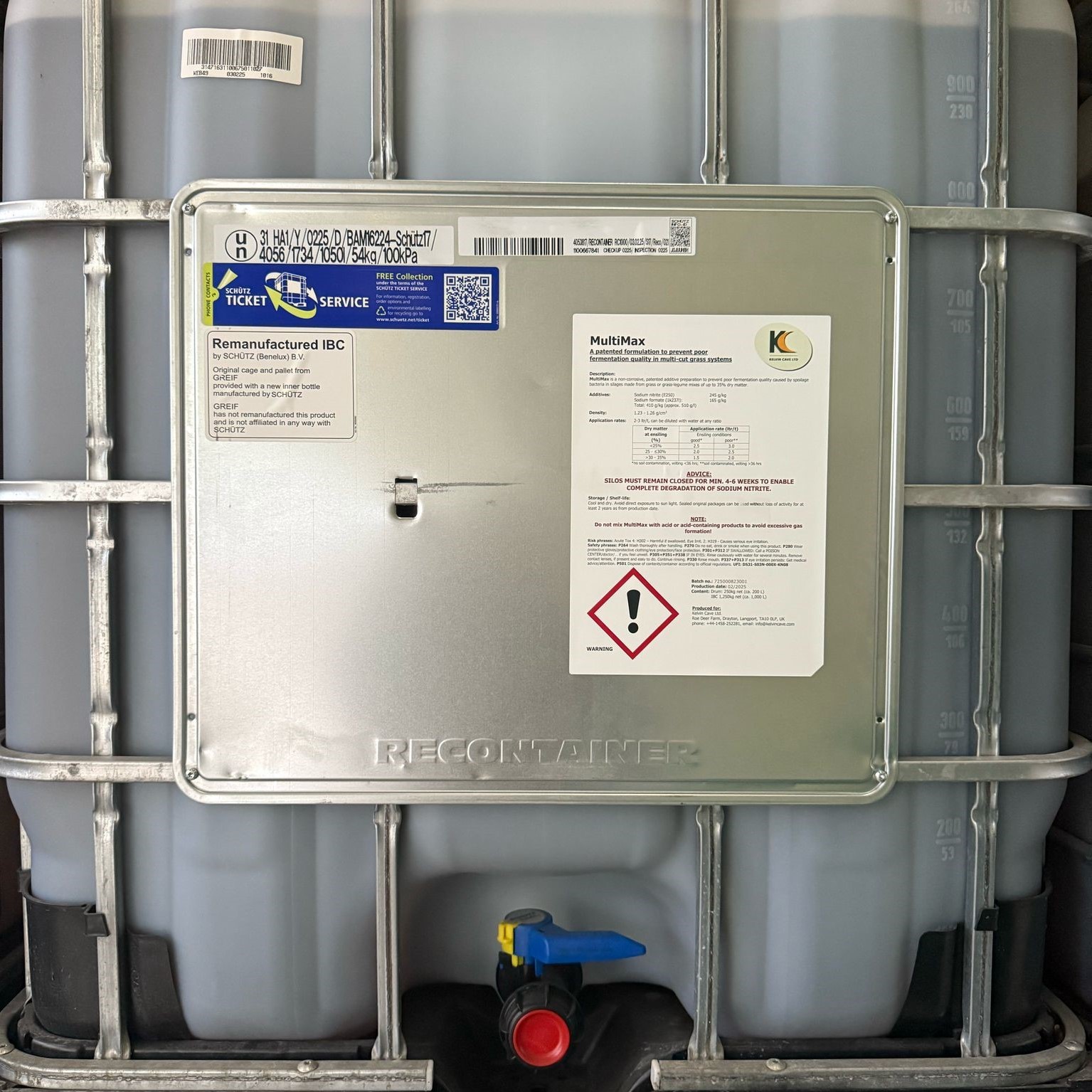
- For multi-cut grass systems
- Suitable for grass and legume silages up to 35% moisture
- Formulated to eliminate spoilage bacteria
Mill & Mix Machines

- Bespoke Mill & Mixer machines
- Built to order
- Mounted on farm or road trailers