
Taking on the challenges of our great British weather

No two years in farming are ever the same, and the stark contrast between 2024 and 2025 demonstrate this better than many. As well as global political and economic volatility affecting the whole country, agriculture is arguably at the mercy of the British weather more than any other industry.
Our article featuring Durham beef, sheep and arable producer, Luke Medd (Taking Control of What Comes in…and What Goes Out) demonstrates how much weather conditions can affect us at every step of the way. Luke’s bi-cropped peas and beans – which he trialled for the first time for his Wagyu beef enterprise as part of his drive to become self-sufficient and improve his soils to future-proof his family business and protect it from market volatility – were not drilled until early May in 2024, thanks to the extremely wet spring. Many people told him the seed would have done better left in the bag. But with good attention to detail and a big dose of luck from the ensuing weather, he achieved one of the best pea/bean bi-crops we have ever seen.
This year, he was keen to grow more but was able to drill the same crop almost a month earlier. This replicated a situation we have seen so often in 2025, with many growers reporting that spring cereal and pulse drilling has been completed in record time and in near perfect conditions. We will be watching the outcome closely.

April-cut silage
As we travel around the country it’s also been noted that we have probably never seen as much silage cut in April or the first week of May and we are looking forward to seeing the results from the first UK users of our new additive, MultiMax, as well as our established products, Safesil and Activator+ on these very high quality early cuts.
Rainfall
As we go to press, we anxiously await more rainfall and the maps below show how extreme the difference has been between April 2024 and April 2025. This year, some areas experienced as little as 20% of the month’s 30-year average rainfall but last year, in contrast, many areas saw double that average. This only serves to highlight the importance of being flexible and dynamic in our approach to producing the best home-grown feeds, whatever the conditions.
This obviously begs the question, how do you run a farming business when you have no control over the biggest variable?

The answer is to aim to make the very best of everything you produce, whatever the weather. No one gets everything right all of the time but, with good attention to detail you can make the best of every situation and ensure the feeds you produce are the best they can be.
As part of the Nitrogen Climate Smart (NCS) Project, project partners, Agrii, have been conducting a large number of trials and some of the work is highlighted in this issue (The Benefits of Beans) by Todd Jex, Agrii’s regenerative farming specialist. This shows how soil structure and crop nutrition can have a huge impact on not only yield but also nitrogen fixation.
Reducing losses
Reducing losses in home-grown feeds is always beneficial but can become a challenge when weather conditions threaten yields or quality. Our ‘Five Ps Package’ doesn’t just offer the correct preservatives and additives to match the crop and conditions by reducing dry matter loss and maximising nutrient retention through fast and efficient fermentation. It also offers high quality sheeting and other management products we have developed, including Klamp Clips and Silobond, to ease the silage-making process. These, and our many other products, will help ensure every kilogram of feed and forage is the best it can be when it’s delivered to the animal.
New for pests in treated grain
Having been asked over the years about how best to treat pests in crimped, Propcorn NC-treated and dry cereals, we are now pleased to offer CropProtect® which is detailed in full on the CropProtect information page.
Agent in Wales
And finally, we are delighted that our team at Kelvin Cave has been further strengthened as we welcome Steve Jones – an acclaimed former farm manager – to the team. Steve will be promoting our products and offering support across South and West Wales. His contact details and more information are available here: Award-winning farm manager joins Kelvin Cave team.
Everything we do is backed by sound technical advice from our experienced team and bolstered by our close links with independent experts, so please call us with any questions or queries.
You may also be interested in

Taking control of what comes in…and what goes out
Wagyu cattle and home-grown feeds have helped a Durham family side-step market prices and turn the fortunes of their livestock and arable farm.
Learn more
The Benefits of Beans
Beans are becoming an important source of protein in more crop rotations and getting the agronomy right is key to consistent performance. Todd Jex from Agrii gives his insights for success.
Learn more
Connecting these words can be a game-changer
Each one of the five words on this Scrabble board represents a vital stage in successful home-grown feed preservation
and processing.
MultiMax
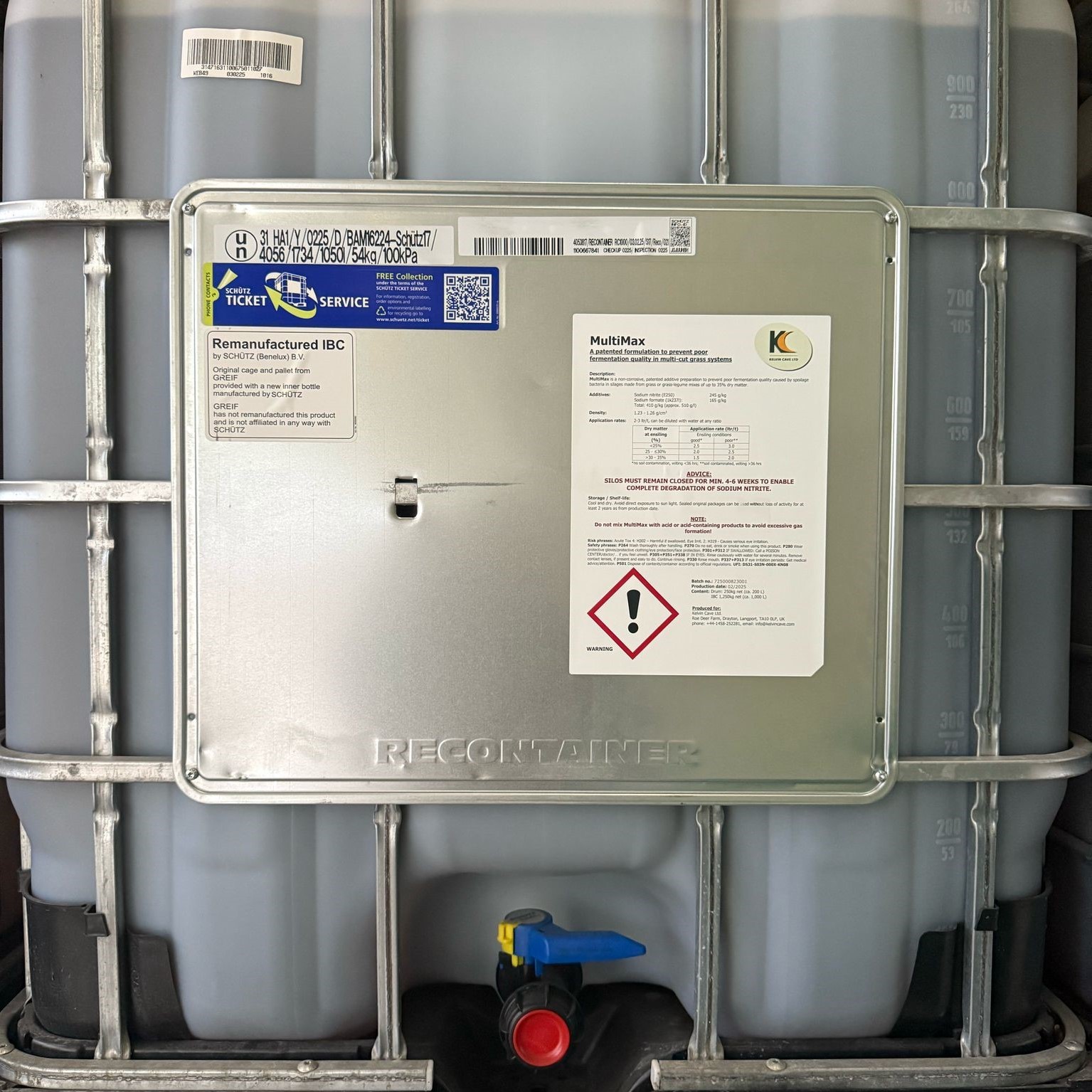
- For multi-cut grass systems
- Suitable for grass and legume silages up to 35% moisture
- Formulated to eliminate spoilage bacteria
Crop Protect

- Versatile grain protectant
- Prevents contamination from insects
- Pyrethroid formulation
Propcorn NC

- Safe, non-corrosive grain preservative
- For whole and processed grains and pulses
- Increases energy levels in feeds