
Newcomers to maize boost milk solids

When Derrick Wilson decided to grow maize for the first time on his South Wales farm, he was keen to get every practice right and make the most of the crop’s benefits for his herd of Holstein Friesians.
Farming with sons, James and Robert, at West Pool Farm near the village of Pendine on the Carmarthenshire-Pembrokeshire border, the family felt their 600 cows would do well with maize in their milking ration. Now producing around 9,000 litres at 4.5% fat and 3.65% protein, the family say they’re particularly pleased with the lift in solids they’ve seen since the crop was introduced, around four years ago.
With an enterprise of 800 acres (324ha), around 500ac (202ha) of which are owned and 300ac (121ha) rented, the family were able to dedicate around 150 acres (61ha) to forage maize.
Fields were selected carefully for their sheltered, ideally south-facing aspect and their lower altitude, generally running at 300-400 feet above sea level and avoiding those on higher parts of the farm. The team were happy with the yields of around 17 tonnes freshweight per acre, and keen to preserve all the feed value they could from the crop. Tim Frost, Kelvin Cave’s representative in South Wales, said:
“Maize can carry a high fungal loading, particularly in a wet year, which increases the risk of aerobic instability and waste.
“This, in turn, can reduce palatability and increase the risk of mycotoxin formation.
“Maize is also a high dry matter crop so extra attention needs to be given to compaction to exclude any air, as this would allow for the proliferation of yeasts and moulds.”
He therefore recommended using Safesil Pro, specifically formulated for high dry matter silages in which it will inhibit fungal growth.
“Safesil Pro contains a variety of chemical salts licensed for use in preserving human food. In particular, sodium benzoate and potassium sorbate are important for the elimination of yeasts and moulds.
These preservatives are proven to be far more effective and reliable in silage preservation than bacterial inoculants, which simply encourage the fermentation to go in a particular direction.”

The Wilsons decided not to leave their maize silage fermentation to chance and opted to use Safesil Pro from the outset.
Always delighted with the outcome, Derrick says: “We feed the maize all year round and it is always perfectly cool. Our clamp has a face of about 11 metres wide which takes about a week to cross. In that time, it always remains stone cold, and stays that way in the trough.”
The ration is pushed up to the feed fence once a day, but there’s never any heating, or waste to discard.
With heat considered to be one of the first signs of unstable silage, this gives the family confidence they are not losing dry matter.
“Dry matter losses can easily amount to 20% in a clamp of maize, but this is very difficult to measure,” says Tim. “However, if the maize is cool and well compacted with no visible waste, DM losses will be kept to a minimum.”

James says their contractor, Richard Lewis, has brought a SilaPactor to compact the silage in the clamp in the past. As well as helping in the exclusion of air, it also created a noticeable increase in the tonnage of maize ensiled in the pit.
He says: “The herd is expanding all the time and we are always looking for more space, so getting more silage in the clamp is
very useful.”
The analysis of the silage being fed this year bears out the success of the strategy. It has a dry matter of 36%, starch at 35%, a D-value of 74 and metabolisable energy of 11.6MJ/kg DM. The cows’ performance is the final arbiter, and Derrick says they’ve been very pleased with their performance since the crop was introduced.
“We’re on a cheese contract with First Milk so we get paid for solids, in particular for protein, so the lift in components has made it well worthwhile,” he says.
Request a call back
You may also be interested in

21st century silage feeds Jurassic beef
Eric and James Sealey could never be accused of failing to grasp opportunities as they arise. Quick to see trends on the horizon and fast to respond, the father and son team have built a business which began life with meat sales from the back of a van; grew its turnover to £2.3 million by mid-2022; and will reach £2.5 million and rising by the end of this year.
Learn more
All you need to produce show-stopping silage time after time
All you need to produce show-stopping silage time after time
Learn more
Wholecrop boost for milk from forage
Producing milk from forage is a key target for every dairy producer, and wholecrop cereals can play a significant role in this ambition. Starch levels potentially approaching 30% and high levels of structural fibre to aid rumen function both contribute to good animal performance from this relatively easy-to-grow forage.
Learn moreRelated products
Safesil Challenge
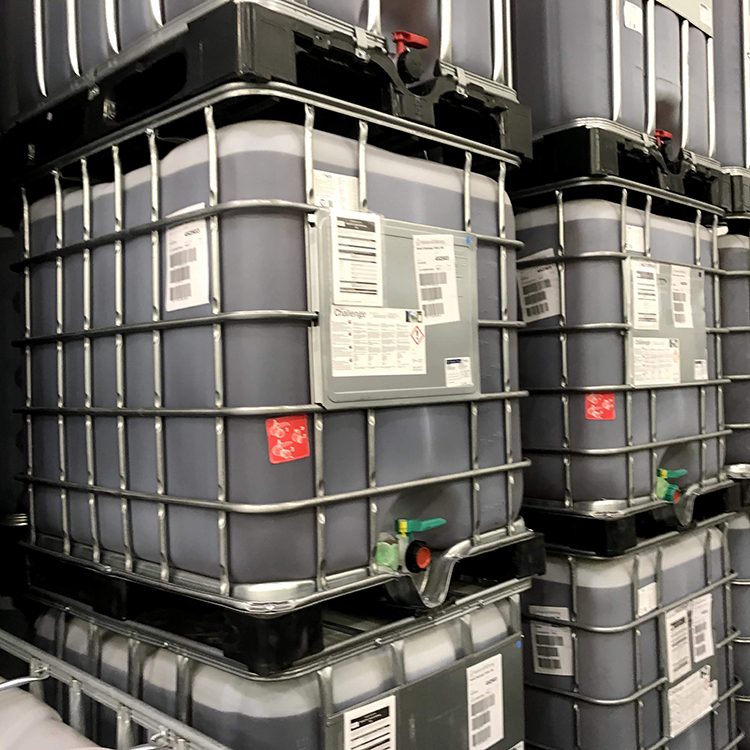
- For lower DM grass silage
- Human food-grade preservative
- Suitable for clamps, bales and ag-bags
SilageSafe
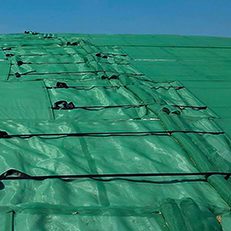
- Integrated tensioning straps
- Eliminates tyres and gravel bags
- Customised to clamp size