
Harvest Help 2020 plus latest advice for forage maize & late cut silage 7/9/2020


Welcome to “Harvest Help 2020”
As the wet and windy weather continues, and with such a large area of crop still to be harvested across the country, we have put together this ‘one stop shop’ to keep you updated with the latest advice. We aim to update this page on a weekly basis until harvest is completed so please pop back as the season progresses.
Due to the large amount of spring cereal drilled as a consequence of the wet autumn last year, the amount of unharvested crop is higher than it was on this date in either 2012 or 2008 which were particularly challenging years and some are now saying that it could be the worst harvest in 30 years.
Check out the harvest progress in your area


Latest advice for forage maize & late cut silage – 7th September 2020.
Following another week of variable weather across the country, the advice we can offer with regard to the cereal harvest has not really changed, but we are now being asked if the wet weather is already having a negative effect on forage maize crops.
If the crop is still green and healthy looking than it has probably not suffered any ill-effects from the weather yet.
If your maize has been damaged by strong winds and heavy rain it is much more likely to be at higher risk of aerobic stability problems as moulds are far more likely to develop in damaged plant tissue. Mycotoxins may also become more of a problem.
If the plant damage is severe and it is beginning to look dead, then we would advise harvesting the crop as soon as possible, even if your grain is not at the ideal maturity. If only part of your acreage is affected then just harvest the damaged areas and leave the rest to reach the desired grain maturity if practical to do so. If it means sealing and re-opening a clamp when the rest of the crop is harvested it will be worth the effort.
If you do need to reopen a clamp it is important to start filling from the ramp so that the loader or buck-rake tractor is always travelling on fresh material and not disturbing the clamp surface and introducing air into the material that has already fermented.
Treating maize with Safesil Pro will give the best possible aerobic stability because its powerful human-food-grade preservatives (Sodium Benzoate and Potassium Sorbate) kill yeasts and moulds. These survive treatment with biological inoculants by forming spores which come back to life in the presence of oxygen at feedout. Fermentation dry matter losses are also reduced with Safesil Pro compared to hetero-fermenting inoculants as these types of bacteria produce CO2 and water as they convert lactic acid to acetic acid.
Safesil Pro also contains Sodium Nitrite which kills undesirable bacteria such as clostridia which is likely to be more of a problem this year due to soil contamination.
We have also been asked about the possibility of taking a late silage cut off grassland in these conditions. As days become shorter, and sugar levels in grass are reduced, making a good lactic fermentation harder to achieve, and with a higher risk of soil contamination, treatment with Safesil Challenge will greatly reduce the risks associated with silaging in these conditions.
If you would like to discuss this, or any other issue relating to home grown feed preservation, in more detail please call your local contact.
In most cases someone will be able to visit you and look at the crop to advise you on the best way forward.
Kelvin Cave Ltd have been involved in cereal processing and preservation in the UK for over 25 years and, by looking at alternative solutions, we very rarely come across a crop which is totally unsalvageable.
We offer a full range of scientifically-proven, tried and tested grain and straw preservatives, grain processing equipment and ancillary products, backed up by a team of skilled sales managers who can visit to assess crops and offer practical advice and support at all stages.
The following are some of the frequently-asked questions we are hearing this harvest:-
The grain ripening is so uneven this year and in catchy conditions it’s going to cost a fortune to dry; are there any better options?
Dependant on the end use of the grain and the dry matter at harvest the use of a chemical preservative may well be more cost effective than drying.
There may still be a little spring barley that was drilled late in the north, or spring wheat or oats which could potentially be harvested at 25-45% moisture, processed and treated with Crimpsafe 300 and ensiled for livestock feed. For non-livestock units, this could be either ensiled in a clamp or plastic tube at source and sold through winter, or sold ‘off the combine’ and ensiled by the end user.
Much more grain is now likely to be harvested at 15-25% moisture and this can be treated and ensiled in the same way, but with a different preservative, Crimpsafe Hi-Dry.
The benefits of crimping explained in more detail.
A second option at the 15-25% moisture range is to treat the grain, either whole or processed, with Propcorn NC the advantage of this method is that it can be stored aerobically.


There isn’t much straw and I want to get on with my autumn cultivations to get my rotation back on track. Should I just chop the straw?
As the wet weather continues, many of you, fearful of a repeat of last season, will forgo the potential income from straw in favour of clearing land quickly, in the hope that a break in the weather will allow timely autumn cultivations and sowing of winter cereals. However, with so little winter cereal for this year’s harvest, and crops being affected by the spring drought, straw is likely to be in short supply for the livestock sector, and prices are almost certain to rise.
Whilst chopping straw does bring benefits of increasing P and K levels it is not without its problems. The risk of increasing the slug burden in the following crop, and competing for nitrogen as it breaks down in the soil, being major concerns.
Treating straw at baling with BaleSafe kills the yeasts and moulds that spoil damp straw. This unique blend of non-corrosive ammonium propionate, potassium sorbate and benzoic acid is applied at baling and allows straw, with a moisture content of up to 25%, to be baled straight behind the combine.
This could give valuable extra income and help another sector of the industry, which could potentially see a shortage, without holding you up at a busy time waiting for the straw to be dry enough to bale naturally.

If I decide to crimp – or Propcorn NC-treat my grain, or treat my straw, should I desiccate with glyphosate?
Adopting these processes will remove the need to desiccate unevenly-ripened crops with glyphosate, as the uneven ripening caused by secondary tillering in drought-stressed crops is no longer an issue. Desiccation can be risky in catchy weather as it can increase field losses due to brackling and lodging if the crop is not harvested between 7 and 14 days after spraying. As well as saving on the cost, and bringing environmental benefits of reducing chemical inputs, you may well have more grain, and more and better-quality straw.
My grain has gone flat and is chitting in the ear, can anything be done or should I just cut my losses and write the crop off?
If the grain has begun to chit then it should not be treated with Propcorn NC and will need to be crimped and ensiled as above but, as long as the combine will travel through the crop, it’s surprising how much feed value can still be harvested. The crimping process involves a rapid, controlled, lactic fermentation which kills yeasts and moulds but also stops the enzymatic activity associated with sprouting which breaks down starch, enabling crops in a wet harvest to be salvaged.


We don’t have any livestock but think the crimping process may be our best option, how easy is it to sell?
Whilst grain is not commonly traded at the crimping stage there will undoubtedly be a market there for it either for livestock feed or AD. Talk to local livestock units or AD plants, the Kelvin Cave team can offer them advice on how to incorporate it cost-effectively into their current system.
Alternatively, it may be advertised online https://farmtofarmmachinery.co.uk/looking-to-sell
I like the idea of crimping but I don’t have a roller mill, are there any available?
We have a full range of new and reconditioned mills available as well as preservative applicators which can be fitted by us or sold to retrofit on an existing mill. We also work with a network of approved crimping contractors throughout the UK who are experienced in crimping and applying our preservatives.


Crimping grain to sell sounds like a good idea but how do I store it?
Ensiled grain can be stored in an inside or outside clamp and rolled with a tractor or telehandler but care should be taken that the walls are strong enough to stand the pressure on them. Alternatively, several of our contractors are able to offer a bagging service whereby the grain is stored in a plastic tube. This merely requires a level site, free of sharp objects and 1 linear metre of bag stores approximately 2 tonnes.


I’m not sure of the grain moisture as my meter only reads to 25% how do I test it?
We can supply a simple to use, whole-grain, specially calibrated moisture meter which can test most cereals and pulses to 50% moisture.

If I decide to crimp, or treat my straw, what else do I need?
If you are interested in anything mentioned above the best thing to do is have a chat with one of our team. We can guide you through the whole process and, in most cases someone should be able to visit you to assess the crop and provide advice tailored to your individual situation. We can supply most other products needed such as our unique 02 Barrier, low oxygen permeability sheeting, side sheets, nets, gravel bags and mats.
If you would like more information please contact a member of our team.
You may also like to read through some of the success stories our customers have shared with us in our KnowHow newsletters along with some more information on our products. These are produced twice a year and distributed either as a printed version, or electronically. If you would like to go on our mailing list to receive them, please email your details to the relevant local contact. You may also wish to follow us on Facebook.
You may also be interested in

Everyone’s A Winner
They say that gambling is a mug’s game, and that’s certainly true when it comes to taking risks with your valuable home-grown crimped feeds. However, by putting your smart money on the combined use of these proven products, you’ll be on a winning streak every time.
Learn more
Going Through the Mill
Finishing 800 store cattle on the farm every year and processing all of the stock’s grain through a small static mill, the Wilcock family from Gladden Hey Farm in Wigan knew the time had come to upgrade their system.
Learn more
Small steps to tackle hard times ahead
The driest July since 1935, with little rainfall since, has put pressure on grazing and forage stocks, with many farmers already feeding silage intended for winter and later silage crops being lighter than expected. Maize in many areas is also particularly badly affected.
Learn moreRelated products
Murska 350

- Output 5-8 t/hr
- 2mm fluted rollers process all cereal and pulses down to 45% moisture
- 3m chain and flight discharge elevator
Murska 700HD
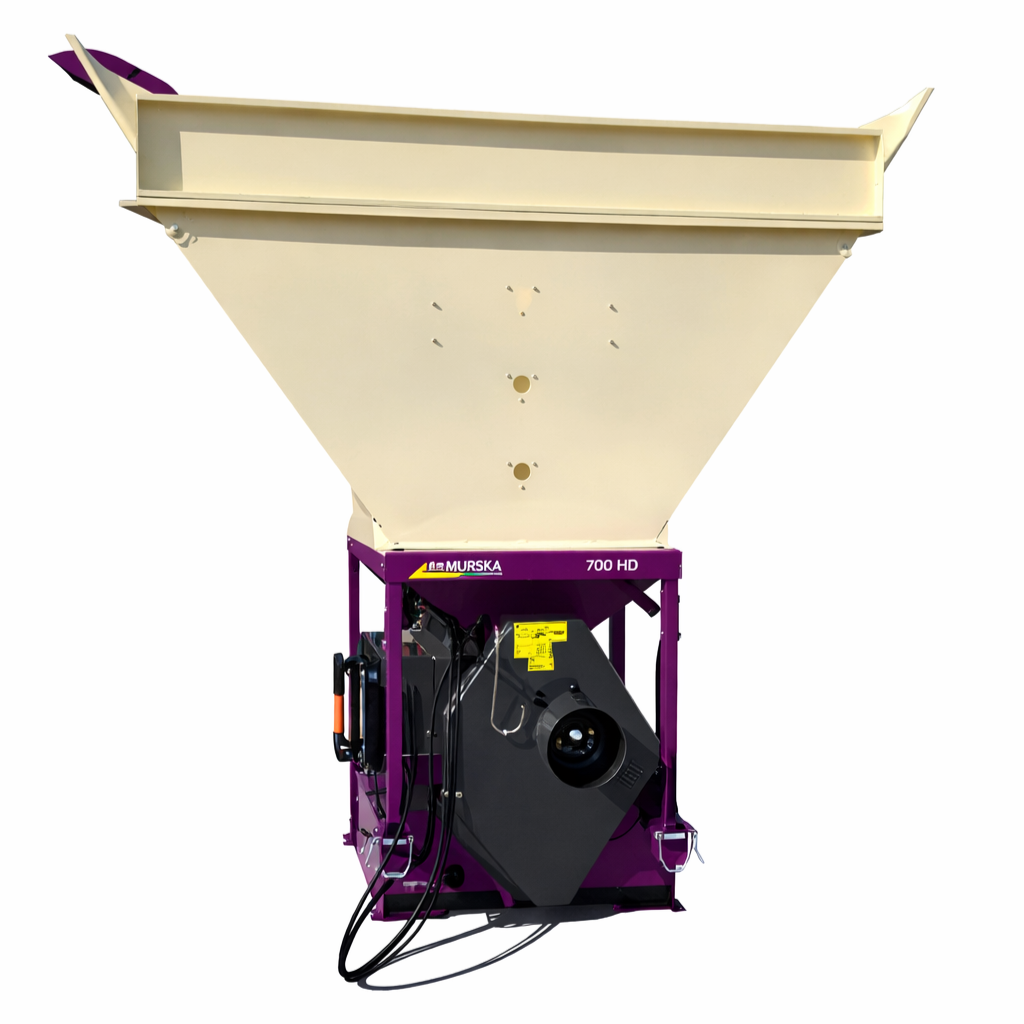
- Output 10-16 tonnes/hour
- 2mm fluted rollers process all cereal and pulses down to 45% moisture
- 3m chain and flight discharge elevator
