Hard graft and good science reap rewards for Ayrshire farmers

The Campbell family have worked hard to turn a small tenancy into a fully owned farm. The latest generation is adding science to this mix and improving outcomes with high quality forage.
When Scottish dairy producer, David Campbell, installed robots in 2019, he knew that achieving the highest possible forage quality had to be his goal. Home-grown forages would form the mainstay of the housed herd’s ration every day of the year and every effort would be made to maximise the protein, as well as the energy, conserved in these feeds.
This meant a two-pronged approach would be taken to their production – not simply growing the highest nutrient-density crops but ensuring their quality was not lost in the clamp. All too aware that even the smallest hint of heating represents energy loss, David has focussed firmly on upping his game.
Running 180 pedigree Holsteins at Low Ballees Farm in West Kilbride, Ayrshire, he was also aware he had big boots to fill.
Describing his father, Tom, and grandfather, John as ‘grafters’, in just 22 years, the family’s collective efforts have transformed a 90-acre tenancy to the 310-acre (126ha) holding they own and farm today.
With the herd’s 305-day production standing at 11,200kg at 4.2% fat and 3.2% protein, it now demands an input of science alongside the graft.
Growing higher protein grass
Returning from university with an agriculture degree in 2016, David was eager to take on this challenge and first applied his knowledge to growing better grass.
A key aspect of grassland management has been the input of sulphur which he says has been crucial in uplifting protein.
“We changed the fertiliser regime to include protected urea with added sulphur [38N 19S], as sulphur is a component of so many amino acids,” he says.
Furthermore, he says sulphur helps in nitrogen use efficiency and because it is now so scarce in the unpolluted atmosphere, he applies it to all of his crops and with every fertiliser application between silage cuts.
“Our contractor applies liquid nitrogen after second and third cuts and this includes sulphur too,” he adds. This means less is required than the equivalent granular product and there’s less volatilisation too.
Three cuts of grass silage are taken from 110 acres (45ha), which in 2024 started on 11 May.
“We’ve taken first cut earlier every year and this has generally resulted in a trend towards higher ME [metabolisable energy],” he says.
“However, last year was difficult and spring was late, cold and wet and everyone in the area suffered with lower ME,” he says.
Milking ration
- 6kg meal
- 6kg ‘supergrains’ (distillery moist grains)
- 5kg wholecrop wheat
- 36kg grass silage (first, second and third cut)
Snatch and grab silage
Describing that year’s silage-making as ‘snatch and grab’, he says he was pleased to have the insurance of the silage preservatives in Kelvin Cave’s Safesil range.
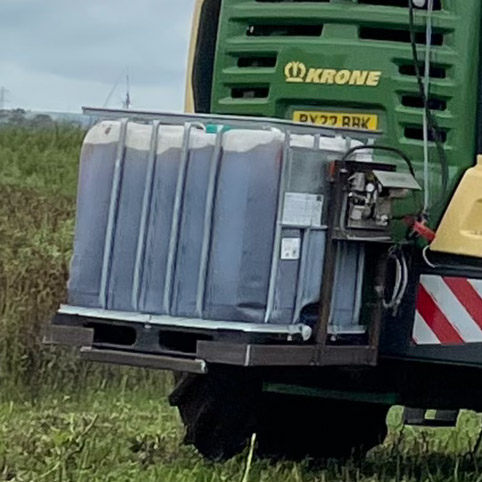
“We use two Safesil products to cover us in all conditions, and we switch between Safesil Challenge and Safesil Pro,” he says. “A full IBC can sit on our contractor’s forager and this saves decanting and makes switching easy.”

We use two Safesil products to cover us in all conditions, and we switch between Safesil Challenge and Safesil Pro.
David Campbell
Deciding on the day which product to use, this has often been Challenge on first and third cuts and Pro on second. This reflects the lower dry matter of first cut in spring and third cut, which is likely to run into September.
“Safesil Challenge is ideal for dealing with soil contamination – something more likely when conditions are wet – as we know it will knock out spoilage bacteria such as clostridia and enterobacteria,” he says.
Meanwhile, he says second cut in summer tends to be drier and stemmier so preventing aerobic spoilage – a strength of Safesil Pro – becomes the priority.
“Because we have moved to feeding silage all year, having stability at the pit face, during summer and winter, has become very important, and we have found Safesil Pro keeps the silage really stable and cool all year,” he says. “We also want to protect the protein we have worked so hard to grow.”
First cut in 2024 was taken at a lower dry matter than desired, weighing in at DM 24%. And at an ME of 11.6MJ/kg DM it was lower than normal but good for the season on an already wet, west coast location. However, the highlight in this silage was its 16.9% protein which cements the farm’s upward trend.
Low Ballees Farm Facts
- AHDB Strategic Dairy Farm sharing good practice
- Run 180 pedigree Holsteins calving year-round
- Three Lely A5 robots with a fourth to come
- Yield 11,200kg at 4.2% fat and 3.2% protein
- Boost protein in grass with sulphur applications
- Maximise nutrient preservation in clamp with Safesil
- Switch between Safesil Challenge and Safesil Pro
- 2024 grass silage cut 11 May, 28 June and 5 Sept
- Wholecrop wheat cut and bagged on 11 August 2024
- Use Safesil Pro on wholecrop wheat

Safesil Pro on wholecrop wheat
The success of Safesil on grass has been followed through to the wholecrop wheat whose preservation today, when compared with the past, David says is ‘like night and day’.
Previously using an inoculant containing heterofermenting bacteria, David learnt firsthand why Kelvin Cave does not carry any such products and advises against their use.
Ian Hall from Kelvin Cave explains: “Bacterial inoculants can work well in preserving silage but we always warn producers against using a product containing hetero-fermentative bacteria. These don’t just produce the lactic acid which is desirable for a quick and stable fermentation but they create other by-products, including water and carbon dioxide as well as other compounds such as acetic acid.
“Acetic acid is a far weaker acid than lactic acid and therefore doesn’t achieve the fast pH drop we are aiming to achieve,” he says.
“Along with the carbon dioxide and water, also produced as a waste product of this type of fermentation, inevitably there is more dry matter loss – in other words, less of the highly nutritious crop David has cut is retained in the clamp.”
Furthermore, Ian points out that silages which are higher in acetic acid are less palatable to stock, and dry matter intakes have been shown to be lower with this type of fermentation [Gerlach et al 2021 An Fe Sci Tech].
“And a particular worry is that bacterial inoculants are not labelled as homo- or hetero-fermentative, which means it’s difficult for producers to know which type they are buying,” he adds, advising producers to always ask the question of a trusted supplier.


Preservatives trump inoculants
However, David says that the preservative option he now uses in Safesil has trumped either bacterial option. “We were having heating with the previous additive but now it stays cold and there is no visible waste,” he says.
Observing that the preservative has transformed wholecrop quality, last year this analysed at 48.3% DM, 39.2% starch and with a glucogenic energy of 194g/kg.
“That’s higher than most maize silage which I would not want to grow on our farm in any event,” he says. “Our land is marginal for maize and harvesting would be difficult so we would much rather stick with wholecrop which we know we can grow and harvest.”
For the wholecrop he used winter wheat which was harvested on 11 August and bagged by a contractor.
Having now raised the game of silage preservation, the Campbells are happy to continue their strategy of mix and match.
“We feel the two products give us better options,” he says. “Taking first cut early means we should be ready for the next weather window and using Safesil gives us confidence we can deal with sub-optimal conditions.”
The farm’s high-quality forage has also supported a 2,000-litre/head lift in milk production since robots were installed, and the family is now heading towards installing its fourth milking robot.
Request a call back
You may also be interested in

Cutting the cost of feeding for robot-milked Jerseys
Home-grown crimped concentrate feed and high-quality silage slash feed costs on Somerset farm.
Dairy farmer, Laurence Wadman, continually strives to make more milk from home-grown feeds on his family’s Somerset farm.
Learn more
High DM forage and home-grown crimp lift milk solids and margins
A Strong emphasis on crimped cereals and high dry matter forage on a Cumbrian farm has helped produce a Holstein herd whose fat and protein levels rival those of a Channel Island breed.
Learn more
Quality grass and forage bring sweet smell of success
When you’re making farmhouse Cheddar from unpasteurised milk, every input and practice can feed through to its flavour.
From the species of grass in the swards to the choice of additive to conserve the silage and from the products chosen to clean the cows’ teats to each individual ingredient in the total mixed ration. All come together to create the distinct flavours of a raw, artisan cheese, every one of which must be continuously and carefully balanced to retain the consistency of product customers expect.
Learn moreSafesil Challenge
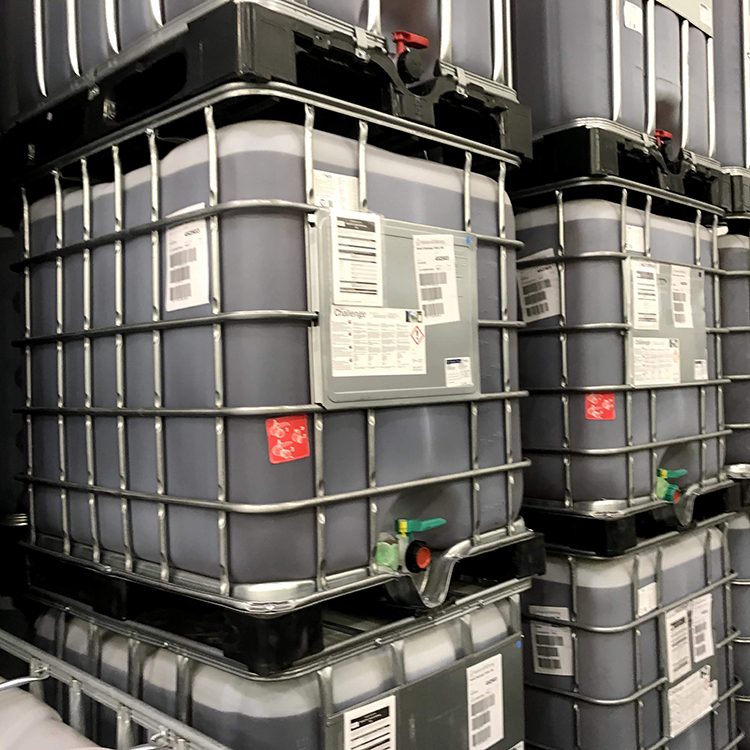
- For lower DM grass silage
- Human food-grade preservative
- Suitable for clamps, bales and ag-bags