
GROWING the dairy ration has built PROFITS for REINVESTMENT

Cornish dairy producer, Tim Wood, is not one to follow the crowd. By growing his feed on the farm and improving the way it is processed, he has kept profits at home and fuelled reinvestment.
With an average yield of 8,500 litres at 4.7% fat and 3.7% protein, Tim Wood’s dairy herd might look bang on a national average, if a little higher in constituents.
But, nothing much else conforms to the norm in this family-run business, where Tim’s originality of thinking and willingness to embrace the unconventional stand him out from the crowd.
Since joining his father, James, on Trevillador Farm near Wadebridge in Cornwall over 15 years ago, his sights have been firmly set on farming both profitably and sustainably.
The key focus in this endeavour has been reducing costs of production by growing feed for the dairy herd, as well as for youngstock and beef. This has insulated the business from some of the recent commodity price rises the industry has had to endure and has helped keep costs of production under control.
To this end, home-grown beans and crimped cereals form the basis of the dairy herd’s ration, along with grass and maize silage, plus rolled oats for youngstock. The herd is loose-housed and bedded on straw from the cereals, and by ditching soya completely, a bonus of around £2,000 per annum is paid through Arla.
All of this has ensured the 400-acre (162ha) holding – of which just 70 acres (28ha) are owned, the remainder being on a lifetime tenancy – has remained in profit. This, in turn, has funded significant investment in the business over the past five years, including the construction of new sheds, new clamps for silage and crimped cereals, and a 10/20 swing-over De Laval parlour.
The 150-head herd calves throughout the year and twice daily milking is covered between Tim, his father, James, and a part-time relief milker. Tim’s brother, Will (a self-employed foot trimmer) also helps out at weekends and evenings during busy times.
Playing a supporting role, while also working for the NHS, Tim’s wife, Lucy says: “Our stock numbers have now hit the sweet spot. Any more cows and we’d have to employ an extra member of staff.”
Growing beans
It hasn’t all been plain sailing to reach this point, and Tim describes how his experiences with beans have taught him how to grow and manage this crop, through trial and error.
He says: “We grow around 30 acres of spring beans which are rolled for use in the total mixed ration. Normally, they will take us through winter, into spring, and even summer, but last year was a bad one for the beans, and we had to buy a 28% protein blend to use in the TMR which we’re now buffer-feeding.”
The difficulties arose when the beans were direct drilled into stubble turnips and rape, but the pre-emergence herbicide could not suppress the weeds.

“The stubble turnips just would not die, so this year, we ploughed and buried everything, and the beans are flying,” he says. “We nearly didn’t grow them after last year’s experience but I’m so glad we did.
“They are not expensive to grow – around £55 per acre in herbicides each year – and in a normal year, they mean we don’t need to buy in any protein between September and January.
“Now, we hope to lengthen this period by growing a higher acreage, and we will continue to plough and drill them in future,” he says.
The beans are milled in a new Korte 700 from Kelvin Cave Ltd, selected for its build quality and 2mm fluted rollers.
“They really grip and pull the beans in, and the new mill’s throughput is so much higher than the one it replaced. This means that when we’re crimping cereals, it can keep up with our two combines,” he says.

Crimping cereals
The Korte mill is also the backbone of the crimping operation, with moist crimped cereals having been included in the dairy ration for at least 10 years.
“We harvest cereals at up to 44% moisture and have absolutely no issue with this,” says Tim. “People think it is difficult but it really is not. It’s easier to harvest moist corn than to harvest wet, dry corn! Trying to cut rained-on, dry corn is misery.
“We find moist cereals flow through the combine easily, especially with wheat, where there are no awns to create blockages – and you run the sieves wide open when you’re crimping.
“I also love the fact that we are not waiting for the crop to dry and we’re three weeks ahead with our harvest.
“We harvest from around 21 June, starting with winter barley, and because we are harvesting earlier there are also fewer issues with weeds.
“But the thing I like most of all is getting more from less, as where we’d harvest three tonnes per acre of dry corn, we’d get four tonnes per acre when it’s harvested earlier for crimping,” he says. “There’s obviously more moisture making up some of that weight, but there is also more crop, and at that stage of growth it also has a higher nutritional value.”
He also cites the cow health benefits of feeding crimp which he describes as ‘a far safer feed’.
He says: “While we were doing the building work, we lost some crimp storage and had to feed dried grain instead. We instantly saw a drop in constituents and also had some cases of acidosis. We have never had this with crimp, which we can also safely feed in higher quantities than dried rolled grain.”
Now, the farm has invested in two new clamps for crimp, with the hope of storing 300-350 tonnes of crimped wheat and barley.
He says: “I would love to crimp everything and move completely away from drying grain, but we still need even more crimp storage.
“I don’t really understand why more people don’t do it, as crimp is such a great feed for cattle,” he adds. “It might be that they don’t feel they have the storage, but building a clamp isn’t as expensive as building a grain store for dry cereals.
“I personally wouldn’t put it into an earth-bank clamp, and expect a good feed to come out,” he says. “You have to spend the money to get the return, and the additive, CrimpSafe 300, is around £10 per tonne, which is less than the cost of drying grain.”
Everything through the crimping process is done by the book, and the result has been little, if any, waste. Side-sheeting and FarmGuard top-sheeting are used, and ClampShield 500 is used on top in defence against vermin.
Grass and maize silage
Similar consideration and care are paid to making grass and maize silage, both of which are preserved with products from the acclaimed Safesil range.
“We’ve only used Safesil for the second year but get on really well with it,” he says.
Particularly noting its preservation of the farm’s high red clover swards, he says the recent analysis of dry matter 30%, metabolisable energy 11.4MJ/kg, D value 75 and protein 19.3%, bears this out.
Since the family has committed itself to growing its own feed, it has also stepped back from grain assurance certification.

Tim says: “We felt it wasn’t worth being grain-assured and jumping through hoops for the quantities we sell. And a better margin comes from cereals when they are put through beef and dairy.”
Confident in his direction, he says: “Growing crimped cereals, maize and beans has made us as profitable as we can be in the present economic climate.
“I know that running our farm this way makes the most profit, and being self-sufficient is more environmentally sustainable and keeps control of our costs.”
Trevillador Farm Facts
- Family-run farm of 150 milking cows and arable; rear beef from the dairy herd
- British Friesian, Jersey and Fleckvieh base,shifting towards predominantly Fleckvieh
- 400 acres (162ha) farmed, 70 acres (28ha) owned and the remainder rented
- Cropping: 100 acres (41ha) wheat, 65 acres (26ha) maize, 50 acres (20ha) oats, 40 acres (16ha) barley, and 30 acres (12ha) spring beans
- All wheat and barley crimped through Korte 700 and beans rolled through the same mill
- Crimped cereals preserved with CrimpSafe 300 (and CrimpSafe Hi-Dry where moisture is less than 25%)
- Side-sheeting (held in place with SiloBond) and FarmGuard used on all clamps
- ClampShield 500 used on crimp clamps to protect against seagulls
- Farm tracks laid and 40 one-acre paddocks created for rotational grazing
Request a call back
You may also be interested in

Crimp for your planet. Crimp for our pocket
Regular KnowHow readers will understand our enthusiasm for crimped grain based on feed quality, yield, impact on animal performance and costs relative to concentrate feed energy sources. But, as a reminder and for our newer friends, harvesting wheat or barley just as the main leaves are dying off (25-35% moisture content in grain), treating the crimped grain and chaff with a preservative and ensiling, produces a high energy (13MJ ME/kg DM) feed that can significantly reduce bought-in concentrates.
Learn more
Crimped beans with Brewers’ Grains for Stable High Protein Feed
Cumbrian beef, sheep and arable producer, James Marshall, entered the world of growing and feeding beans with some trepidation. A lack of information on how to preserve and store the crop combined with little industry advice on how to incorporate beans into a ration could easily have put him off the idea altogether.
Learn more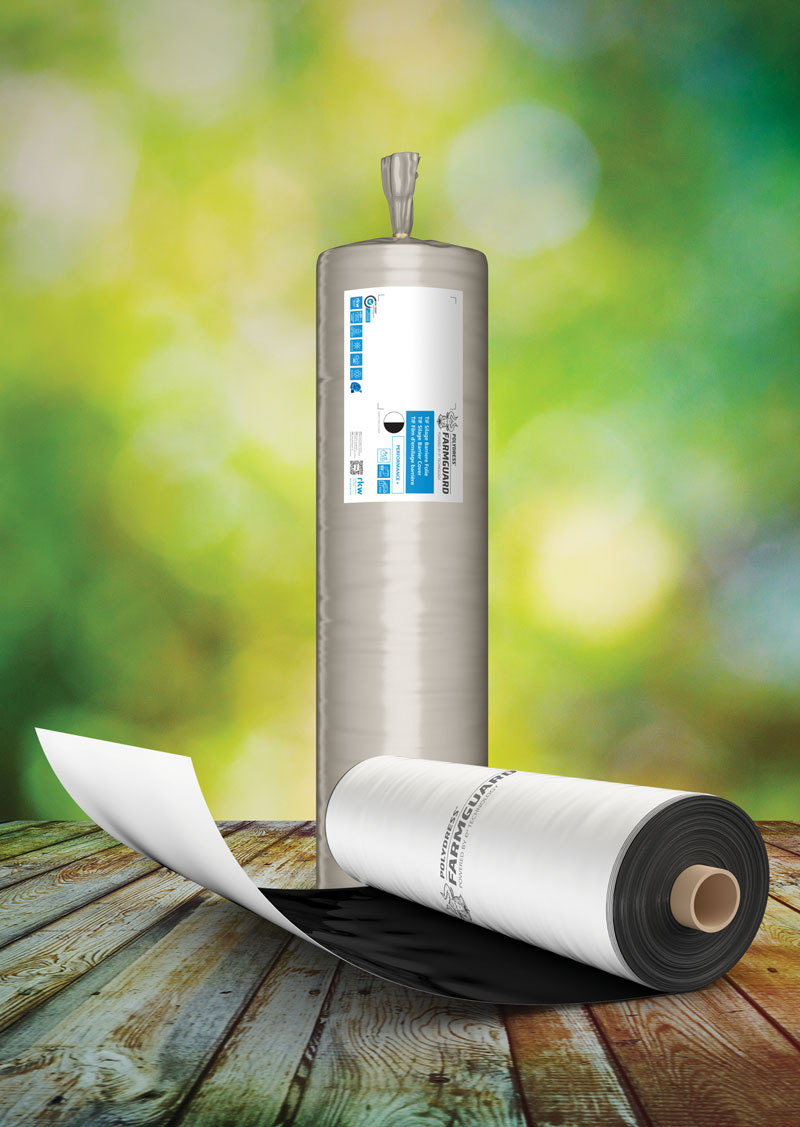
Clamp sheeting range strengthened by Farmguard
A new high-strength, recyclable clamp sheeting has been launched by Kelvin Cave Ltd, offering added protection for silage or crimped grain clamps this season.
Learn moreRelated Products

Murska 700HD
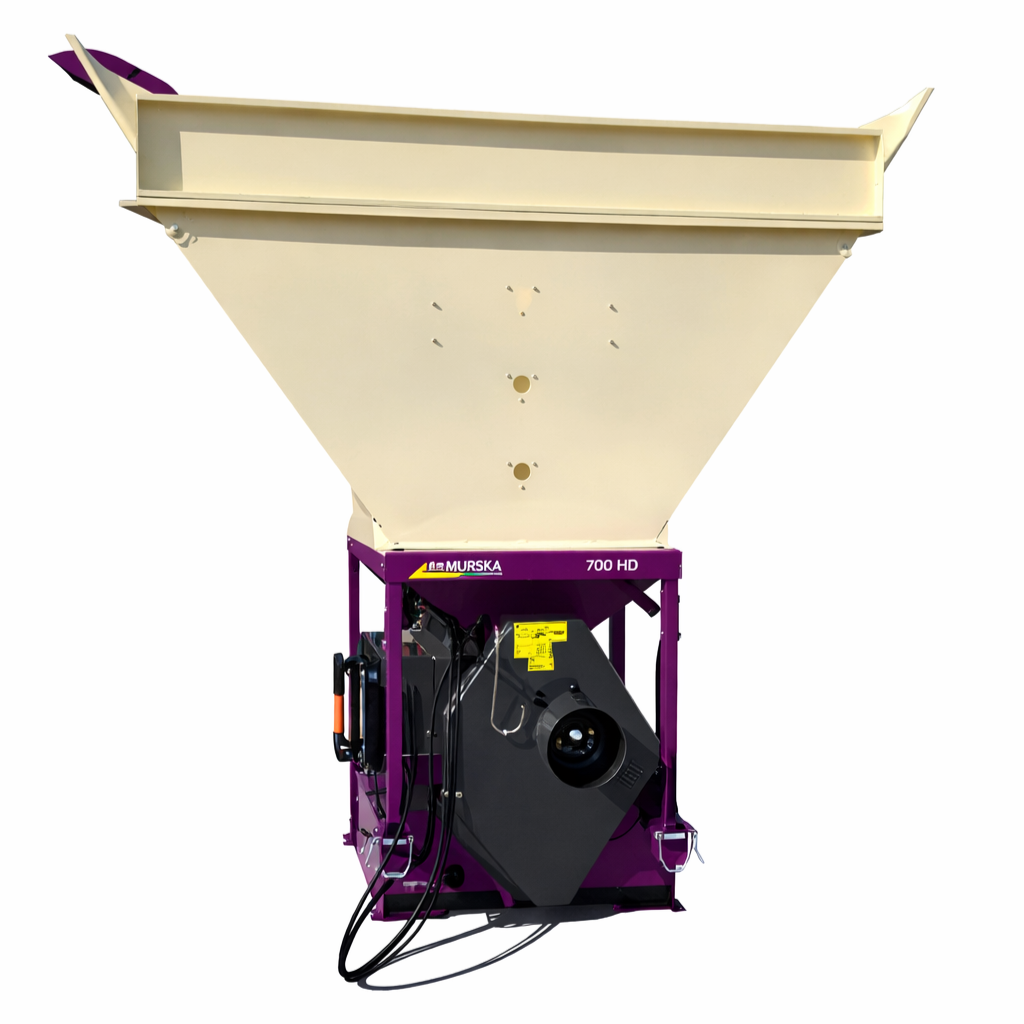
- Output 10-16 tonnes/hour
- 2mm fluted rollers process all cereal and pulses down to 45% moisture
- 3m chain and flight discharge elevator
