
Focus on Home Production to Dodge External Forces

Who could have predicted the turmoil we face as a nation? And who could have foreseen the gut-wrenching anxiety which is now a feature of everyday life – on the farm and beyond?
One moment, we face the prospect of hefty trade tariffs – and who knows which exports or even imports could be hit by these, the next we’re discussing the polar opposite – a free trade agreement with the USA, which could have profound implications for the livelihoods of UK farmers.
Concerns about global conflicts and climate change further fuel the anxiety as previously reliable sources of imported feed are no longer considered ethical or no longer assured – at least, at an affordable price.
And then there’s the debacle of agricultural relief for inheritance tax, which will eat into profitability and call into question the continuation of many family businesses. Added to this has been the abrupt and unexpected withdrawal of the Sustainable Farming Incentive – something which many believed would be assured for the long term.
The net result is that all the constants and assurances of the past seem to mean nothing. Instead of stability, we are faced with policy change at a dizzying speed to which we are expected to react.
But we all know farming cannot operate on these short-term cycles.
While we can do little to prevent them, we can set up our businesses to sidestep their effects.
Taking control of inputs
Above all else, UK farmers can control their feed inputs—the highest variable cost on any livestock farm—by producing feed at home or trading with neighbours.
Of course, we at Kelvin Cave Ltd. have been beating this drum throughout our 40 years of existence. But we never argue that home-produced feed is more urgent and compelling.
By growing our own stock feed, we can avoid at least some of the outside influences – from the geopolitical crises to the changes of heart in Whitehall. We can take control of far more of our production cycle.
It is no surprise that the most profitable livestock producers have repeatedly demonstrated their expertise in forage production, whether maximising daily live weight gain or milk from forage.
Luckily, there are many tools and techniques at livestock farmers’ disposal to help them in this endeavour. And there’s an increasing experience and understanding of producing concentrates at home too.
This is demonstrated admirably by our case study farmer, Luke Gardner (Combining the benefits of protein crops and bi-cropping) whose efforts in bi-cropping pulses have enabled him to produce a highly nutritious crimped concentrate feed at around 30% protein and 40% starch on which his cattle are growing faster than ever before. And it’s costing him much less too.
Several other on-farm studies were conducted last season as part of the NCS Project* and the data from these will be presented in a future issue of KnowHow. One particular highlight was a harvest efficiency trial investigating field losses and fuel usage when wholecropping. Hosted by the Birkbeck family at H & K Farms, Annan and their farm manager, James Marshall, the work was kindly supported by Krone UK and published in Profi magazine.
Higher digestibility multi-cut forages
Making forages with higher digestibility will also improve milk or meat production from forage, alongside reducing rumen methane production. And the trend towards multi-cut systems is helping to drive this improvement.
However, whilst this is a good idea in theory, it comes with challenges, mainly related to contaminants from slurry and sometimes its high buffering capacity. We have therefore launched a new silage preservative, MultiMax, specifically formulated for this situation as explained below, with a further technical article (MultiMax in multi-cut grass systems) on the trials behind its development from Dr Horst Auerbach, from International Silage Consultancy.
More on-farm grain processing
Another change we have seen in recent years is in the demand for grain processing equipment – again reflecting an appreciation of the importance of home-grown feed. With this in mind, we are pleased to introduce a new range from Finnish manufacturer, Rivakka (Grain processing range strengthened with Rivakka equipment)
We cannot avoid change; sometimes we instigate it to make improvements and sometimes it’s forced upon us but we at Kelvin Cave are here to work with you – to provide a constantly evolving range of scientifically proven products alongside the best support and advice we possibly can.
And we can’t emphasise enough how firmly we stand on the farmer’s side in the current industry upheaval. It’s been a source of pride and gratification to see the peaceful and professional way in which farmers have protested at rallies in London and we fully support these actions and the organisations lobbying government on behalf of the industry. The impact of the changes will not only affect family farms but also businesses like ours and the wider rural community and we want to do all we can to help farming businesses thrive.
*NCS Project = Nitrogen Efficient Plants for Climate Smart Arable Cropping Systems (sometimes also referred to as Nitrogen Climate Smart)
You may also be interested in

MultiMax in multi-cut grass systems
Dr Horst Auerbach from International Silage Consultancy, Germany gives some background to the development and testing of the new Kelvin Cave silage preservative, MultiMax, and explains how to ensure consistently good fermentation quality in silages from intensively managed grass leys.
Learn more
MultiMax…the New Silage Additive
MultiMax, the preservative-based additive has been formulated to wipe out spoilage bacteria which can be prevalent in silage harvested in the tight weather windows which are often a feature of multi-cut grass.
Learn more
Grain processing range strengthened with Rivakka equipment
In order to maintain and strengthen our market-leading position and respond to the diverse and evolving requirements of our farmers and contractors, we are delighted to have added a full range of equipment from Rivakka.
Learn moreMill & Mix Machines

- Bespoke Mill & Mixer machines
- Built to order
- Mounted on farm or road trailers
SilageSafe
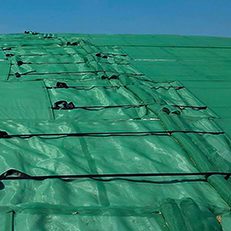
- Integrated tensioning straps
- Eliminates tyres and gravel bags
- Customised to clamp size
Forage preservative applicators

- Robust range of diaphragm pumps with
- Various output volumes, flow controllers and nozzle types