
Cutting purchased feed costs

Focussing on forage quality has brought abundant rewards for Orkney dairy producer, Daniel Ritch. Driven by the desire to cut the cost of purchased feed – which is burdened with extra haulage costs by boat to the island – he has focussed his efforts on making the best grass silage he possibly can, aiming for high enough protein to displace some bought-in soya, and bolstering his herd’s milk from forage.
Although his grass silage was already of a high standard before these efforts were made, Daniel has succeeded spectacularly in his endeavours.
For, not only has his resulting silage been of such phenomenal composition that it has replaced between 0.25 and 0.5kg/head/day of concentrates in his 100-cow herd’s ration, but it also bowled over judges in the prestigious AgriScot Silage Competition, winning the most hotly contested class, for dairy clamp silage in 2021.
With an analysis which included a D value of 77%, metabolisable energy of 12.3MJ/kg DM and crude protein at an impressive 18.2%, this silage was said, by the competition organisers, to be from further north than any of the previous winning samples.
Farming 173 acres (70ha) at Brettobreck Farm, Stromness, Daniel has overcome the challenges of his exposed, North Sea location, introducing a multi-faceted approach to raising forage standards since he took over the family farm in 2016.
Young leys
This begins with his grass leys, none of which are more than six years old and all of which include plentiful white clover, to bolster protein. High clover levels are maintained throughout the life of the ley by regular cutting and grazing and careful broadleaf weed control, which only involves spot-spraying from a quad bike.
First cut silage is taken towards the end of May or early June, with second cut targeted for five to six weeks later and a small third cut in late August or September if forage stocks are low.
The silage-making operation is designed for its low costs and simplicity, with just Daniel and his family – his father, David and brother, Fraser- mowing, tedding and raking up the swath.
The grass is picked up with Tormiston Farm Contractors’ pick-up wagon, which is said to achieve a more suitable pace, create less stress and use less fuel than a forage harvester.

“It gives us time to compact,” says Daniel, explaining that they have two tractors on the pit, and equally, don’t need the extra trailers they would require to keep up with a modern forager.
Mowing is said to be ‘at the top of the day’, with pick-up the day after, while a residual of 40-50mm is left to avoid soil contamination.
An Orkney dairy producer’s 18% protein, high energy silage has cut his concentrate use and made him the most northerly winner of the prestigious AgriScot Silage Competition.
Safesil preservative
A key to the high forage quality is Kelvin Cave’s salts-based preservative, Safesil, which was used for the prize-winning silage in 2021 and has been continued ever since.
And although Daniel says he’d never had serious spoilage in the past, he had wanted to try Safesil since reading about the product in 2019, but – for a variety of reasons, including prior orders – had been unable to do so until 2021.
With such a high-quality sample resulting, he was persuaded by Kelvin Cave’s sales director, Ian Hall, to enter the product in the AgriScot competition, and was delighted to take the top prize in such a keenly contested field.
“I would never have thought of entering but Ian persuaded me,” he says. “I never thought my silage would be up to that standard.”
But it emphatically was, not only scoring well for the all-important protein, energy and digestibility, but also having sugars of 6.6%, suggesting optimal timing of cutting; neutral detergent fibre (NDF) of 35.4%, reflecting the young, leafy sward with minimal stem formation; lactic acid of 96.8g/kg DM, indicating the efficient fermentation which achieved rapid stability; and great intake characteristics, scoring 125 for silage intake potential (SIP).
Dry matter at 37.6% was higher than Daniel’s target (30%) and a reflection of Orkney’s keen drying winds and perhaps the crop’s slower pick-up, without the speed of a forager or a fleet of trailers to more quickly get the grass into the clamp.
However, thanks to good ensiling practices, the use of Safesil, and efficient sheeting (Kelvin Cave’s recyclable FarmGuard sheeting is used, which Daniel says is very easy to use, with seven layers in one giving it good tear resistance and up to 10-times less permeability to oxygen than standard sheeting), fermentation has been superb in this high dry matter crop.
Ian Hall explains: “Safesil is key to good fermentation, as it contains preservatives which are approved for use in human foods, thanks to their ability to eliminate the growth of undesirable, nutrient-wasting bacteria, and to stop the growth of yeasts and moulds.
“This provides the environment for desirable lactic acid bacteria to achieve a rapid reduction of pH, quickly preserving the nutrient value and palatability of the forage and preventing its spoilage.
“This is why so much of the quality in Daniel’s young, leafy swards is retained, including its protein,” he says. “People often under-estimate the additional protein a clover-rich grass silage can supply and how it’s capable of displacing imported soya or other protein sources in concentrate feed.”
However, as well as retention of quality, Ian says its quantity will also be preserved.
“Dry matter losses are invisible, but we can be absolutely confident that this fermentation pathway will result in minimal DM losses compared with other ensiling practices,” he says.
This is also suggested by low levels of undesirable volatile fatty acids in the sample, compared with higher amounts of desirable lactic acid, alongside a pH of 4.4.
The overall result is seen in the performance of Daniel’s mainly Holstein Friesian herd, whose production stands at around 8,000 litres at 4.5% fat and 3.52% protein.
Dry matter intakes of their total mixed ration – which includes grass silage, Propcorn NC-treated barley and some bought-in protein and is currently formulated by SAC Commercial Ltd – are said to be high, and cow health has improved.
“They are feeding really well on it, and we’ve had noticeably fewer metabolic problems,” says Daniel, who remarks that concentrates in the parlour have been dropped altogether, which has improved the composition of his herd’s milk.
And although milk from forage is not a parameter Daniel measures, as he doesn’t carry out costings for the farm, he is confident he has lifted this figure as the farm’s bought-in feed use is lower than in the past, and continues to decline.
Brettobreck Farm Facts
- 100 mainly Holstein Friesians giving
8,000 litres at 4.5% fat and 3.52% protein - Orkney island location presents weather and feed delivery challenges
- Ambition to increase the quality of home-grown forage included in the ration
- Home-grown feeds include silage, green wholecrop and Propcorn NC-treated barley
- High quality swards reseeded every six years and cut for silage three times/year
- Careful maintenance of clover in the sward including spot-spraying weeds
- Use of Safesil has contributed to exceptional quality and intake characteristics of silage
- Winner of AgriScot Silage Competition for keenly contested dairy clamp class (2021)
- Has also won the Orkney Silage Competition twice in the past three years
- Analysis of prize-winning grass silage sample: DM 37.6%, D 77%, ME 12.3MJ/kg DM,
protein 18.2%, NDF 35.4%, sugars 6.6%, pH4.4
More Safesil winners
Having recommended Safesil to fellow Orkney farmers, several have now followed in Daniel’s footsteps to become competition winners. Both John Laird (Pole Farm) and Allan Scott (Georth Farm) are amongst them, taking second and third place in the AgriScot Silage Awards (dairy clamp section) in 2022, the first year their silage was preserved with Safesil. Congratulations to Daniel, John and Allan! We love hearing of our customers’ success stories, so please let us know if you have one!
Request a call back
You may also be interested in

Safesil user wins Silage Clamp Award
Safesil delivers the best silage from Lands End to John o’ Groats and beyond! We would like to congratulate Daniel Ritch of Brettobreck, Stormness, Orkney Isles on winning the coveted Dairy Clamp Silage class at the Agriscot Silage Competition.
Learn more
Making a proper job of silage in Devon
For Devon beef producer, Matt Widdicombe (pictured above), high quality silage is the lifeblood of his business. It’s made with strict adherence to good practice – two vehicles for compaction, good silage sheeting (both high grade side sheeting and oxygen impermeable dual top sheeting) and top-of the-range preservative, Safesil Pro.
Learn more
Wagyu Producer Raises Silage Quality with Safesil
Forage contractor and Wagyu beef producer, David Leighton (pictured), started using Safesil Challenge around two years ago and says he is now advising his customers to do the same.
Learn moreRelated products
Safesil Challenge
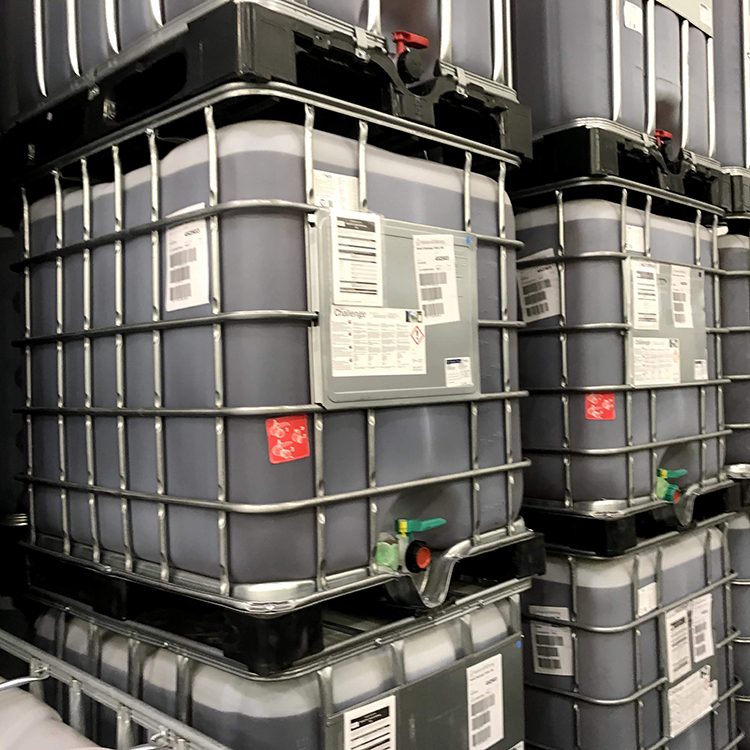
- For lower DM grass silage
- Human food-grade preservative
- Suitable for clamps, bales and ag-bags
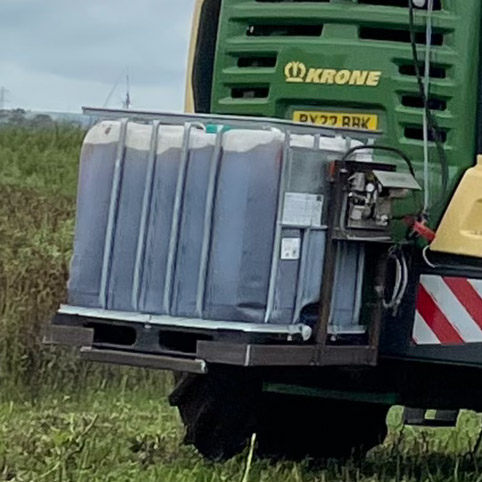
SilaPactor: Silage Compactor

- Increase DM density by up to 40%
- Up to 6 tonnes
- Speeds up silage compaction almost four-fold