
Combining the benefits of protein crops and bi-cropping

Keen to rear his beef cattle on home-grown proteins, Lancashire farmer, Luke Gardner (pictured below) has also thrown bi-cropping into the mix. The outcome has been to cut costs, increase performance and gain benefits in agronomy.
The idea of growing protein crops on his Lancashire farm appealed to Luke Gardner for a variety of reasons. He liked the prospect of saving money on bought-in feed; he would cut fertiliser use; gain the soil benefits he knew legumes would bring and he felt the concept would chime with the Sustainable Farming Incentive (SFI) – in future if not today.
He also liked the idea of bi-cropping – seeing its potential benefits such as higher yields than either crop would give individually; better weed suppression; and greater biodiversity both above and below soil. And he believed two crops could be chosen which would complement each other well.

“This is obviously the way farming is going,” says Luke. And he wanted to be part of it.
However, the 350-acre (142ha) family farm at Nateby Hall near Garstang – where Luke farms with his parents, Philip and Dianne and which comprises 150 acres (61ha) of arable and 200 acres (81ha) of grassland, most of which is permanent pasture – was never going to be the easiest for the introduction of legumes.
“We’re in a high rainfall area – especially in the last two summers – and the land is heavy clay to moss land, which is much like peat,” he says. “It’s quite wet and low lying and regularly floods.”
The omens for introducing legumes were not particularly good, but Luke had spoken to Michael Carpenter, technical director for Kelvin Cave, who’d suggested that a mixture of peas and beans could provide a high protein, high value concentrate feed which could be preserved and stored as a mixed crimped pulse.
“The two crops have been shown to complement each other well,” explains Michael. “The peas help provide earlier ground cover than the beans, which helps to smother weeds, while the beans provide a strong scaffold which helps keep the peas standing later in the season.”
Furthermore, he advised that the uneven ripening of the two different crops – which was expected to present problems if the pulses were being dried – was no problem for crimping.
“By passing the beans and peas through a crimping machine, applying a suitable salts-based preservative – in this case CrimpSafe 300 – the pulses could be conserved at their highest feed value and fed from the clamp throughout the winter and following year,” he says.
This meant no dry grain storage would be required which was a further benefit on Nateby Hall Farm.

Crimping equipment
Luke was in a particularly good position to carry out the recommended process as he and his father run a contracting business alongside the farm and already owned two Korte 1400s. Crimping with these machines – albeit using cereals – was part of his regular business.
“We crimp around 800-1,000 tonnes of wheat and barley every summer and have noticed that once farmers get into it, they like crimping,” he said.
Michael explains how the appeal of crimping – which involves harvesting early, at a higher moisture content than conventional crops and preserving by fermentation in a clamp – gives growers a higher feed-value and more palatable crop than the equivalent crop dried.
“The crop is taken at a higher nutrient value than a later crop,” he explains. “And there’s even a higher yield – not just because of the extra moisture, but because there’s less shedding at harvest and there’s less chance for the crop to senesce and become diseased, all of which can lose dry matter too.”
Further agronomic benefits added to the appeal of crimping including the earlier harvest (spreading the workload and potentially bringing forward autumn cultivations), a wider harvest window (because harvest is less weather-dependent) and good livestock performance (crimp is known to be safer for the rumen and more digestible than the equivalent crop dried and can be fed in higher quantities).
Plumping for peas and beans
Luke decided to apply the principle to a pea and bean crop, and drilled it as his first ever bi-crop in early May 2024

“This was far later than we wanted – we would have preferred early April – but the ground was too wet to go earlier,” he says.
This had a knock-on effect on the timing of harvest, which was compounded again by difficult autumn weather.
“Harvest was pushed back to the end of September and it was a bad September at that,” says Luke. “We struggled to get the combine though the crop as the weeds had grown up through the bottom so we opted to spray with glyphosate and go back 10 days later.
“I’d rather not have had to use it and would prefer to have gone a month earlier, but in the circumstances, spraying it made the harvest much easier,” he says.
Taking the pulses back to the yard, they were immediately put through the crimper, treated with CrimpSafe 300 and clamped.
“It went through the crimper well – it was a doddle to process,” says Luke.

The pea and bean haulm was baled and wrapped straight behind the combine, using the preservative, BaleSafe. This was carried out at around 30% moisture although in less challenging conditions and at a lower moisture content (25% or drier) it could have been treated with BaleSafe and stored undercover without wrapping.
Treating the first year as a trial, only a makeshift clamp made of bales was constructed for the crimp although good compaction and airtight sheeting helped ensure the crimp was well preserved. Using peas and beans together was also a help in excluding air as the peas fill the gaps around the beans.
“We ended up with 40 tonnes of crimp off 20 acres, and considering the type of clamp, the whole thing worked really well, with very little if any waste,” says Luke.
The proof in the feeding
With between 200 and 250 head of dairy-bred beef reared and finished on the farm each year and sold through Woodhead Bros under the Elite Beef scheme and destined for Morrisons, it was vitally important to the business that any newly formulated ration, including the crimped pulses, was both cost-effective and achieved good livestock performance.
It didn’t disappoint on either count according to Luke, who had previously struggled to lift the average daily liveweight gain of his growers beyond 1.1kg.
“I’ve been really happy with the new diets this year,” he says. “The cattle find it really palatable – the higher moisture of the crimp seems to make it taste good.”
Using the peas and beans as part of the growers’ ration, they’re included at a rate of 1.5kg per head per day along with 3kg rolled wheat/barley mix, 3kg wholecrop barley (preserved with Activator+CA) and 13kg grass silage (which analysed at 16% protein).
This total mixed ration analyses at 15% protein, metabolisable energy of 11.8MJ/kg DM and 34% starch. “Since we introduced the peas and upped the barley in the ration, our average daily liveweight gain for the growers has gone up to 1.3kg,” he says
Remaining on this ration from about six months of age until 450-500kg, the cattle are then moved on to the finishing ration which reduces the protein by cutting out the pulses and has higher levels of starch and energy.
“The cattle come off the peas and beans at this stage and are fed a lot more barley,” he explains. This gives an overall finisher ration which analyses at 12.8% protein, ME 12.5MJ/kg DM and 40-43% starch.
The largely British Blue- and Angus-cross cattle mostly grade at R3 and 4L.

Cost of the ration
“We haven’t done detailed costings on a like-for-like basis, but before we grew the peas and beans we were buying a protein blend at £313 a tonne,” says Luke. “At 1kg in the ration, that’s a cost of 31p per head per day.”
In contrast, he has calculated the production costs of the peas and beans at £125-£130 per tonne and is feeding this at 1.5kg per day. That’s a cost per head of 18-19p per day. “The new ration is definitely costing less,” he confirms.
However, he feels that escaping the uncertainties of the international feed markets and bringing control back on to the farm is even more important.
“It also improves our carbon sequestration and reduces our fertiliser use,” he says. This is evidenced by the bi-crop’s small requirement for phosphate and potash, the absence of a requirement for nitrogen and the residual nitrogen left in the soil. This is estimated to equate to over 180kg/ha for the following crop. As for the crimping process he says: “It’s definitely an earlier harvest; definitely a higher yield than dried beans and peas and it would be difficult to dry the two crops together because of the different ripening times – something which doesn’t matter when crimping.”
In fact, so enamoured is Luke with the outcome of crimping, he says he is considering crimping cereals in future too.
As for the legumes, he says: “They will definitely be staying in the rotation. We are building a new [45m x 20m] silage clamp this year and we will create a corner with blocks within it, specifically for the crimp.”
Having already seeded his 2025 crop (on 15 March) he now has 20 acres in the ground and hopes to take off 40-45 tonnes.
“Last year was very difficult at both ends of the season,” he says. “We want to give the crop a fair trial.

Nitrogen Climate Smart Project
The analysis of pea and bean crimp on Luke Gardner’s farm forms part of Kelvin Cave’s involvement with the NCS* Project. This aims to support more farmers growing leguminous crops, with the ambition that legumes will be produced on 20% of arable rotations compared with the 5% they cover today. If this were achieved, it would not only help to give participating farmers the resilience they need to sustain international and domestic crises, but it would cut their fertiliser use, improve their profitability and make a significant impact on climate change targets for agriculture.
Seed choice, agronomy and ratio of beans to peas
Luke Gardner used the opportunity while bi-cropping for the first time to test different seed ratios. Trying beans:peas (by seed weight) at 60:40, 40:60 and 50:50, he undertook an observational field study with Nickerson Seeds. These ratios were also equivalent to the seed weights in kg per acre (50kg:50kg etc).
George Hall (pictured), Nickerson’s seed specialist in the northwest of England, says the process began by choosing the right, complementary varieties.


“Peas generally mature earlier than beans so we chose the early bean variety, LG Raptor and an average maturity pea, LG Aviator,” he says. “You would not want a late maturing variety on Luke’s farm.”
Seeds were treated with Nickerson’s growth promoting agent (GPA) which stimulates germination and encourages root growth and the absorption of nutrients.

“A pea crop on its own can be liable to lodging but in this mixed crop, the peas were vining on to the beans nicely,” he says.
Assessing the three plots visually, he says: “The plot with more peas visually looked the best, although the peas may have been holding the beans back slightly.

“The higher bean plot seemed to take off but then the beans got to a point where they blocked light from the peas.”
On balance, Luke says he will probably opt for the 50:50 ratio although is undecided and may opt for more beans. Although the constraints of his land and field size did not permit a full-scale quantitative trial, the 50:50 crop looked the heaviest yielding.
Analysis of the combined pulses
Analysis of the Gardners’ pea/bean crops – undertaken as part of Kelvin Cave’s participation in the NCS* Project – provided compelling evidence of its quality as a high protein concentrate feed.
Five replicated mini-silos of the crimped crop from each seed ratio plot were ensiled for a period of 70 days. All crimp was treated with four litres of CrimpSafe 300 per tonne of crop (freshweight) (diluted 50:50 with water) and an average analysis for a cross-section of nutrients was calculated for each. The analyses were conducted by chemical methods and not by NIRS prediction.
“The results indicate that with respect to nutritional parameters such as protein, starch, NDF [neutral detergent fibre], WSC [water soluble carbohydrates] and ME [metabolisable energy], there were no differences between any of the pea bean seed mixture ratios,” says Dr Dave Davies of Silage Solutions, who undertook the analysis.
“The only differences were in dry matter, which is most likely due to variations in soil and environmental conditions in the specific part of the field in which the crop was grown, rather than a difference in the ratio of peas and beans in the sown seed mixture.
“With respect to preservation it is clear that the preservative used had controlled the preservation process with the major fermentation end-product being lactic acid, with low levels of acetic acid and ethanol as the other fermentation end-products [see table 1].
“This is also seen with respect to the low percent dry matter losses ranging from 1.29% to 3.80%. At this crop’s dry matter, the high pH values are exactly as expected,” he said.
Analysis of the pea-bean crop at three different seed ratios
All results on a % DM basis unless otherwise stated. *NCS = Nitrogen efficient plants for climate-smart arable cropping systems
Request a call back
You may also be interested in

Peas and Beans Article
In recent years, due to price volatility and increasing focus on environmental factors, many of our customers have turned to us to help them process and preserve home-grown or locally-sourced proteins in order to become more self-sufficient, try to increase their profitability and reduce their carbon footprint.
Learn more
Crimped beans with Brewers’ Grains for Stable High Protein Feed
Cumbrian beef, sheep and arable producer, James Marshall, entered the world of growing and feeding beans with some trepidation. A lack of information on how to preserve and store the crop combined with little industry advice on how to incorporate beans into a ration could easily have put him off the idea altogether.
Learn more
Improving beef ration with wholecrop beans
Home-grown spring beans have cut the cost of the beef ration on a Northumberland farm by halving the use of straw and cutting out feed-grade urea.
Learn more
CrimpSafe Hi-dry
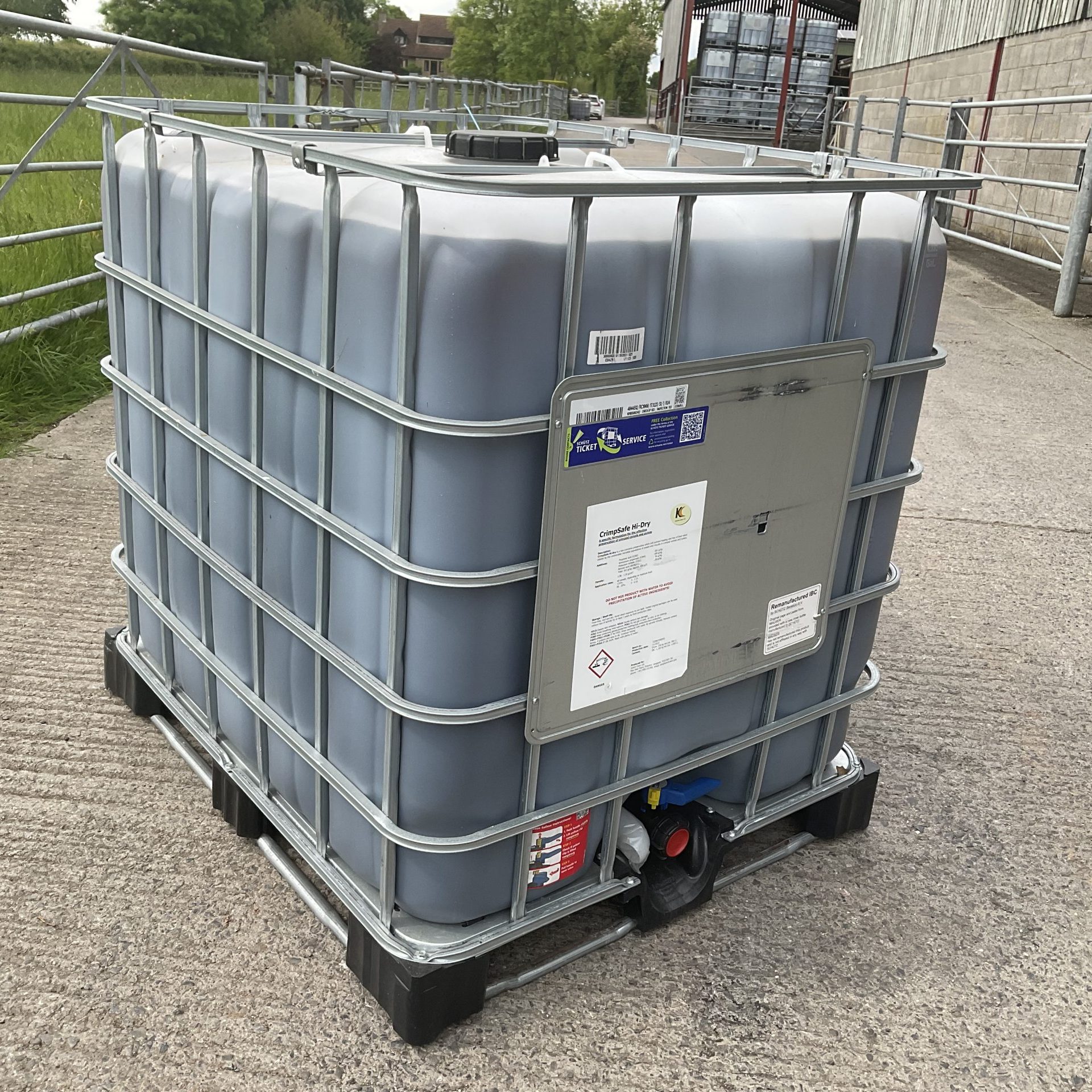
- For crimped grain drier than 30% MC
- Will flow through hoppers
- Can be clamped outside
BaleSafe

- Hay, haylage & straw preservative
- For wrapped haylage 50-75% DM
- For hay up to 25% MC