
A new feed on the block

A new bulk feed co-product could soon be available to UK farmers, thanks to innovative R&D by several companies, including Kelvin Cave, a British engineering company and an international waste, water and energy giant. The result will be a nutritionally dense, moist livestock feed.
Using surplus ingredients to help build a circular economy is on many company agendas. But for resource management company Veolia, it is the essence of its business. This global company – headquartered in Paris and with several factory premises in the UK – is deeply committed to recycling food and water alongside generating energy from renewable sources.
The company has been using surplus supermarket bread and turning it into bulk animal feed – so-called ‘bread crumb’ – for many years. This feed has sufficient storage life to be a practicable option on UK farms.
But in line with the Courtauld Commitment, which sets out targets to cut food waste that many organisations internationally have committed to meet, the company seeks to expand its use of supermarket waste. Most recently, this has involved Veolia taking surplus fruit and vegetables and combining them with the bakery products it already uses, with the ambition of turning them into animal feed.
“The issue with fruit and veg is that they have a high moisture content and microbial load, and perish very quickly,” says Matthew Noble, animal feed project manager with Veolia in the UK. “Realistically, feed produced from these ingredients would not last on farm for more than a couple of days.”
Seeking to preserve the product for at least two weeks on-farm, the company approached Kelvin Cave Ltd.

“We wanted to go straight to the experts and find a way of preserving these feeds and would rather use smaller quantities of a better product than apply high volumes,” says Matthew. Working with Dr Horst Auerbach from Germany’s International Silage Consultancy (ISC), the team at Kelvin Cave singled out the product CrimpSafe Hi-Dry as the most likely contender and set about trialling it on the fruit/veg/bread mix.

Horst explains: “We were not trying to achieve a fermentation as, unlike silage, this feed was not going to be kept in anaerobic conditions. Instead, it would be stored in a heap with the aim of keeping it fresh while stored in the presence of air for at least two weeks.”
The preservative CrimpSafe Hi-Dry, whose ingredients include non-corrosive propionic acid, ammonium propionate, potassium sorbate and sodium benzoate, is proven to kill yeast and moulds, which are likely to proliferate on exposure to air.
Creating the relevant conditions in mini feed bunkers, the team trialled five different application rates of the product. Over given times, the feeds were observed for visual spoilage, analysed for microbial contaminants and measured with a temperature probe.
After a matter of days, the control batches (without any treatment) were spoilt and analysed to have high levels of spoilage bacteria as well as yeasts and moulds; their temperatures had also risen significantly, indicating severe microbial activity.
“No one had ever carried out trials on this type of material before, but with its high moisture and microbial content, we knew the risk of spoilage was high,” says Horst.
Samples treated with low levels of preservative showed a similar pattern to untreated samples, but the increase in microbial numbers and temperature was delayed for a few days.
However, samples treated with a higher dose rate remained cool and well preserved for the duration of the trial. This had been planned for completion after 14 days but was continued for a further week, stopping after a total of 21 days.
“By that time, the well-preserved feed was completely unspoilt and retained the same low temperature it had held right through the trial,” says Horst.

From the results, the team arrived at a recommended dose rate of CrimpSafe Hi-Dry which could be used in the factory setting, and installed a preservative applicator (a Silaspray) on the production line in Veolia’s Bolton factory. Software for the Silaspray was modified to communicate with the de-packaging machine and ensure a consistently accurate and even distribution of the preservative on the production line.

Meanwhile, engineers from Gloucestershire company Rowan Food and Biomass Engineering had redeveloped their food unpackaging line and developed extra functions to assist the more complex quality control required for the multiple-ingredient feed product.


“If surplus supermarket food is being turned into an animal feed it must be completely stripped of its packing and devoid of any contaminants,” explains Matthew.
At the time of going to press, fitting at the factory has been completed and commercial production is imminent.
“We expect to supply this feed to dairy and beef producers in particular in artic loads across the north of England,” says Matthew.
“Feeds like this are normally tipped into bays, ideally under cover. And now that we’ve carried out the trials, we are confident the product will be well preserved and ideal for use in total mixed rations.”
Composition of new bulk feed
- Dry Matter – 43-45%
- Metabolisable energy – 13.7-14 MJ/kg DM
- Starch – 49-53%
- Crude protein – 13-14%
- Crude fat – 2.7-4.5%
- Sugar 8-10%
The feed trialled by Kelvin Cave’s consultant in Germany was assessed using wet chemistry and found, on average, to have the above analysis.
All figures expressed in the dry matter.
The analysis suggests the feed will be particularly suitable for use in cattle total mixed rations (TMRs).
You may also be interested in

Is the use of urea or urea-containing additives really the way forward to preserve home-grown high-moisture cereals?
Dr Horst Auerbach, International Silage Consultancy (ISC), Wettin-Löbejünthe considers wether the use of urea or urea-containing additives is really the way forward to preserve home-grown high-moisture cereals?
Learn more
As input costs rise, is it time for a reset?
Rising input costs require a short, medium and long-term strategy if we are to protect and develop profitability.
Learn more
Small steps to tackle hard times ahead
The driest July since 1935, with little rainfall since, has put pressure on grazing and forage stocks, with many farmers already feeding silage intended for winter and later silage crops being lighter than expected. Maize in many areas is also particularly badly affected.
Learn moreCrimpSafe Hi-dry
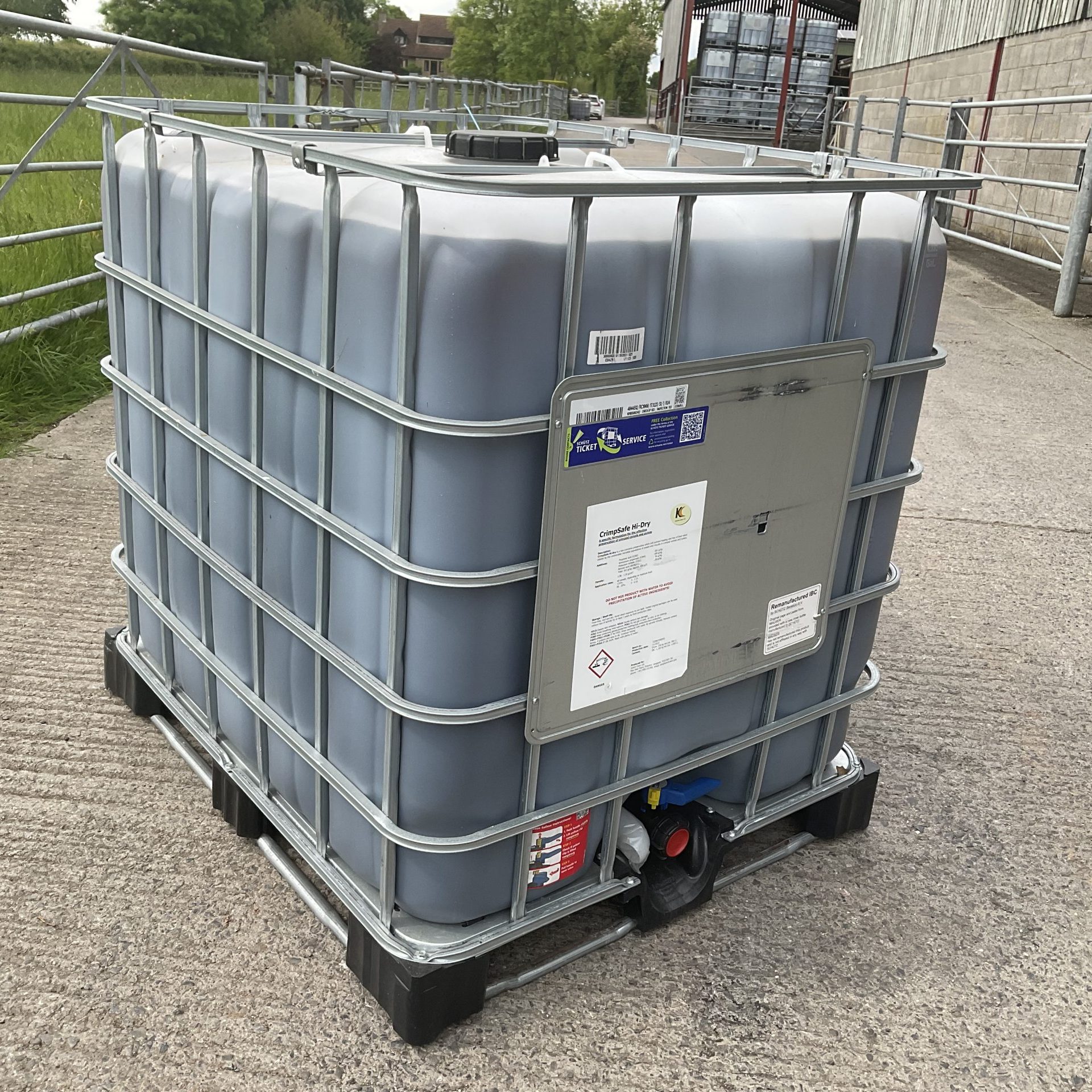
- For crimped grain drier than 30% MC
- Will flow through hoppers
- Can be clamped outside
Silaspray SP Compact

- Applies all acids, salt based preservatives and biological inoculants
- Pump output: 30-500 litres per hour
- Only available from Kelvin Cave Ltd in the UK