
Wagyu on grass silage-based ration boosts financial performance

First buying 87 head in 2022, he had to overcome preconceptions about the breed which he quickly discovered were misplaced.
A total mixed ration was compiled by independent nutritionist, Lizz Clarke, which comprises grass silage, waste potato chips, barley, Vitagold, with minerals and limestone flour.
Silage is treated with Kelvin Cave’s top-of-the-range preservative, Safesil Pro, which is said by Fraser to be essential in maintaining the ration’s quality.
“You can’t finish beef cattle on what I’d call suckler cow silage and Safesil is vital for enhancing our forage quality,” he says. “It allows us to move across a 90-foot-wide silage face with complete confidence that the forage has retained its nutritional value and will remain stable and cool.”
The overall TMR analyses with a metabolisable energy (ME) of 12.6MJ/kg DM, protein at 14.5% and starch at a hefty 34%.
Lizz explains: “The Wagyu have to be fed a high starch diet, ideally through the entire growing and finishing period, to achieve the required marbling.”
This is fed at a rate of 30kg (freshweight) per head, achieving a daily dry matter intake of 12.6kg.
Remaining on the farm from around 18-19 months to 23-25 months and from around 450kg to an average weight of 680kg (heifers and steers), the F1, dairy cross Wagyu kill out at a target average of 52%.
Fraser says he’s very pleased with the outcome for the Wagyu business so far and will continue to bring in stock through Warrendale Wagyu’s integrated supply chain.
He says: “It’s a much more relaxing way of finishing beef than dealing with the turbulence of store cattle prices.
“We pay a fixed price for stores in pence per kilo; the cattle arrive with no transport cost; and there’s no carcase weight limit; no killing charges; and we have a ration put together by Lizz.
“We are paid a base price of £5 per kilo and we find they finish remarkably well. And if we can achieve a high score for marbling we are significantly better off.”
The top marbling score achieved by the farm has been nine and the best-performing animal in the farm’s first batch had a 416kg carcase with a high marbling score.
Fraser says he’s very pleased with the outcome for the Wagyu business so far and will continue to bring in stock through Warrendale Wagyu’s integrated supply chain.
He says: “It’s a much more relaxing way of finishing beef than dealing with the turbulence of store cattle prices. “We pay a fixed price for stores in pence per kilo; the cattle arrive with no transport cost; and there’s no carcase weight limit; no killing charges; and we have a ration put together by Lizz.
“We are paid a base price of £5 per kilo and we find they finish remarkably well. And if we can achieve a high score for marbling we are significantly better off.”

The top marbling score achieved by the farm has been nine and the best-performing animal in the farm’s first batch had a 416kg carcase with a high marbling score.
Request a call back
You may also be interested in

All you need to produce show-stopping silage time after time
All you need to produce show-stopping silage time after time
Learn more
Better silage – better farm
Getting one job right on the farm can sometimes feed into another and so create a virtuous cycle, and this is the happy situation which has been experienced by brothers, Andrew and Mark Watkins, and their parents, Richard and Linda.
Learn more
Bean silage and crimp drive profits in beef
Brothers, Martin and Richard Grix, have found a niche in the beef industry involving finishing cull cows as they leave the suckler herd. But the profitability of the enterprise depends entirely on sourcing cattle well from markets across northern Britain and quickly and cheaply moving animals through the system.
Learn moreRelated products
SilageSafe
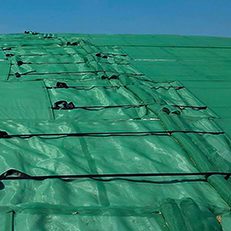
- Integrated tensioning straps
- Eliminates tyres and gravel bags
- Customised to clamp size
CrimpSafe Hi-dry
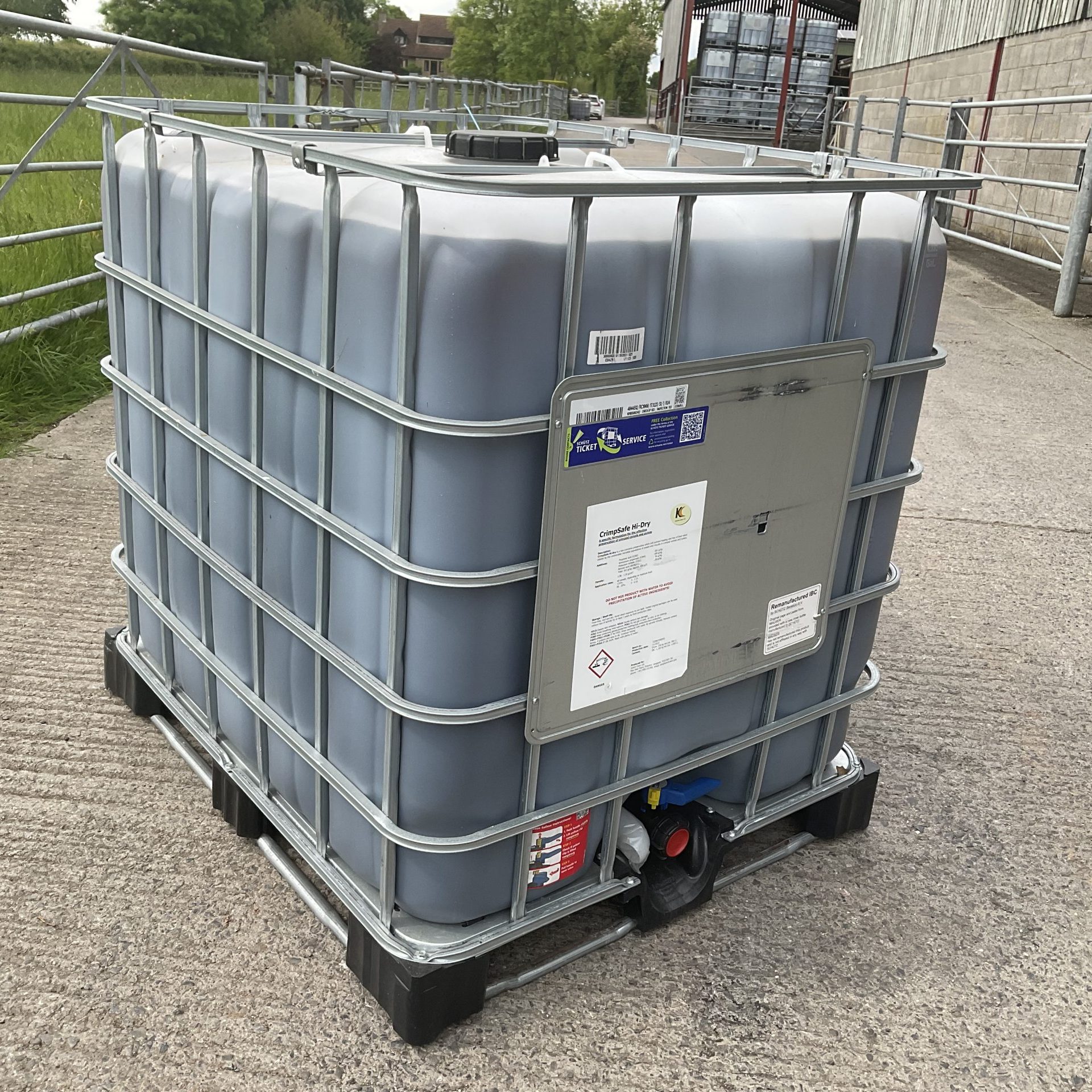
- For crimped grain drier than 30% MC
- Will flow through hoppers
- Can be clamped outside

News
Moisture meters for grain and hay
Moisture meters take the guesswork out of grain and hay preservation.
Learn moreStacking haylage in your favour
Pressure to reduce the use of plastic on bales comes from many directions, with wrap costs climbing, disposal often difficult and expensive, and plastic in fields and hedgerows unsightly and potentially damaging to livestock and wildlife. Its use may even incur a tax in future.
Learn moreBespoke KC frame allows quick switch from silage to grain
The Kelvin Cave workshop manufactures, modifies and refurbishes a range of milling and ancillary equipment, often making bespoke adaptations for specific farm requirements. One farmer in Warwickshire requested a quick-release IBC frame and Silaspray which can be used to apply additive to silage and easily switched to treating grain.
Learn moreA new feed on the block
A new bulk feed co-product could soon be available to UK farmers, thanks to innovative R&D by several companies, including Kelvin Cave, a British engineering company and an international waste, water and energy giant. The result will be a nutritionally dense, moist livestock feed.
Learn more