
Using beans for finishing cuts two-thirds from costs

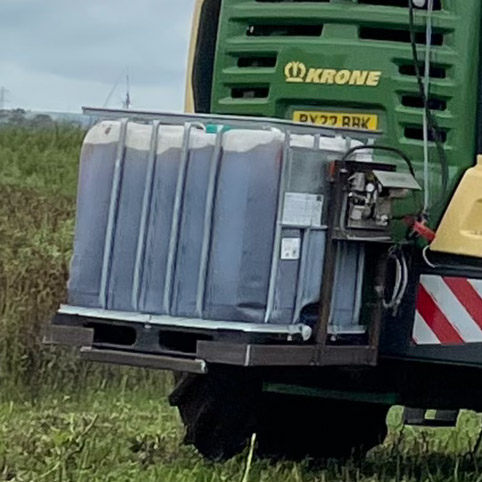
This meant putting extra effort into compaction to achieve anaerobic conditions and treating the wholecrop beans with the salts-based preservative, Safesil Pro, which has been proven to be effective against yeasts, moulds and spoilage bacteria associated with aerobic conditions.
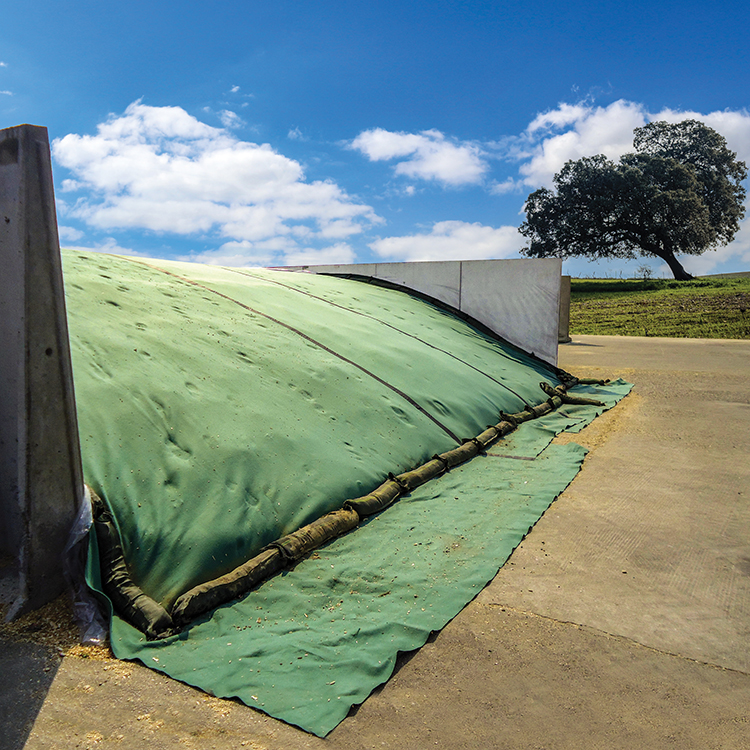
The clamp is also covered with O2 Barrier 2in1, the double layered silage sheet and vacuum combination whose lower layer is sucked down on to the silage surface, quickly creating an airtight seal. On top of this, Clampnet and gravel bags prevent bird damage, while 150-micron side-sheets, prevent the ingress of air through the clamp walls.


Cattle management at East Greenridge has undergone major change over the past 10 years with a switch of suckler cow breed from Limousins x British Blue to Simmental x Luing, which is bred to an Aberdeen Angus bull.
The new system is designed for easier management all round, with the Angus-sired progeny having the ability to fatten without concentrates.
With two defined calving blocks in spring and autumn, stock will be sold throughout the year to provide a regular income.
A total mixed ration is made up of bean and grass silage with minerals and, like the sheep, the cattle are said to be more content on the high forage mix.
“They are not waiting for me to turn up and feed them, as they were when they were on barley and cake,” says Mr Smith.
“We hope this will be the first year that we sell everything fat,” he continues. “We do a mix every other day and it’s absolutely fantastic. It never goes off at all.”

Request a call back
You may also be interested in

Cutting the cost of feeding for robot-milked Jerseys
Home-grown crimped concentrate feed and high-quality silage slash feed costs on Somerset farm.
Dairy farmer, Laurence Wadman, continually strives to make more milk from home-grown feeds on his family’s Somerset farm.
Learn more
Don’t delay harvest in maize thats under stress
Growers who are suffering with dead or dying maize crops have been advised to harvest the crop at the earliest opportunity. Waiting for a later harvest in the hope of higher yields and more starch is likely to be counterproductive.
Learn more
Ditching the plastic wrap
Kelvin Cave Ltd has been informed that plastic manufacturers are expecting significant price rises which are likely to affect the cost of bale wrap this season.
This highlights the benefits of treating moist hay and haylage with a preservative, which, at many moisture contents, can be used instead of plastic wrap.
Learn moreRelated products

News
Moisture meters for grain and hay
Moisture meters take the guesswork out of grain and hay preservation.
Learn moreStacking haylage in your favour
Pressure to reduce the use of plastic on bales comes from many directions, with wrap costs climbing, disposal often difficult and expensive, and plastic in fields and hedgerows unsightly and potentially damaging to livestock and wildlife. Its use may even incur a tax in future.
Learn moreBespoke KC frame allows quick switch from silage to grain
The Kelvin Cave workshop manufactures, modifies and refurbishes a range of milling and ancillary equipment, often making bespoke adaptations for specific farm requirements. One farmer in Warwickshire requested a quick-release IBC frame and Silaspray which can be used to apply additive to silage and easily switched to treating grain.
Learn moreA new feed on the block
A new bulk feed co-product could soon be available to UK farmers, thanks to innovative R&D by several companies, including Kelvin Cave, a British engineering company and an international waste, water and energy giant. The result will be a nutritionally dense, moist livestock feed.
Learn more