
Treating the customer as king has built thriving feed trade

Adding value has been a mantra at Foxberry Farm in North Yorks for at least 20 years, since Phil Metcalfe’s father first took an order for four tonnes of rolled barley from a local livestock producer.
Since that time, treating the customer as king has helped grow this farm-to-farm trade to around 800 tonnes of rolled barley and 200 tonnes of beans every year.
Much of this is grown on the family’s 191 hectare (472 acre) arable holding but ingredients are also purchased to achieve year-round continuity of supply and to ensure a variety of blends can be made.
Other demands assiduously met are for high nutritional quality, a good look and feel for ease of handling and a lack of dust for the benefit of the farm worker, Richard Birkbeck, as well as for customers and stock.
“The customer is king, and when I’m approached I explain what we can do, and tailor that closely to each customer’s needs,” says Phil.
This may be for 20% moisture Propcorn NC-treated barley; for a mineral-enriched pre-mix; or for a high protein blend, amongst the many products he can create. As well as producing these with the farm’s own barley and beans, some local co-products from the biofuel industry are used.
“People are becoming much more switched on to the benefits of home-grown protein, and that falls into my court, as we can put more beans into the mix,” he says.
This means he plans to increase the farm’s acreage of beans – currently just over 50 acres (20.6ha) – if the constraints of wet weather don’t limit planting, as they have done this season.
Machinery updates
While Phil has consistently striven for excellence since the outset, other aspects of production – in particular the equipment used to create his livestock feeds – have changed beyond recognition.
“The mill we had when we received our first order was already old, and took the best part of a day to roll our first four tonne order,” he recalls.
“My father then built a higher capacity mill, and with that, we were able to grow the business by word of mouth.”
The next mill moved the trade further forward, with its ability to process around five tonnes an hour, but as beans became more important, its limitations began to show.
The decision has therefore recently been taken to invest in a Korte 700 from Kelvin Cave Ltd. This was supplied through Paul Bellas at AgriSource Machinery, Phil’s local dealership.
“We wanted to make sure a new mill would be up to the job so last year, we hired the same machine – a Korte 700 – from a neighbour and our contractor also used his Korte 1400 on the farm,” says Phil.
With their hardened, 2mm fluted rollers he could immediately see these mills were more aggressive, and much better at grabbing and holding the material than anything he’d used before.
“Because AgriSource is actually based on our farm, I see a lot of machines coming through and the build quality of the Korte and Murska [both supplied by Kelvin Cave Ltd] is far superior to anything else I have seen,” he says.
“There are cheaper alternatives but they probably do not match up in terms of spec, and Kelvin Cave and AgriSource came up with a competitive price,” he says.
The Korte 700 came with bespoke adaptations to meet the farm’s needs which were carried out in Kelvin Cave Ltd’s Somerset workshop. These included a separate protein hopper for beans and other ingredients; a long mixing auger to give a consistent product, even when cereals are moist; an IBC carrier for the accurate addition of molasses; removable side panels on the elevator to facilitate cleaning; space for a mineral hopper if required; and room for the farm’s existing SilaSpray applicator, so PropCorn NC or other preservatives can be applied.
Preferring to sell feeds at 18-20% moisture preserved with PropCorn NC when possible, he says the alternative of drying grain from 20% to 15% moisture for dry storage not only costs around £12 per tonne in kerosene, but loses 12kg of water per percentage point, equating to 60kg in lost weight per tonne.
High throughput
With the new machine, Phil expects to comfortably process 15 tonnes per hour, although the mill’s specification is higher.
Foxberry Farm Facts
- Arable farm in North Yorks operated by Phil
plus one full-time staff member - 191ha (472 acres) including 170ha (420 acres) of arable
- Farm-to-farm livestock feed business based
largely on barley (40ha/99 acres) and beans
(20.6ha/51acres) - 800 tonnes of rolled barley and 200 tonnes
of beans processed/year including bought-in ingredients - Rations and blends processed in Korte 700
mill-and-mix, with bespoke adaptations - Treatments include PropCorn NC to preserve
approx 20% moisture grains and pulses and
ProFlake NC to temper, rehydrate and
suppress dust in dry samples - Wheat, oilseed rape, and potatoes are also grown
on the farm
“It’s also far superior in terms of dust suppression and easily handles both dry and 20% moisture grain,” he adds.
With complete confidence that his rations are consistently mixed and of high quality, he says more and more livestock producers are latching on to the quality and performance of home-grown rations.
He also cites the agronomic benefits of beans, including an early entry into winter wheat after winter beans, which are harvested around a week after wheat, while spring beans come off the field around three weeks later.
“Beans also lift the nitrogen index of the soil for the following crop and leave a nice friable tilth,” he says. “This is assessed with an in-field crop sensor, and we put about 15kg per hectare less nitrogen on the following spring.”

The bottom line
The system Phil and his father before him have developed is categorically proving itself on the farm’s bottom line. As a member of an AHDB benchmarking group, and now also on a steering group for AHDB monitor farms, Phil is closely involved in farm-to-farm comparisons.
He says his livestock feed business makes good margins and net profit, and he is happy with his position within the benchmarking group.
“I am not number one, but our farm is not big, which means I can’t dilute my fixed costs as much as some,” he says.
His excellent performance has also been recognised by Farmers Weekly, when he was one of three finalists for Arable Farmer of the Year in 2022.
Phil also feels he has carved out a system which perfectly suits his personal situation as well as his geographical location.
Diagnosed with multiple sclerosis (MS) in 2010, he needed to create enterprises which reduced his hands-on work, and he sees positive benefits of taking a more office-based role.
“This means I tend to scrutinise each part of the business more closely, and, because of the added value in livestock feed, I know this enterprise stacks up well,” he says.
The geography also works in Phil’s favour as his farm’s Tees Valley location is sandwiched between the Pennines, the Dales and the North Yorkshire
Moors where there are plenty of farmers needing livestock feed.
The icing on the cake comes from the exchange of straw for manure from some of his nearby customers. This brings structure and nutrition to the farm’s soils and neatly completes the nutrient cycle.
Request a call back
You may also be interested in

Propcorn NC beans cut out bought-in protein
William Maughan has made a saving of well over £130 per tonne by switching from bought-in to home-grown protein and now says Propcorn NC-treated beans will remain a mainstay of his beef ration.
Learn more
New Murska 4000 – The worlds biggest grain crimper
Boasting an impressive output of up to 80 tonnes/hour, the latest addition to the Murska/Korte stable of crimpers delivers the performance requirements of large-scale farming operations, including contractors and animal-feed blending plants.
Learn more
Arable farmer ditches combine in favour of forage
A Yorkshire farmer has turned a difficult situation following this summer’s drought to everyone’s advantage in a move which could be replicated across the country to help alleviate the forage crisis.
Learn moreRelated Products
Murska 700HD
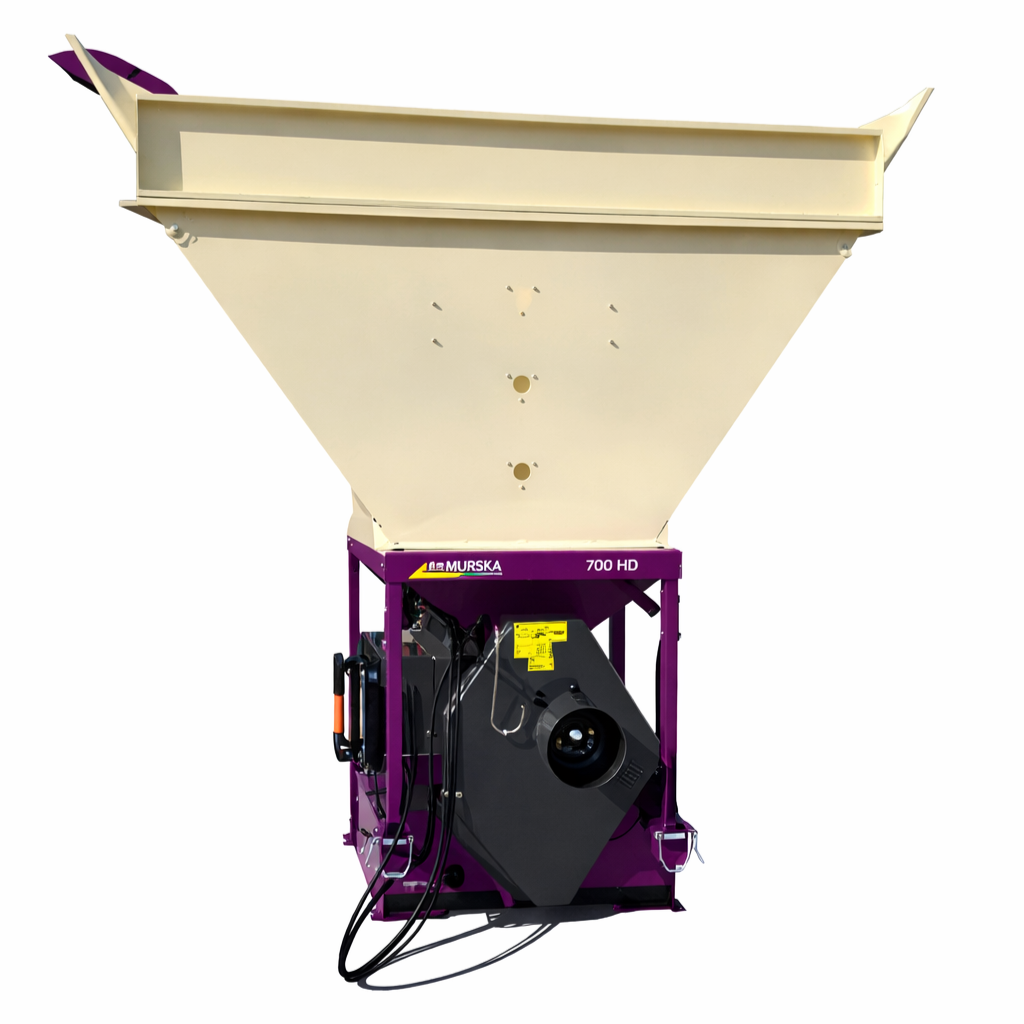
- Output 10-16 tonnes/hour
- 2mm fluted rollers process all cereal and pulses down to 45% moisture
- 3m chain and flight discharge elevator

Murska 1000HD
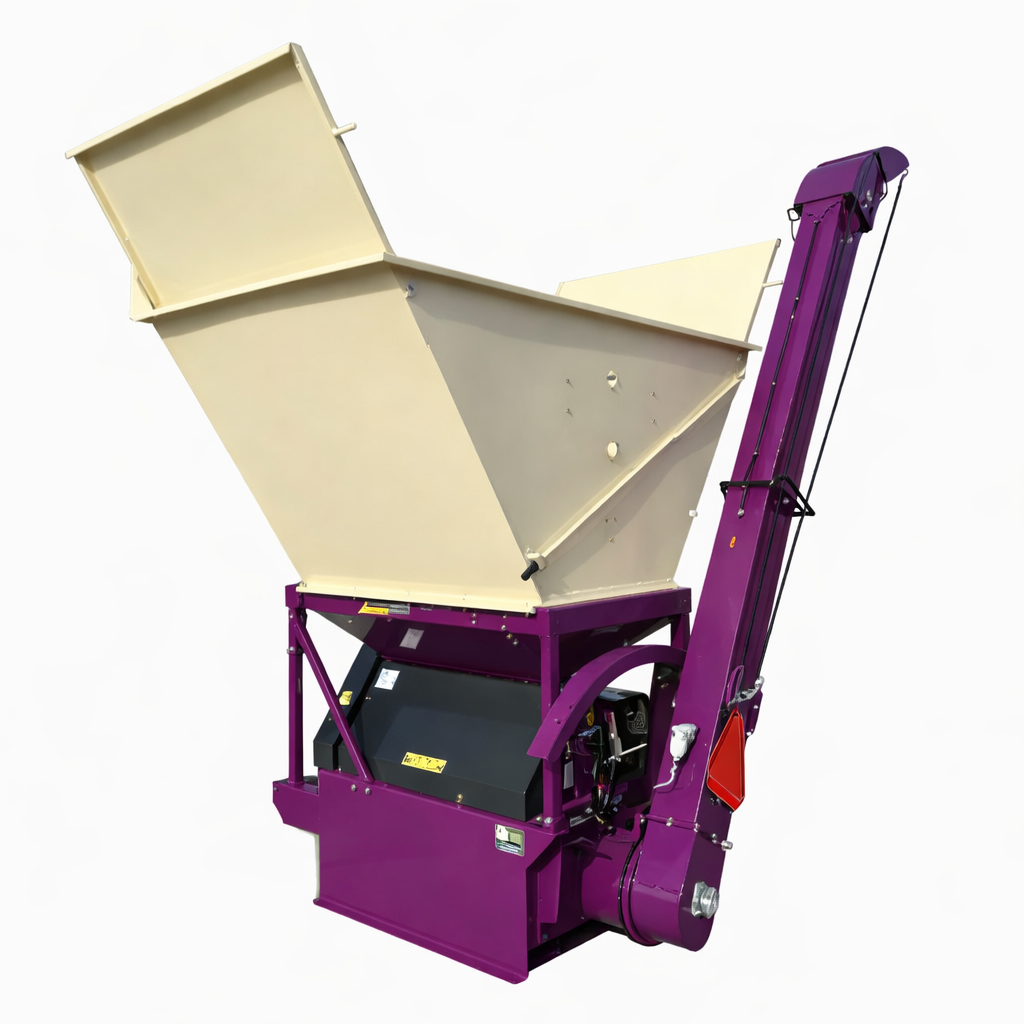
- Output 15-20 tonnes/hour
- 2mm fluted rollers process all cereal and pulses down to 45% moisture
- 3m chain and flight discharge elevator