
Six Tips for silage survival in a changing climate

The changing climate demands adaptations to our silage-making practices. Silage specialist, Dr Dave Davies of Silage Solutions Ltd, provides his tips for silage survival, and says above all, be flexible.
Recent years have seen weather records tumble. Four of the five wettest years on record have occurred this century; 2021 had the highest March temperature on record; the next month had the coldest April temperature for 40 years and July 2022 was England’s driest since 2011.
This is to name but a few. The only consistency is the inconsistency of our growing and ensiling seasons. So, what can we do to stack the cards in favour of making consistent, high-quality silage no matter what the weather throws at us.
1. Be flexible
First and foremorel is flexibility- think outside the traditional silo! Some practices, I believe are here to stay, including the multi- or opti-cut systems, which plan harvest around the stage of growth and not the calendar. These approaches – which harvest the grass before seedhead emergence and before stem elongation – enable high quality silage to be made with lower risks. That’s because not only are there more cuts in the season, but each cut is lower in yield, so can be mown, wilted and picked up quicker. This results in lower field losses and higher quality silage, and the weather risk is spread over a greater number of harvests.
2. Consider double-cropping
Alongside this, we need to consider what other crops fit into our rotations, especially within any cultivated land on the farm. The use of rye as an autumn-sown crop after maize is one such example. Rye is able to establish and grow through the autumn and winter months, especially given our much milder winters. This allows harvesting as a green crop very early in the spring before another crop of maize is planted. This type of double-cropping enables better use of land, but it also reduces run-off, and the potential loss of soil nutrients from bare land over the winter.
However, to make a high-quality silage for ruminants, the rye must be cut before stem emergence from the sheath and flowering. This can give a silage with a D value of 75%, metabolisable energy of 11.5–12MJ/kg dry matter and a crude protein of 16-18%. As such, this makes a perfect replacement for grass silage which may have been challenged by the weather conditions – whether through summer droughts or excessive rain and flooding.
In addition, if the conditions turn against sowing a follow-on crop, cutting at the very early stage of growth will enable the rye to re-grow and allow a second cut of rye to be taken. Such a second crop could again be taken at the very early green stage, or left as a more traditional wholecrop, or even combined and crimped.
Rye is not the only crop with which to take this approach, as any of the cereals could be taken as a green, ‘grass-like crop’, through to wholecrop or combining and crimping. However, it’s important to remember, if you go down the wholecrop route, that it is 70% straw and has a maximum D value of 50%. So, only small amounts should be used in milking cow or beef finishing rations, to avoid compromising intake and production targets.
3. Choose deep-rooting crops
If drought is a regular occurrence, deeper rooting crops such as red clover, lucerne and even multispecies swards can all be considered. These will be more resilient during periods of water shortage and provide better yields than grass alone. However, like grass, they need frequent cutting – before flower emergence in the legumes and before seedhead emergence and stem growth in the multispecies herbal leys.
Multi-species swards also benefit from frequent cutting, at around five weeks of regrowth.
If these types of forage aren’t your bag, then it’s still worth reconsidering the grass cultivars and species you are growing. For instance, festuloliums (fescue/ ryegrass hybrids), offer the production of a ryegrass with the robustness of the fescue. They too are deeper rooting, allowing better growth during droughts and, interestingly, better survival during flooding. Their deeper roots are also likely to reduce soil erosion and run-off during flood events.
4. Reconsider the timing of harvest
Crop maturity has a huge bearing on forage quality, so I’m a big advocate of going for it if the crop is almost ready and the weather is good but expected to change. A lower yield of higher quality grass in the clamp is worth far more than a big yield of stemmy stuff with less meat or milk production potential.
In addition, if grass is suffering from drought, then harvest it! As soon as the rain comes a cut sward will recover much quicker than that sward you waited to bulk up, as the drought-stricken, bulky sward requires much more water to rehydrate and start to grow than an aftermath.
The maturity of maize requires similar consideration, as if the crop is heat- or drought-stressed and beginning to die, but has not reached the cob development you would like, the chances of it ever reaching the starch content you wanted are small. So again, you’d be better off getting it into the clamp than having a dead crop with low fibre digestibility and a poor starch content. Getting it in early also enables you to get on and establish another crop to fill that forage gap.
I’d advise keeping a watching brief and monitoring maize maturity. Many maize crops appear very green, but investigating the cob will often show it is further developed than a cursory look over the hedge may suggest. Often, harvesting maize a week or 10 days early means the crop is in the clamp in September rather than deteriorating in the field at the end of October because the ground was flooded and too wet to traverse.
5. Adjust chop-length
When being adaptable, it is important to focus attention on the detail of silage making, and chop length should be altered, depending on dry matter and quality. These guidelines are there for a reason, as optimum compaction reduces aerobic spoilage losses, whilst ensuring the clamp doesn’t slip. For a grass of high D value and a dry matter of less than 28%, a 10-12cm chop length is not too long. Conversely, a grass at over 35% DM should be chopped to a 2cm length.
6. Be aware of changing mycotoxins
Mycotoxins such as penicillic acid, roquefortine C and mycophenolic acid would traditionally be associated with aerobic spoilage and heating in the silage clamp. As such, they are designated ‘storage-formed’ mycotoxins. However, some of these penicillium mycotoxins are now being found in silages that are very well managed, with no hint of mould growth or heating. We scientists are still working on the source of these mycotoxins, which are an enigma. We wouldn’t expect them to have been formed in the field, where different mycotoxins result from fungal plant pathogen growth. But it’s possible they could originate on dead material in the swards. Either way, I have no doubt science will, over the coming years, determine the most likely source. But for now, I’d recommend keeping an eye out for unexpected poor performance.
Using the approaches I’ve outlined will give more flexibility in producing home-grown feeds, and help address emerging challenges. I hope this year’s harvest is easier than the last few, and if not, I hope some of these options will help improve the outcome.
You may also be interested in

Adding value to your grass silage
It will not be long before we hear the familiar sound of the forage harvesters in the fields gathering in the grass to ensile for this year’s winter feed. Love it or hate it, it’s a major part of the farming year and the basal feed for many farmers, but do we give it enough attention to get the most out of this valuable product?
Learn more
Better silage – better farm
Getting one job right on the farm can sometimes feed into another and so create a virtuous cycle, and this is the happy situation which has been experienced by brothers, Andrew and Mark Watkins, and their parents, Richard and Linda.
Learn moreCan we fix it? Yes, We Can!
Tin, and these days aluminium cans have been used to package and preserve foodstuffs for more than 200 years. And while we don’t advocate canning silage crops, the time, effort and expense of growing them can amount to little if losses then occur in the clamp due to inadequate preservation, insufficient and uneven compaction or poor protection from air ingress, the weather and vermin.
Learn moreRelated products
SilaPactor: Silage Compactor

- Increase DM density by up to 40%
- Up to 6 tonnes
- Speeds up silage compaction almost four-fold

SilageSafe
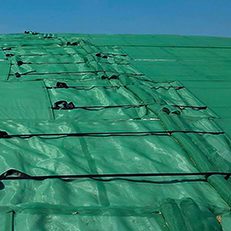
- Integrated tensioning straps
- Eliminates tyres and gravel bags
- Customised to clamp size