
SilaPactor: the ‘in thing’ in Devon for Silage Compaction

Across the green and verdant land of Devon – arguably the best grass-growing county of England – the trusty SilaPactor, Kelvin Cave’s silage compactor, is truly having its moment. So much so, that Matthew Alford – agronomist by day and owner of a newly fledged hire company in his spare time – has bought six of these mighty machines in under two years.
And for those who wonder why anyone would need quite so many of these forage-compacting heavyweights, he says he needs even more! Keeping up with demand has been a problem from the outset, and he expects to buy at least one more machine in 2024.
Matthew first saw the silage compactor at The Royal Welsh Show in July 2022, sounded out a contractor and a farmer he knew ‘liked to do the silage job right’, and bought the implement on the spot.
The first to hire the machine from the newly dubbed MPA Hire were father and son dairy farmers, Andrew and Ryan Sanders.
And from the moment the implement arrived on their farm – compacting their summer cuts of grass silage as well as maize – Ryan started to share posts on social media.
“We tried it and found that it did actually work,” says Andrew. “Before we knew it, it had become the ‘in thing’.”
Opening clamps was a milestone which reinforced the reputation the machine was building, and, as Ryan recalls: “I opened the first pit and saw there was absolutely no mould or spoilage, so we’ve used it ever since.”
Continuing to post on social media, he says: “People could see how much more silage there was in the clamp; how densely it was packed; and that there was no heating or waste.”
Matthew acted fast to keep up with demand, hiring to farmers for £125 per day, with multi-day discounts, and adding to his SilaPactor fleet.
“I rang Kelvin and said I’d better have another one tomorrow,” he recalls.
Word continued to spread, and Matthew’s network of customers advanced across Devon and into Somerset and Cornwall, including farmers, contractors and AD plant operators, and by the end of the difficult 2023 season, he was running six machines. This included one 2.1 metre/2.5-2.7 tonne machine for smaller clamps, the remainder being 3 metres and 3.8-4.0 tonnes.
Supplying trailers on which to transport his machines, farmers seemed happy to organise pickup and collection.
Explaining the numbers by the growth of multi-cut systems, he says: “It’s not like years ago when you stopped grass and started maize. Now there’s a lot of overlap.”
And while Matthew continued to service his happy customers, he felt increasingly confident in his investment and that the machines would stay the course.
“It’s a good piece of hire equipment because, as long as it’s greased, there’s not much to go wrong,” he says.
As he contemplates more for 2024, he admits: “Ultimately, I may end up with one too many but I don’t want to have to say ‘no’!”

About SilaPactor
The SilaPactor provides heavyweight compaction of any clamped forage, where the exclusion of air is important. It does this with far greater speed and efficiency, and with less fuel use, than a tractor doing the same job. In fact, tractors are designed to avoid compaction, so are really not fit for this use!
Weighing from 2.5 to 6 tonnes at widths of 2.1 to 4 metres, it rolls tight to the sides and corners of the clamp. This makes the job much easier, and results in improved silage quality in these vulnerable areas.
Just like all forage compaction, it should be done in layers of up to 25cm, on a long, low ramp. This should be done from the start of clamp filling, in order to maximise the implement’s benefits and help avoid slippage at feedout.
In fact, this silage compactor has been demonstrated to increase dry matter density by up to 40% when compared to conventional tractor rolling. That’s an impressive 40% more feed that can be stored in the same clamp, helping to save valuable space.
Removing air from the forage is key to the implement’s success as this removes the breeding ground that spoilage aerobic bacteria, yeasts and moulds need to survive. It also creates the favourable anaerobic conditions essential for good fermentation.
Independent trials have shown that the better the compaction the lower the losses due to poor fermentation. A well-compacted silage face can also be cut out more easily and is more stable because air cannot penetrate as far into the silage mass.
These improved levels of compaction result in higher nutrient retention, better fermentation and utilisation of clamp space, and lower fuel consumption, making a considerable saving in overall feed costs.
Andrew and Ryan Sanders
Father and son, Andrew and Ryan Sanders milk 600 Holsteins at Castle Hill Barton near Barnstaple, Devon, and, as Matthew Alford’s first SilaPactor customers, they set the ball rolling.
Producing an average of 11,000 litres at 4.2% fat and 3.3% protein (3x), the forage in their herd’s ration has to be top quality and Ryan’s friends on social media were keen to see the results from the compactor.
Using contractors for raking and foraging, the Sanders mow, cart and do the clamp work themselves, either of them, at times, using the SilaPactor.
“The person on the SilaPactor is quite confident on the clamp,” says Ryan. “It feels more stable than just driving a tractor. And with a tractor, you are just moving about a foot at a time. With the SilaPactor, it’s three metres each time so it’s much quicker. It uses less fuel, and if you put the buckrake on the front too, it saves even more.”

The complete absence of waste is also a big attraction, especially on a farm spanning 1,100 acres in total and making around 6,000 tonnes of grass silage and a similar tonnage of forage maize each year.
“If you are wasting six inches on the to of the clamp, that’s a lot of tonnes,” says Andrew. “It soon adds up, and at £30-£40 per tonne, that could easily be £3,000 to £5,000 wasted on a farm like ours.”
Remarking that it’s easy to tell from the tightly-packed clamp which has been compacted with the machine, Andrew says it helps with their shortage of clamp space.
“This is especially noticeable on the maize, where it’s made a huge difference,” he says.
“We always had heating in the past, and some years, we’ve had to tip some from another farm in our yard, where it sits for three or four days.
“There was always a lot of heating then, but now there’s nothing,” he says, remarking that they’ve also switched to the preservative, Safesil Pro, on all their maize silage.
The message from Castle Hill Barton has spread by social media across the region and it was this, above all, which fuelled the growth of MPA Hire.
“We would have definitely bought a SilaPactor if Matthew hadn’t, but now he has six, it’s never very far to go and pick one up,” says Ryan.
Ricki Stevens of RAS Contracting
Contractor, Ricki Stevens, says more and more of his customers are using a SilaPactor and for many, he’s now taking it on farm as a routine.
“You just get so much more grass in the pit,” he says. “And, of course, there’s the better quality of silage.”
Running two Claas self-propelled foragers and six tractors, from his mid-Devon base, he says: “Without the SilaPactor, the next load of grass comes before you’ve compacted; with it, you’ve compacted before the next load.”
Hiring his compactors from Matthew Alford of MPA Hire, he says he uses the 3-metre version on a 200-horsepower tractor, or will increase the tractor spec to 270HP if he’s using a buck rake on the same machine.
“We find we can roll against the walls and into the corners much better with the SilaPactor, which seems to anchor you to the pit,” he adds.
Recalling his first visit to a customer’s farm, he says: “When we got to the farm, the pit was already half full. But once we started using the compactor, it even went down, and didn’t rise for three or four hours!”
Comparing the machine to a tractor alone, he says: “To compact wheel-to-wheel with the tractor, you need to drive up and back about 30 times. With the compactor, it would take around eight passes.”
Praising the SilaPactor’s running costs, he says: “There are no running costs to speak of. You can’t have a puncture or a breakdown. I think it will go on for years.”
David Luxton
David Luxton had considered using a compactor on his silage for many years, but only when Matthew Alford acquired his SilaPactors did he eventually take the plunge.
Milking 200 cows through three robots on an AHDB strategic dairy farm near Bradworthy, on the border of Devon and Cornwall, he describes the machine he hired as ‘an absolutely brilliant piece of kit’.
Benefiting, as expected, from the extra compaction and virtual exclusion of air the machine can achieve, it has been the extra speed of compacting silage that he’s also found he values.
“In this day and age, self-propelled foragers send grass into the clamp so quickly that the buck rake man gets quickly snowed under, so this really helps to speed up the process,” he says.
Using the machine on five cuts of silage since he first started, means he needs the machine for five days a year.
“Silage is expensive to make, so the cost of hiring the SilaPactor for five days is nominal,” he says.
You may also be interested in

Making a proper job of silage in Devon
For Devon beef producer, Matt Widdicombe (pictured above), high quality silage is the lifeblood of his business. It’s made with strict adherence to good practice – two vehicles for compaction, good silage sheeting (both high grade side sheeting and oxygen impermeable dual top sheeting) and top-of the-range preservative, Safesil Pro.
Learn more
SilaPactor: A Cut Above the rest for silage clamp compaction
Thanks to ACA Contracting (A Cut Above) in South Africa for sharing this video of one of the two, 3m SilaPactors recently purchased from us.
Learn more
A trailer for an epic success: SilaPactor
Kelvin Cave have developed this simple yet sturdy SilaPactor transport trailer for the growing number of farmers keen to benefit from using the SilaPactor and for the contractors who often travel many miles between farms.
Learn moreRelated Products
SilaPactor: Silage Compactor

- Increase DM density by up to 40%
- Up to 6 tonnes
- Speeds up silage compaction almost four-fold
SilageSafe
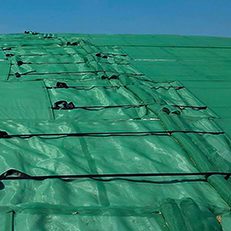
- Integrated tensioning straps
- Eliminates tyres and gravel bags
- Customised to clamp size
Silaspray SP Compact
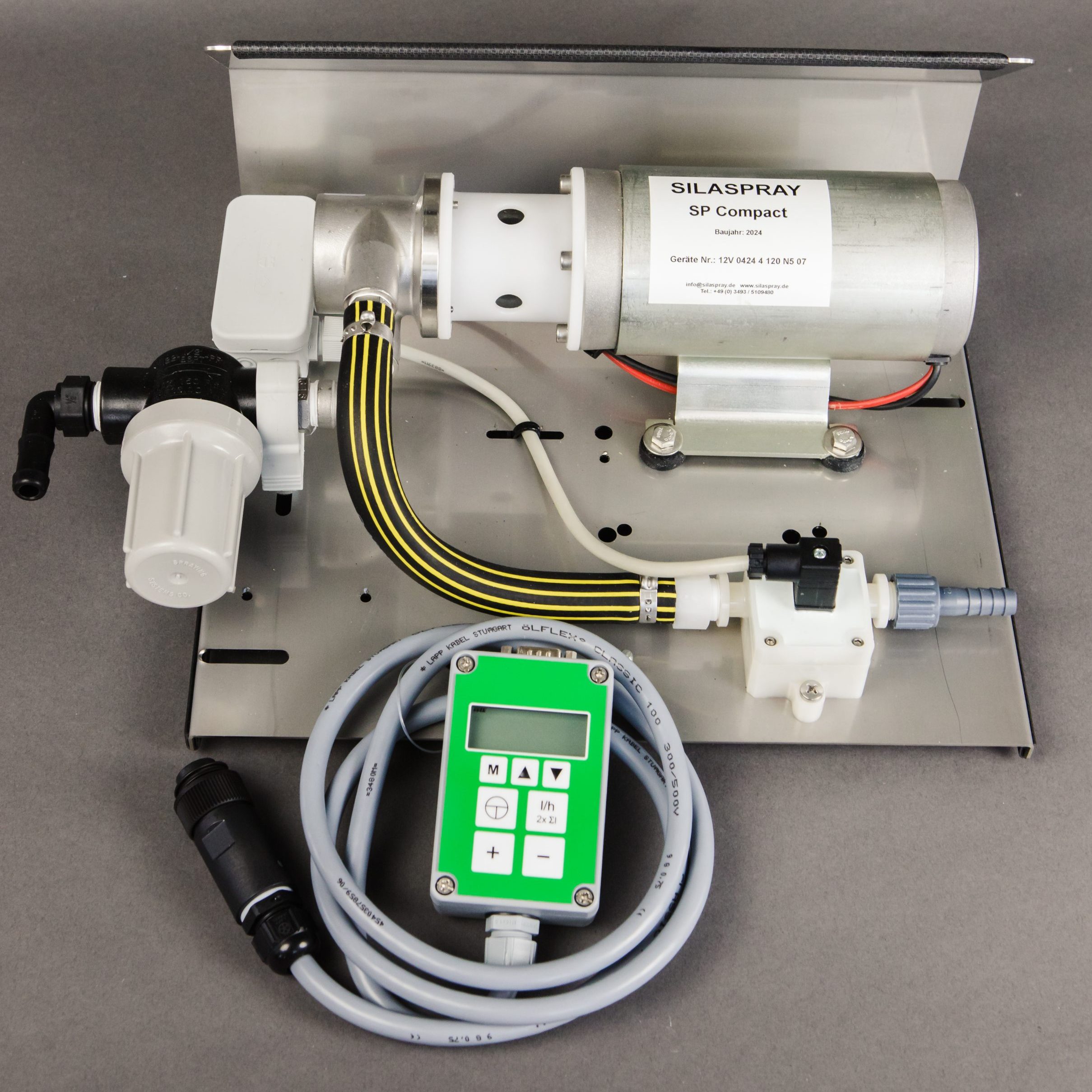
- Applies all acids, salt based preservatives and biological inoculants
- Pump output: 30-500 litres per hour
- Only available from Kelvin Cave Ltd in the UK