
Silage Inoculants Upgraded

For our many organic customers, and those who prefer not to use the power of feed silage preservatives we have upgraded our range of silage inoculants.
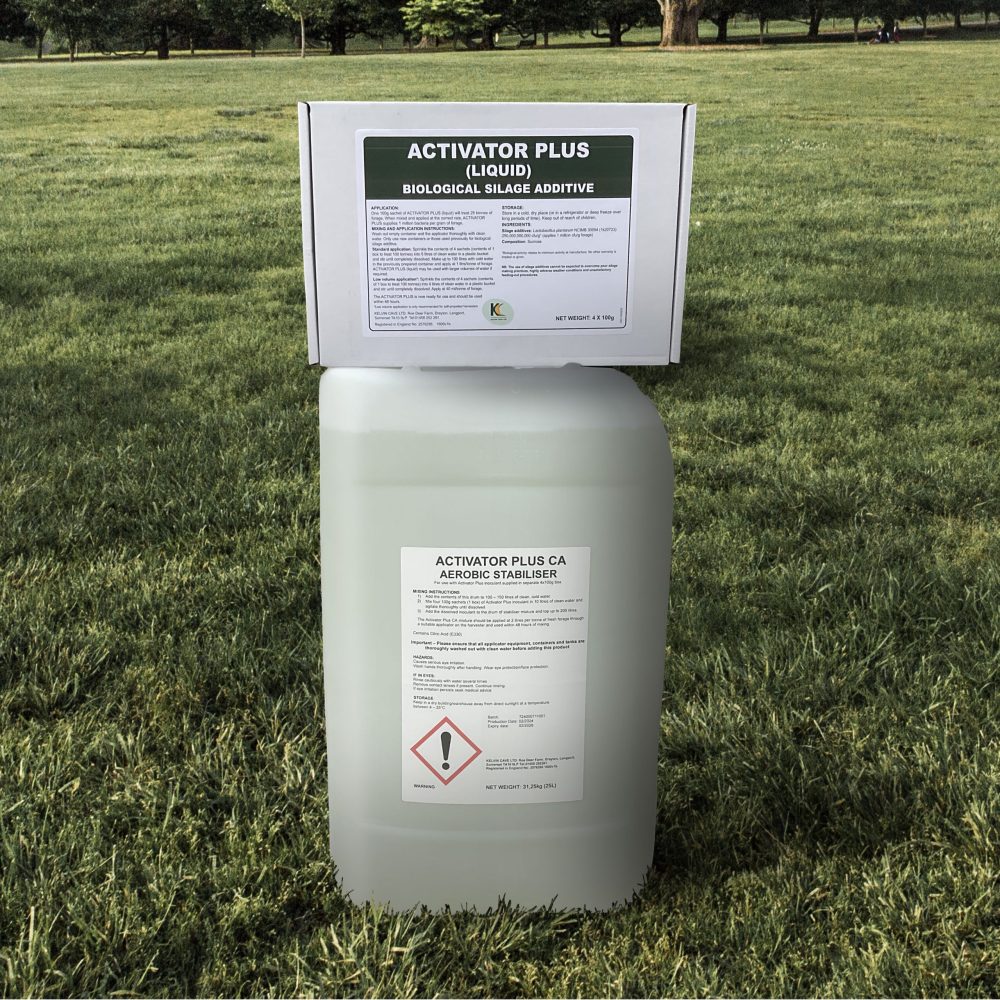
Activator Plus uses an elite strain of Lactobacillus plantarum to speed-up the lactic fermentation of grass, grass/clover and lucerne silage harvested below 28% dry matter (DM).
When used at the recommended rate, Activator Plus supplies 1,000,000 bacteria per gram of forage.
Independent trials (IBERS 2009) have shown that the rapid pH decline achieved will preserve more of the dry matter (fermentation losses reduced to less than half those of an untreated control) and true protein in the forage, and increase palatability. This results in improved intakes and significant improvements in milk yield and quality* in the dairy herd and daily liveweight gain increases in beef cattle.**
*Wye College; **ADAS Liscombe
Summary of Wye College Dairy Trial
Activator + CA
Activator + CA is ideal for use on higher DM grass silages (28%DM+), wholecrop cereal and arable silages, maize silage and crimped cereals. Yeasts, which are present on the crop at harvest and are the micro-organisms that initiate aerobic spoilage, are frequently a problem on these higher DM crops and cause significant loss of nutrient value. As they grow they consume lactic acid and sugars, raising the pH of the silage to a point where moulds can grow. These cause further losses and increase the risk of raised mycotoxin levels which can have a further, deleterious effect on animal performance and fertility.


Combining all the improved fermentation and animal performance benefits of Activator Plus with a specific citrate as an additional food source for the Lactobacillus plantarum, the citrate is converted to the powerful yeast-inhibiting compounds acetic acid and diacetyl (fig.2). Activator + CA can more than double the time that the silage remains aerobically stable (fig.1), thereby reducing feedout losses and expensive waste.
You may also be interested in

As input costs rise, is it time for a reset?
Rising input costs require a short, medium and long-term strategy if we are to protect and develop profitability.
Learn more
Cold, dry spring calls for extra care with first cut silage
Grassland farmers have been advised that it’s particularly important to analyse their grass before taking first cut silage this year.
The unusually long, cold, dry spell through spring could have several effects, which means grass composition is more unpredictable than in a typical year.
Learn more
Extra care advised for this year’s first cut silage
Forage experts have warned that weather conditions over recent weeks could bring multiple challenges to silage-making which may need to be addressed this spring. Left unchecked, these could not only seriously reduce silage quality but may also generate gases in silage which endanger human and animal health.
Learn moreRelated products
Activator +

- Contains lactobacillus plantarum
- Supplies 1,000,000 bacteria per gram of forage
- Suitable for organic farmers
BaleSafe

- Hay, haylage & straw preservative
- For wrapped haylage 50-75% DM
- For hay up to 25% MC