No waste on Ship-Shape Scottish Farm

A Scottish dairy producer has lifted yields by 1,000 litres and seen milk from forage peak at 5,000 litres by radically improving his grass and wholecrop silage.
Ayrshire farmer and contractor, Tom Smith, has always been keen to avoid waste on his dairy and arable farm. Milking 260 Holsteins, rearing store cattle and growing around 190 acres (77ha) of cereals, everything reeks of cleanliness and quality across the 680-acre (275ha) business he tends.
A herd average yield of 10,300kg with outstanding solids of 4.51% fat and 3.48% ptn (305d, 2x) is mirrored by a rolling somatic cell count of 73,000 cells/ml and a Bactoscan of 8.9.
Bottoms Farm Facts
- 260 Holsteins, store cattle and 680 acres (275ha)
- Ave milk yield 10,300kg, 4.51% fat and 3.48% ptn (305d, 2x)
- Multicut grass silage now cut from 8 May
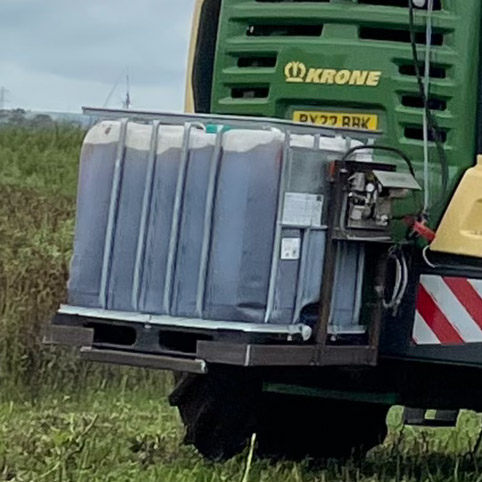
- Grass preserved with Safesil Challenge
- Wholecrop spring wheat preserved with Safesil Pro
- Also run contracting and engineering businesses in Kilmarnock
So, when Tom, who farms at Bottoms Farm near Stewarton in Kilmarnock, was faced with silage which heated, he wasted no time in putting things right.
His first approach was to Kelvin Cave Ltd at the Royal Highland Show in 2022 where he sought out a SilaPactor to compact his forage.
“We previously used to buckrake with two tractors but that never did a brilliant job,” he says. “Why would you expect it to as a tractor is designed not to compact your fields so you can’t expect it to compact a clamp.”
Now he’s introduced the SilaPactor, he says it’s transformed both his silage-making process and the resulting forage.
“We now have two distinct jobs at the clamp – one man slowly rolls and another is on the shovel and doesn’t need to concentrate on rolling – and we end up with a nice level top and a really dense, clean face at feedout,” he says. “We also reckon we get a lot more forage in the clamp.”
However, Tom was also introduced to the concept of preservatives at the time of his meeting, which Ian Hall from Kelvin Cave was confident would transform the quality of the farm’s wholecrop cereals and grass silage.
“Tom was using a heterofermentative inoculant and the bacteria in this type of additive will always produce a degree of waste,” says Ian. “This type of inoculant turns sugars into acetic acid amongst other end products, in a process which is intended to give the silage stability.
“However, the reactions by which this happens are slow, and they unavoidably produce water and/or carbon dioxide as by-products which inevitably represents waste,” he says.

Instead, he says the goal should be to rapidly convert some of the grass sugars into lactic acid as the main end product, which will drop the pH faster and rapidly ferment and preserve the forage in the clamp.
“Our silage and wholecrop both had a slight back heat, which is a sure sign that they’re using up energy, so I was very happy to give the preservative a go,” says Tom.
“I recommended Safesil Challenge for Tom’s grass silage and Safesil Pro for the wholecrop which both include a range of human food-grade preservatives,” says Ian. “These work by inhibiting undesirable bacteria, yeasts and moulds and they will quickly ferment the crop by rapidly converting sugar into lactic acid and stabilising the clamp.
“We know from independent research that this process is quick and produces almost no waste, and I was confident it would raise the quality of Tom’s forage,” he says. “One product is for the wetter grass silage which can pick up undesirable bacteria and the other suits wholecrop, which is more likely to suffer aerobic spoilage, so the two products have different formulations to address each challenge.”
Tom says all of Ian’s promises were borne out on his farm, where both the forage quality and animal performance improved beyond his expectations when Safesil was introduced. This is in spite of the very low sugar levels in last year’s grass which suffered through a lack of sunshine and could have compromised the forage’s fermentation.
Of particular note was a jump in the herd’s production, which had been some 1,000 litres below its current level.
Independent nutritionist, Matt Gilliland, who compiles the herd’s ration says he was impressed with what he saw, although he also reformulated the cows’ ration.
“Rationing is obviously a part of it but the 1,000 litre per cow increase in milk production was definitely influenced by the quality of the forage,” he says.


He also says milk from forage has increased and has averaged out over the past year at 4,750 litres, although is peaking this summer at 5,000 litres. “The eating quality of Tom’s forage is very good – I’ve noticed it stays really cool – and the intakes are very high,” he adds, noting that he has now recommended the same preservative to several of his clients.
“The biggest gain is in the lack of waste,” adds Tom. “Before I had to regularly clean the feed passage but now the cows clean up every scrap.
“And that’s the whole TMR you are wasting, with the meal as well, so there’s a high cost to that waste which you don’t even see,” he adds.
Now using Safesil on grass silage and wholecrop spring wheat, Tom says he too has recommended the products to his family and some of his contracting clients, for whom he chops around 4,000 acres (over 1,600ha) of silage and wholecrop.
“I also started taking the SilaPactor to some customers and now they phone me up to make sure I bring it,” he says.
Total mixed rations on Bottoms Farm
- 4.5kg 24% protein blend (comprising sunflower, rolled maize, palm kernel, proprietary protected protein and fat, yeast)
- 4.5kg urea-treated rolled barley
- 5kg wholecrop wheat (preserved with Safesil Pro)
- 30kg grass silage (preserved with Safesil Challenge)
Key parameters of second cut grass silage 2024 preserved with Safesil Challenge
- Dry matter % 27.4
- Crude protein % 15.5
- D value % 74.5
- ME MJ/kg 11.9
- Sugars % 0.5
- NDF % 45.6
- pH 4.1
- Ammonia N as % Total N % 2.5
Request a call back
You may also be interested in

SilaPactor: A Cut Above the rest for silage clamp compaction
Thanks to ACA Contracting (A Cut Above) in South Africa for sharing this video of one of the two, 3m SilaPactors recently purchased from us.
Learn more
10 tips for silage success
10 tips for silage success: Allow time after nitrogen (N) application before cutting. A new perennial ryegrass sward can utilise 2.5kg/ha/day of N, so have an idea of the time required for N to be taken up, although this will be weather-dependent.
Learn more
Adding value to your grass silage
It will not be long before we hear the familiar sound of the forage harvesters in the fields gathering in the grass to ensile for this year’s winter feed. Love it or hate it, it’s a major part of the farming year and the basal feed for many farmers, but do we give it enough attention to get the most out of this valuable product?
Learn moreSilaPactor: Silage Compactor

- Increase DM density by up to 40%
- Up to 6 tonnes
- Speeds up silage compaction almost four-fold
Safesil Challenge
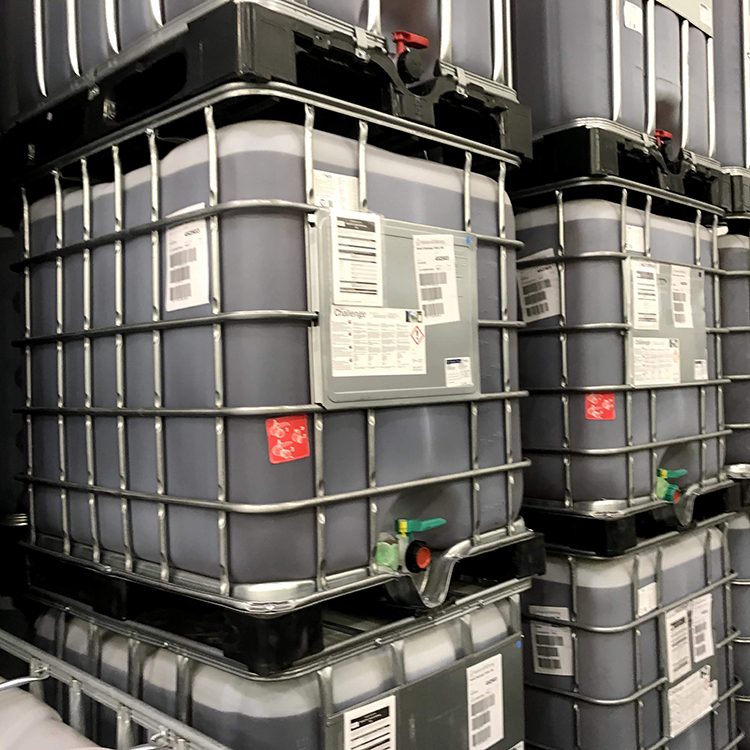
- For lower DM grass silage
- Human food-grade preservative
- Suitable for clamps, bales and ag-bags