
Making the best quality silage from autumn-cut grass

Making silage from autumn-cut grass can be a challenge. But getting it right can provide a highly nutritious forage. Silage consultant, Dr Horst Auerbach, offers some tips for getting the best from the last cut of the season.
Several regions in Europe, including the UK, have experienced severe drought conditions this year leading to a generally low forage inventory and, specifically, to a shortage of grass silage on many farms. Although one can only hope for rain to come, we should and must be prepared to make the most of the potential autumn cuts.
It has been frequently shown that autumn-cut grass can be of high nutritional value but producing high-quality silage from it can and will be challenging due to a number of factors.

Low sugar and contamination risks
Among others, adverse wilting conditions is the most critical factor. Generally lower temperatures during day and night combined with frequent dew formation in the mornings make it very difficult to increase dry matter rapidly, or at all, without extending wilting time.
The challenging conditions for autumn-cut grass silage production leave no option but to use the strongest additives we have. In combination with an unavoidably low DM content, there is a risk of high clostridia contamination due to wet soil, which is more likely to stick to the wet forage. So, the question arises as to what type of additive should be used. Clearly, inoculants cannot be an option due to their mode of action. Lactic acid bacteria work in an indirect way by producing lactic acid from available sugars which, in turn, reduces pH, and inhibits clostridia. But what if the sugar concentration is not high enough? What if ash concentration (soil contamination!) is high, which limits the effect of lactic acid on pH so that the critical pH to inhibit clostridia will not be attained? What if clostridia numbers are high? What if all three aforementioned factors are present simultaneously?
Sodium nitrite
As we do not know any of the answers to these questions at the time of chopping/baling, we cannot but rely only on the most potent clostridial inhibitor: sodium nitrite! The action of sodium nitrite is different from that of inoculants. It directly knocks out clostridia (and their spores), thereby saving sugars for the lactic acid bacteria on the forage to facilitate a natural lactic acid fermentation process in the clamp.
Nitrite-containing additives, including MultiMax, have been widely used for decades in many European countries when ensiling conditions are challenging, such as silage production in the autumn. They are strong, they are proven, they are safe, they are not corrosive!
The data presented in the table below highlight the effectiveness of nitrite-containing additives on the fermentation quality of low DM grasses (Trial 1 and 2), even when contaminated with soil to increase clostridia numbers (Trial 2). Sodium nitrite inhibited butyric acid-forming clostridia, stimulated lactic acid production, or prevented its degradation by clostridia, and reduced protein degradation as reflected by largely reduced ammonia-nitrogen concentrations. In turn, an efficient fermentation process with lower DM losses was ensured.
Effects of sodium nitrite-based additives on fermentation quality of low DM grass silage.
Trial 1: cocksfoot (Dactylis glomerata), 20.0% DM, 13.2% crude ash
Trial 2: natural grassland, autumn-cut, 21.6% DM, 18.2% crude ash after soil addition (50g/kg forage)
International Conference on Forage Conservation, 2016; International Silage Consultancy, 2020
Take home messages
- As usual, cut at optimal stage of maturity to ensure high nutritional value.
- Cut about 0.5 inch (1.27cm) higher than normal to avoid soil contamination.
- Restrict wilting to a maximum of two days.
- Use MultiMax to knock out clostridia and their spores.
You may also be interested in

MultiMax in multi-cut grass systems
Dr Horst Auerbach from International Silage Consultancy, Germany gives some background to the development and testing of the new Kelvin Cave silage preservative, MultiMax, and explains how to ensure consistently good fermentation quality in silages from intensively managed grass leys.
Learn more
10 tips for silage success
10 tips for silage success: Allow time after nitrogen (N) application before cutting. A new perennial ryegrass sward can utilise 2.5kg/ha/day of N, so have an idea of the time required for N to be taken up, although this will be weather-dependent.
Learn more
Is the use of urea or urea-containing additives really the way forward to preserve home-grown high-moisture cereals?
Dr Horst Auerbach, International Silage Consultancy (ISC), Wettin-Löbejünthe considers wether the use of urea or urea-containing additives is really the way forward to preserve home-grown high-moisture cereals?
Learn moreSilageSafe
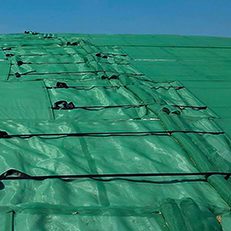
- Integrated tensioning straps
- Eliminates tyres and gravel bags
- Customised to clamp size
Silaspray SP Compact
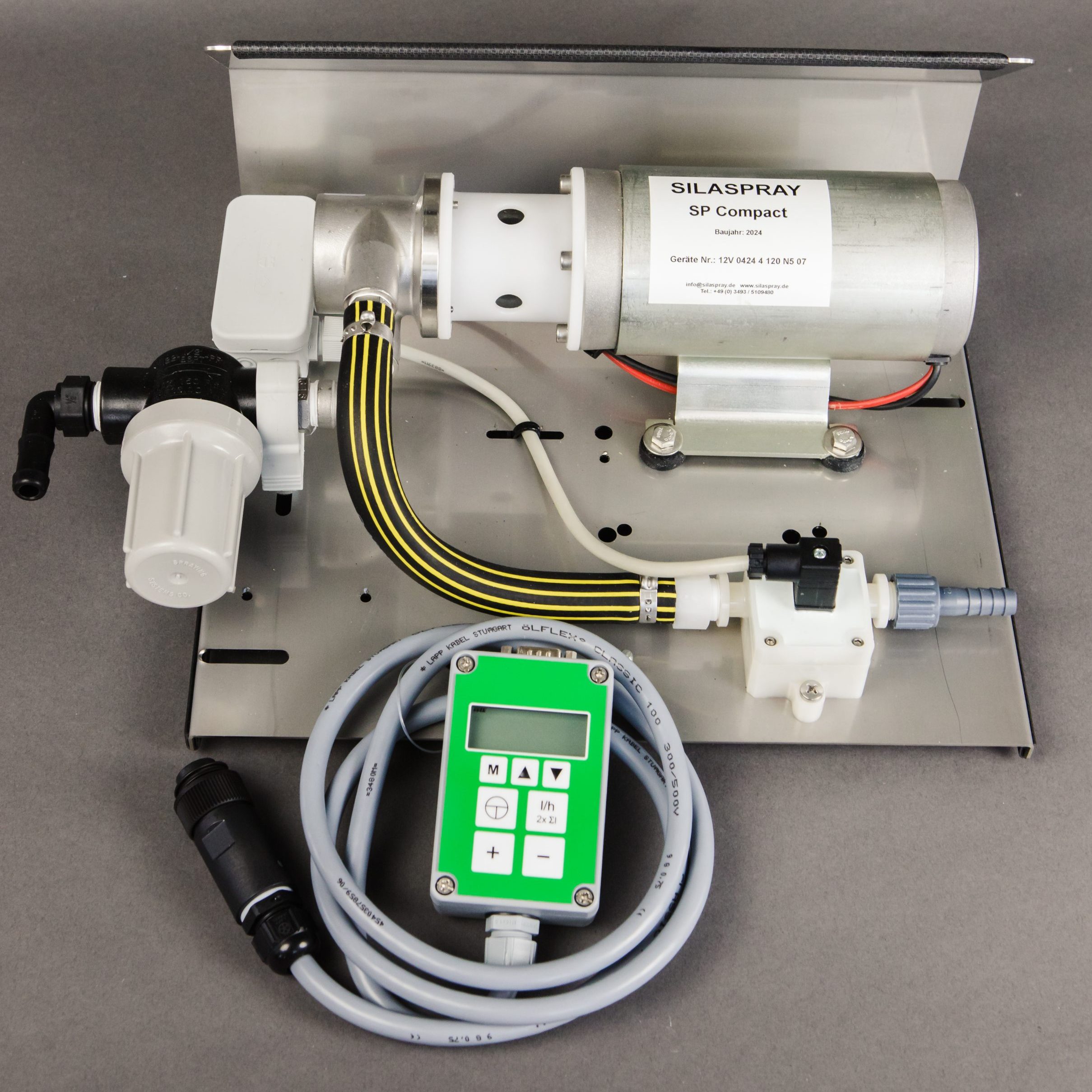
- Applies all acids, salt based preservatives and biological inoculants
- Pump output: 30-500 litres per hour
- Only available from Kelvin Cave Ltd in the UK
SilaPactor: Silage Compactor

- Increase DM density by up to 40%
- Up to 6 tonnes
- Speeds up silage compaction almost four-fold