
Crimped beans with brewers’ grains for stable high protein feed

Cumbrian beef, sheep and arable producer, James Marshall, entered the world of growing and feeding beans with some trepidation. A lack of information on how to preserve and store the crop combined with little industry advice on how to incorporate beans into a ration could easily have put him off the idea altogether.

But, as the manager of the Mounsey-Heysham family’s Castletown Estate, which comprises 1,740 hectares (4,300 acres) between the rivers Eden and Esk to the north west of Carlisle and includes 1,093 ha (2,700 acres) of environmentally sensitive salt marsh, he believed he had to find a way.
He knew beans could help him meet the Basic Payment Scheme’s greening rules – both through achieving the crop diversification required and also in the creation of ecological focus areas (EFAs) – and he knew their high levels of protein and their nitrogen-fixing credentials would be of commercial value to the estate.
“We particularly wanted to produce home-grown protein for the beef,” says Mr Marshall, describing the 625 head enterprise which comprises 60 native suckler cows and their progeny and around 500 head of bought-in stores. “But we’d always bought in our protein in the past, and didn’t really think we’d be able to grow pulses very successfully.”
The farm itself is low-lying, rising from sea-level to around 11 metres above, and holds high levels of ground water in some areas for much of the year. The salt marshes themselves – which carry the cattle through the summer as well as the farm’s ‘salt marsh lamb’ which is destined for Marks and Spencer – have to be managed with the utmost sensitivity and in accordance with the tides and are part of an environmental scheme with Natural England.
But Mr Marshall needn’t have worried about the farm’s ability to grow beans and recognises that even in a difficult year the crop has been a success.
“We planted our first 70 acres [28 ha] of spring field beans in 2015 when the season was cold, wet and late,” he says. “They were in the ground by late March to late April and we harvested them between 22 September and late October, although ideally they’d have come in earlier.”
The first batch of 14 ha (35 acres) – planted on the farm’s lightest, sandiest soils – was harvested with a combine, coming in at an ‘unexpectedly high’ fresh weight yield of 4.3 tonnes/acre (10.6 t/ha) and at a moisture content of around 35 per cent.
When the decision had to be taken about the beans’ preservation, Mr Marshall turned to crimping – a process he routinely employs with moist cereals – involving rolling the grain, preserving with an organic acid-based product, and compacting and sealing in a pit on the day of harvest.
The process is said to suit the farm, with its absence of grain drying facilities and a limit on the availability of dry storage, very well.
“If I have to combine dry I consider I have failed,” says Mr Marshall.
However, although he could see the attraction of the crimping process for preserving the moist beans, he knew that excluding air from the clamp – essential for the prevention of spoilage – would be difficult to achieve with such a large ‘grain’.
It was faced with this dilemma that he had the idea of mixing the rolled beans in a wagon in a 2:1 ratio with brewers’ grains, and applying the same preservative, Crimpstore 2000S, he had regularly used on his crimped cereals.
Michael Carpenter, northern regional manager for Kelvin Cave Ltd, was supportive of the approach, acknowledging the difficulty of achieving anaerobic conditions in the clamp for a crop such as beans.
“The brewers’ grains seemed the perfect product to fill the air gaps between the beans, and the crimping product James chose would rapidly reduce the pH of both feeds in the mix,” he said. “This would mean retaining the maximum nutrient value of the crimped beans, achieving a controlled fermentation and protecting both components of the feed against spoilage organisms which could otherwise cause deterioration at the opened feed face.”
Mr Marshall concurred that even the brewers’ grains benefitted from the extra preservation and lasted far longer than would typically be expected.
“Brewers’ grains in a pit in August quickly go mouldy,” he says. “After about two weeks you have wasted a lot of energy and you start to see the yeasts and moulds.”
The new mixture, in contrast, would last as long as required and could either be fed as a high protein concentrate (see analysis in box) as a summer buffer feed to the finishing group, or used in winter as part of the total mixed ration.
Compiling the basis of the TMR himself and fine-tuning the quantities through the Kelvin Cave rationing programme, Mr Marshall has arrived at two rations – for growing and finishing groups – which have proven to be effective, highly palatable and safe
Analysis of the beans/brewers’ grains mix (on dry matter basis)
- Crude protein (%) 26.85
- Starch (%) 32.22
- ME (MJ/kg DM) 12.8
- Dry matter (%) 51.6
“We feed quite a lot of whole-crop cereal – usually barley – so this is relatively low protein and complements the high protein of the brewers’ grain and bean mix in the finishing ration very well,” he says.
Added to this is fruit peel and crimped barley (both relatively low protein) together with a high energy, high protein syrup produced as aby-product of bio-ethanol production.
In the overall analysis the finishing diet delivers metabolisable energy of 11.86 MJ/kg DM, 14.88 per cent crude protein, 37.02 per cent starch and 37.13 per cent neutral detergent fibre (NDF).
Performance on both rations has exceeded expectations, with the finishers gaining 1.8kg per day compared with a predicted daily liveweight gain of 1.6kg.

Finisher ration (fed ad lib) Kg freshweight per tonne of mix
- Whole-crop barley (undersown) 445
- Crimped barley 200
- Beans/brewers’ grains mix 140
- Fruit peel 180
- Distillery syrup (from bio-ethanol production) 30
- Mineral 3
- Limestone granules 2
Grower ration (fed ad lib) Kg freshweight per tonne of mix
- Second cut grass silage 550
- Crimped barley 145
- Beans/brewers’ grains mix 75
- Whole-crop beans 220
- Mineral 6
- Limestone granules 4
Michael Carpenter attributes the better-than-expected performance in part to the ration’s high palatability and intake characteristics and in part to the rumen-friendly nature of the ingredients.
“The starch in the ration is slowly fermented in the rumen while the ration is also high in digestible fibre with plenty of scratch factor,” he says.
Mr Marshall concurs and adds: “We have no problems with acidosis or laminitis and by weighing the finishing cattle every two weeks, we find ourselves moving animals through the system more quickly than in the past.”
Specialising in native beef, including four types of Galloway (Belted, Black, Dun and White), as well as White and traditional Shorthorns, Aberdeen Angus, Herefords and Highlands, he also adds dairy crosses and even pure Holsteins as opportunistic purchases.
Store cattle are bought throughout the year between 12 and 18 months at 350 to 550kg and will stay on the farm for around six months to as much as a year, and are destined for a range of outlets, from local butchers to the Morrisons Traditional Beef Range.
Having also taken half his bean acreage as whole-crop last year, Mr Marshall now plans to increase the overall acreage to 85 (34 ha) and harvest it all as crimp.
“I hope to crimp it all as it means the beans will come off earlier and it will help the following crop,” he says, remarking that, budgets permitting, he plans to install more clamps.
The farm’s agronomist, Simon Nelson from Agrovista, expands on the agronomic benefits, remarking: “A lot of the beans on this farm were grown on light, sandy and hungry soils which have little residual nitrogen.
“The beans which were harvested last September have been followed by a hybrid barley, so the expectation is that we will have higher yields from this year’s barley because it’s following a nitrogen-fixing crop.”
“We’d been considering growing beans as a source of home-grown protein for many years and I was finally prompted into action by the greening rules required for the Basic Payment Scheme,” says William, who farms in partnership with his father, David, and Uncle Peter, between Darlington and Barnard Castle in County Durham.
As an arable, beef and free-range egg producer operating out of two tenant farms on the Raby Estate – Morton Tinmouth West and Denton Grange West – he has always tried to grow and store his crops close to where they’re required rather than cart them over the three mile distance between the two farms.
For many years, this has meant using Propcorn NC-treated barley on one farm and crimped barley on another, where one premises has a suitable under-cover shed for conventional grain storage, and the other makes use of an outdoor clamp to preserve the barley as crimp.
“We’ve been taking advice on feed preservation from Kelvin Cave’s Michael Carpenter for many years so we worked with Michael when we were considering beans,” he says.
“I did have concerns about growing beans as I know harvest can be in late November or December in this part of the world,” he says. “We often won’t get a dry period at that time of year, and we thought a delay could cause problems if the crop was ripe but still damp.”
The team decided their best way forward was to take an early harvest of a 20-25% moisture crop and preserve with the non-corrosive product, Propcorn NC.
“This meant harvest would be around three weeks early which is a big attraction for our business and fits in well with other arable operations,” says William. “We often won’t get a dry spell in October or November but had no problem last September, and found the beans sailed through the combine.”
For processing they used local contractor, Austen Richardson, whose Korte 1400 (supplied by Kelvin Cave Ltd) has fluted rollers which are important for penetrating deep into the bean and pulling them through to flatten them. The Propcorn NC is applied through the mill.
The spring-sown beans were heaped in the yard and processing took place on the day of harvest. They were stored in ambient conditions in a straightforward shed.
“Propcorn-treated feeds don’t need airtight conditions, which is one of the big attractions of this preservation method,” says Michael Carpenter. “When the preservative is applied at the correct rate, the beans will remain stable in a heap without heating or moulding throughout the year.”
William raises the benefit of the non-corrosive nature of the product which he says he chose out of respect for his contractor’s machine.
“I made a significant investment in the Korte 1400 when I took on contracting in this area,” adds Austen Richardson. “We have used the old, original Propcorn in the past which has a strong smell and produces lots of fumes – to the extent that you’d work with a mask in an enclosed space.
“The new NC product is noticeably better and much kinder on the machine,” he says. “It’s also important that Rob, our regular operator, has good working conditions and this product doesn’t burn if he gets it on his hands.”
William says he is very pleased with the ease and outcome of the whole process, and describes the treated beans as like ‘crinkle cut crisps’.
Bull beef finishing ration (Morton Tinmouth) (mixed in wagon)
- 9.2 kg first cut silage
- 5.8kg crimped barley
- 2.25kg dry barley
- 1.2kg Propcorn NC-treated beans
- 0.3kg straw
- 100g mineral with yeast
- 80g limestone flour
Continental x dairy beef started on ration at approx 300kg and fed until sold at around 650kg.
Liveweight gain: 1.27kg/day; cost: 104p/kg LWG
You may also be interested in

Crimped peas and beans cut out all bought-in feed
Last year, Pembrokeshire farmer, Eurig Jones, harvested 20 acres (8ha) of peas and beans he’d grown as part of a Farming Connect trial. The mixed crop was calculated, through the Welsh Government/EU-sponsored project, to have cost him just £117 per tonne to produce.
Learn more
Crimped beans with Brewers’ Grains for Stable High Protein Feed
Cumbrian beef, sheep and arable producer, James Marshall, entered the world of growing and feeding beans with some trepidation. A lack of information on how to preserve and store the crop combined with little industry advice on how to incorporate beans into a ration could easily have put him off the idea altogether.
Learn more
Peas and Beans Article
In recent years, due to price volatility and increasing focus on environmental factors, many of our customers have turned to us to help them process and preserve home-grown or locally-sourced proteins in order to become more self-sufficient, try to increase their profitability and reduce their carbon footprint.
Learn moreRelated Products

CrimpSafe Hi-dry
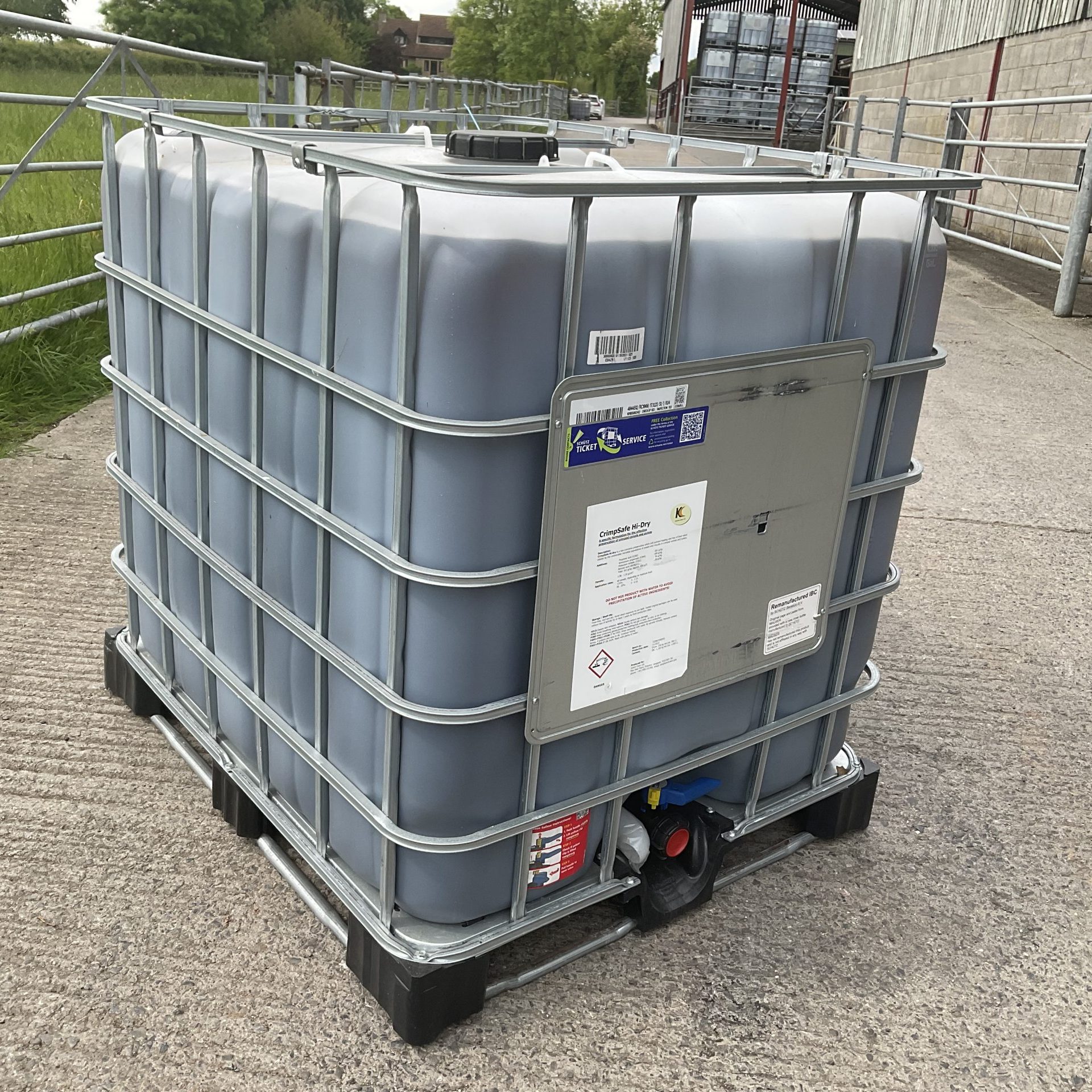
- For crimped grain drier than 30% MC
- Will flow through hoppers
- Can be clamped outside
Crimpmaster Applicator
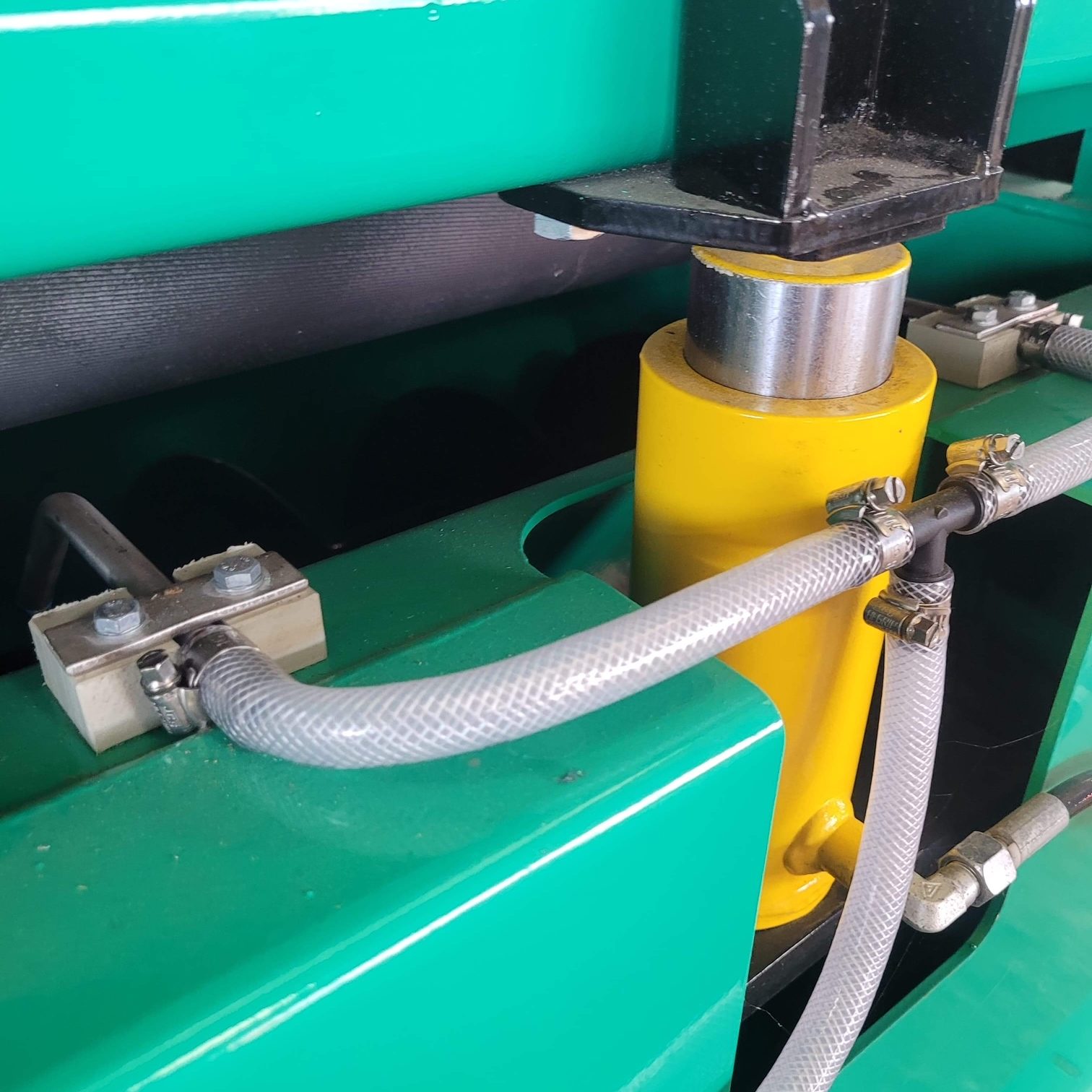
- Stem pump with foot filter
- Controlled flow meter
- Waterproof switch pack