High moisture hay stacks up as fuel and wrap costs rise

Single-use plastic has been central to forage-making for many years. But environmental concerns and rapidly increasing prices are turning attention to alternatives. Using new preservatives, baled forage can now be made with fewer passes, less fuel and sometimes without wrapping.
As the drive to reduce single-use plastic continues apace, farmers are increasingly seeking alternatives to wrapping their baled forage.
Growing numbers are turning to high moisture hay, which can be now treated with the modern preservative, BaleSafe, at the time of baling. This treatment ensures hay at moisture contents of up to 25% can be stored without wrapping, and will retain its quality during storage, without dust or the risk of moulds. Treated bales can then be stored undercover, either in sheds or with suitable stack covers.
The preservatives in BaleSafe include propionic acid and ammonium propionate which stop the activity of undesirable microorganisms including yeasts and moulds.
Using the product achieves cost savings through the wrap not used, but also saves the escalating cost of fuel for the wrapping process. Added to this is the cost of wrap disposal.
As well as being a popular option in place of baled silage, high moisture hay has further attractions over traditional dry hay.
Michael Carpenter, technical director for Kelvin Cave Ltd explains: “Farmers have increasingly moved away from traditional hay due to the length of time taken and the weather dependency of the process.
“Many producers have taken up the BaleSafe option, which means they can bale much sooner after cutting, which is particularly important in catchy weather. “They’re also likely to find they will save one pass with the hay bob, and the resulting high moisture hay is less dusty and has a higher nutritional quality than the dried product,” he says. “That’s because there’s less leaf shatter, which means a greater percentage of the more nutritious leaf is retained. This lifts feed value and palatability, while reducing dry matter losses.”
Furthermore, he says that those who don’t have dry storage for unwrapped hay, can cover their stacks with a long-life reusable product.
BaleShield 160
“We introduced BaleShield 160 to cover baled forage outside, where undercover storage is in short supply,” he says. “The cover is made from reusable, water-repellent, polypropylene fleece, with ultraviolet stability and outstanding tear resistance, offering protection for up to four years.”
This allows forage or bedding to be safely stored in the open, close to where it’s needed, and minimises the risk of losses or spoilage.
Used on stacked bales, ideally in a pyramid formation and on pallets to provide all-round air circulation, BaleShield 160 can be secured using one of a range of accessories, designed for easy access at feedout. These include hook and loop tape to join two or more covers together and plastic screws for securing the fleece to the ends of the stack.
Kelvin Cave Ltd supply a range of preservatives to keep forage stable, whatever its dry matter or the conditions in which it is made (see table). As well as supplying preservatives, the company also offers a simple-to-use moisture meter and a range of applicators to fit conventional, round and big square balers, which ensure easy and effective application.
Please contact your area manager for advice and to discuss the best product to suit your particular needs.
Preserving baled forages at different moistures:
Forage type | Moisture content (or DM) | Wrap needed | Preservative recommended |
Hay and straw | 15% moisture and below | No | Not essential but BaleSafe will reduce dust and assist preservation if grass is diseased |
High moisture hay | 15-25% moisture | No | BaleSafe essential for unwrapped bales |
Haylage (medium DM) | 25-50% moisture (or 50-75% DM) | Yes | BaleSafe will improve fermentation and reduce DM loss |
Baled silage (lower DM) | More than 50% moisture (under 50% DM) | Yes | Use Safesil Challenge to kill yeasts, moulds and undesirable bacteria from soil contamination |

You may also be interested in

Safesil user wins Silage Clamp Award
Safesil delivers the best silage from Lands End to John o’ Groats and beyond! We would like to congratulate Daniel Ritch of Brettobreck, Stormness, Orkney Isles on winning the coveted Dairy Clamp Silage class at the Agriscot Silage Competition.
Learn more
Wagyu Producer Raises Silage Quality with Safesil
Forage contractor and Wagyu beef producer, David Leighton (pictured), started using Safesil Challenge around two years ago and says he is now advising his customers to do the same.
Learn more
Making a proper job of silage in Devon
For Devon beef producer, Matt Widdicombe (pictured above), high quality silage is the lifeblood of his business. It’s made with strict adherence to good practice – two vehicles for compaction, good silage sheeting (both high grade side sheeting and oxygen impermeable dual top sheeting) and top-of the-range preservative, Safesil Pro.
Learn moreBaleSafe

- Hay, haylage & straw preservative
- For wrapped haylage 50-75% DM
- For hay up to 25% MC
Safesil Challenge
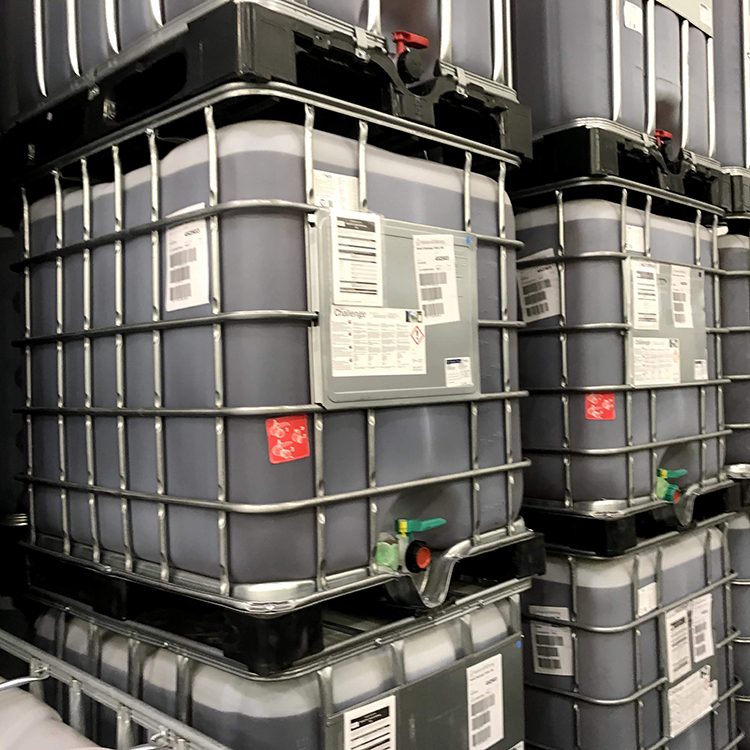
- For lower DM grass silage
- Human food-grade preservative
- Suitable for clamps, bales and ag-bags