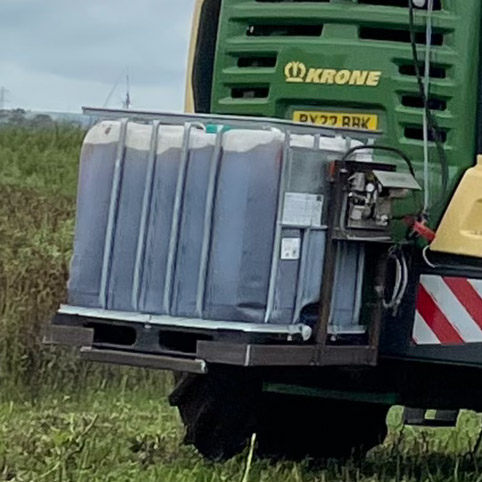
Breaking through the ceiling of low energy silage

Lifting silage quality from an ME of 10.5 to 12.5 MJ/kg DM has transformed both performance and morale on a South Wales dairy farm. The icing on the cake has been winning prizes too.
South Wales dairy farmers, Ian and Kieran Haycocks, have seen the light when it comes to making silage. Milking 260 British and Irish Friesians in a split spring and autumn block calving system, they’d generally been happy that their silage was adequate for their herd.
However, they always seemed to hit a ceiling in terms of forage quality, never exceeding a metabolisable energy of 11MJ/kg DM, and generally ticking over at closer to ME 10.5MJ/kg DM.
Farming both owned and rented land at Allt-y-Bailey, near Whitland, on the Carmarthenshire-Pembrokeshire borders, the father and son team also accepted that a certain degree of heating at the clamp face was inevitable.
Any measures taken, such as dividing the farm’s large clamp in half to reduce the width of the feed face and limit exposure to air, had little impact on the silage heating and on its quality analysis.
“We rarely got past an ME of 10.5 and we just had to feed more cake to increase the cows’ energy intake,” says Kieran. “We run a simple silage and concentrate system and we were feeding up to 8kg of cake per day in the parlour.
“But the cows still didn’t milk particularly well and their fertility was poor,” he says.
Eventually deciding to take a different course, they spoke to Tim Frost from Kelvin Cave Ltd who suggested the team try Safesil Challenge.
Tim says: “Safesil products are the top of the range, and in this situation it was our strong recommendation.
“Kieran and Ian were already doing so much that was right with their silage-making practices, and this was their logical next step,” he says.
The reason for the product’s success is that it’s a proven preservative, actually killing those bacteria in the silage which will cause an undesirable fermentation.
Human food grade preservation
“It contains ingredients licensed for use in human food, which explains it’s high levels of safety and the effectiveness of its preservation,” he adds.
“By actually destroying nutrient-wasting bacteria such as clostridia and enterobacteria, Safesil allows the favourable lactic acid bacteria to do their job,” he continues. “This will promote a rapid reduction in pH and eliminate the risk of butyric acid production, which would lower the nutritional value and palatability of silage.”
Ian and Kieran first tried Safesil in 2021, attracted, not just by the prospect of better silage, but by the product’s ease of use and the absence of a need to mix.
“Before, we always mixed our silage additive in barrels, but Safesil was so much easier to use and to get the application rate right,” says Kieran.
The result of using Safesil has been transformative for the herd, and in the product’s first year of use, the Haycocks won their regional Narberth Grassland Society clamp silage competition.
“The following year’s analysis was actually better, including an ME of 12.5 and a D value of 78.3,” he says. “We weren’t allowed to enter the 2022 competition but could enter, and won again, in 2023.”
Better compaction
The appearance of the clamp has also improved through the use of a SilaPactor, hired from a neighbour, in the past few years.
“As soon as we used it we knew it was doing a better job of rolling, and now the pit doesn’t move or sink,” says Kieran. “We are also getting so much more in the clamp that we wondered where it was all going in the end!”
This helps with pit space as well as the exclusion of air in a high dry matter silage, which shows absolutely no signs of aerobic spoilage. It has also improved pit management at the time of silaging, as it allows the two-man team on the pit to keep up with three trailers.
“We use a buckrake on a JCB 435 and the 4 tonne SilaPactor on a Claas 350 with a one-tonne weight on the front. And if we get everything right, the pit is always being rolled, and the trailers aren’t waiting for us,” he says.
Sheeting is also carried out meticulously, with HD clear side-sheets and double-layered O2 2-in-1 Barrier over the top. This was covered with ClampNet to protect against vermin and weighted with lorry wall tyres touching all the way down the ramp.
Clamp management at feedout has also improved, and the divided clamp – now with a face of 35 rather than 70 feet – is moved across in 2.5-3 days.
“The silage at the face now remains stone cold and we realise that before, the bacteria in our silage were actually taking the energy out,” says Kieran.
Tim explains how they may have formerly been using a heterofermentative inoculant which has been regularly demonstrated to use up more dry matter in silage.
Wasting carbohydrates
“Heterofermentative inoculants are those with bacteria which create more than one acid – lactic acid and acetic acid. And while they are designed to preserve the silage, the reactions by which they do so use up carbohydrates in the grass and produce carbon dioxide and water in the process,” he says.
“This is obviously a wasteful process and may explain why the energy levels in the silage Ian and Kieran were making before, continually hit a ceiling.”
Team morale
Most important of all has been the effect on the herd and the morale of the team working on the farm.
“If you open the pit in September and it’s full of rubbish, it’s a long winter ahead that you are dreading,” says Kieran. “But when you can see nice silage, the cows do so much better and everyone’s spirits are lifted.”
Also describing the cows as ‘different altogether’, their yields have increased, fertility improved and they’re on a lower input of cake – down to a maximum of 6kg per day. Total concentrate use for the two groups is now 1.2 tonnes/cow/year and 1.8 tonnes/cow/year for spring and autumn calvers respectively.
Production now stands at 7,500 litres at 4.5% fat and 3.6% protein for the autumn block, and 6,000 litres at 4.5% fat and 3.7% for those calving in spring.
“If you make good silage they seem to fly in the winter, and if you don’t you have no milk and no business,” says Kieran.


Allt-y-Bailey Farm and Silage-making Facts
- 540 acres (219ha) family farm of Ian, Kieran and grandad, Colin Haycocks
- 240 acres (97ha) first cut silage mowing starts at 10 am to complete in one day
- Ted straight behind mower and wilt for 24 hours; row up 1.5 hours ahead of forager
- Preserve with Safesil Challenge and compact clamp with 4-tonne SilaPactor
- Cover with O2 2-in-1 Barrier; top sheet with ClampNet and weight with lorry wall tyres
- Aim for 10 May first cut with five weeks to second and six weeks to third cut
- Analysis: DM 32.8%, ME 12.5MJ/kg DM; protein 14.6%; D-value 78.3
Request a call back
You may also be interested in
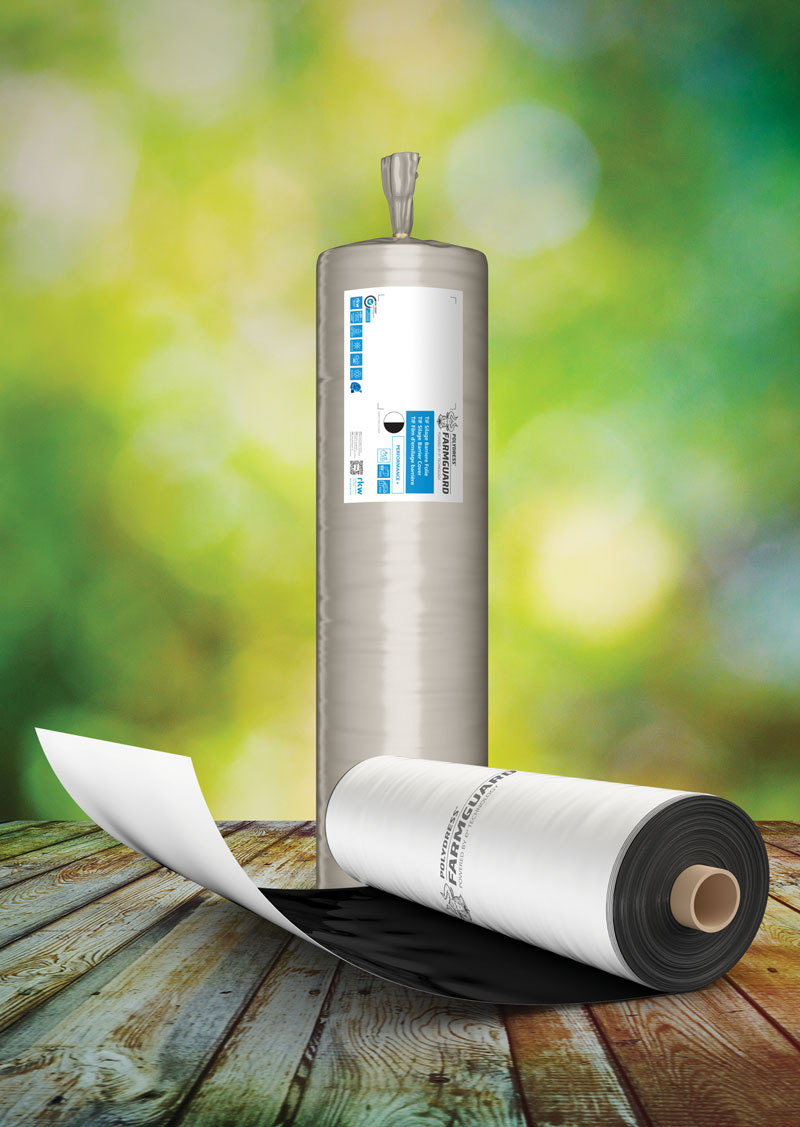
Clamp sheeting range strengthened by Farmguard
A new high-strength, recyclable clamp sheeting has been launched by Kelvin Cave Ltd, offering added protection for silage or crimped grain clamps this season.
Learn more
SilaPactor: the ‘in thing’ in Devon for Silage Compaction
Across the green and verdant land of Devon – arguably the best grass-growing county of England – the trusty SilaPactor, Kelvin Cave’s silage compactor, is truly having its moment. So much so, that Matthew Alford – agronomist by day and owner of a newly fledged hire company in his spare time – has bought six of these mighty machines in under two years.
Learn more
Safesil user wins Silage Clamp Award
Safesil delivers the best silage from Lands End to John o’ Groats and beyond! We would like to congratulate Daniel Ritch of Brettobreck, Stormness, Orkney Isles on winning the coveted Dairy Clamp Silage class at the Agriscot Silage Competition.
Learn moreRelated Products

SilaPactor: Silage Compactor

- Increase DM density by up to 40%
- Up to 6 tonnes
- Speeds up silage compaction almost four-fold