
Where has all the protein gone?

In this year of great uncertainty, even more so than previous years, and with the massive increase in costs of fertiliser and feeds (such as urea and nitrate), it is more important than ever for farmers to be furnished with the correct information to make informed choices.
For these reasons I would like to run through some recent on-farm findings comparing rolled barley treated with a urea-based preservative and crimped barley treated with human food preservative salts.
A farm in West Wales frequently combines barley for either crimping or rolling, and in some seasons both. Last year both crimped barley and rolled barley were made from the same field. The crimp was treated with CrimpSafe 300 and the rolled barley with Maxammon. In late January samples of both were taken and analysed for dry matter and crude protein using traditional chemical methods. When taking the samples, the farmer’s first notable comment was the higher yield of grain at crimping stage compared to rolling stage. However, we must not forget that many things change during grain maturation including the dry matter content. Fresh yield could be misleading.
Traditional chemical analyses of forage and feed components are often expressed on an ‘as received’ or ‘as fed’ basis not on a dry matter basis. What this means is that they are on a fresh basis, so for comparison purposes a conversion to dry matter basis is required.
The table below indicates the complete set of results as analysed and after calculation.
Looking at the protein on an ‘as received’ basis would indicate a higher protein content from rolled barley than crimped barley. However, when considering the DM content, the crude protein on a DM basis was 1.5% higher.

When we consider the yield on a fresh matter basis there appears to be 2.5t more when crimping compared to rolling. However, on a DM basis the yield difference is around 1t in favour of crimping. Therefore, when comparing crude protein yield the crimped barley outperformed the rolled barley by 193 kg/acre. Bearing in mind that the rolled barley has received an additional 15 kg/t FM of urea, these results are of massive importance given the cost of bought-in nitrogen this year.
Let us just run through those likely ballpark costs.
For both crimping and rolling there is a requirement for grain processing and sheeting. I suppose there is a requirement for consolidation with crimp that is not required for rolling; but overall, these processing and storage costs are similar for both processes. Thus, the big difference is the additive and the relative costs of these. Products for urea treatment of grains are currently in excess of £1,200/t of product at an application rate of 30kg/t. That equates to over £36/t treated.
CrimpSafe will vary depending on crop DM and application rate between £7-10/t treated. Using these figures to calculate additive cost/kg crude protein achieved comes out at 26.6p/kg crude protein for urea treatment versus 6.8–9.7p/kg crude protein for CrimpSafe treatment. Admittedly, cereal grains are supplying starch as well as protein, but the main emphasis of the urea treated grain approach is the protein enhancing qualities of this product type.

So where has all the protein gone?
As the crop matures there comes a point where field losses of dry matter and quality increase, thus a lot of protein is lost prior to harvest. In addition, previous research by myself and Dr Horst Auerbach has found that 40-70% of the urea nitrogen applied to the grain is lost to the environment through conversion to ammonia and then volatilisation from the store before it reaches the animal’s mouth. This last figure is unbelievable at first glance but if you have ever smelled urea-treated grains they do smell like a soaking wet baby’s nappy. That’s the ammonia disappearing up your nose and elsewhere, but not getting into the rumen where it could be useful.
All in all, I would be strongly advising farmers this year to make the most of any cereals they are growing for their stock and crimping them to keep the protein in the feed and reduce losses of both precious fertiliser and feed nitrogen. One of the other un-costed advantages of crimping is the land can be reworked and planted that little bit earlier making the next cropping cycle more efficient too.
You may also be interested in

Peas and Beans Article
In recent years, due to price volatility and increasing focus on environmental factors, many of our customers have turned to us to help them process and preserve home-grown or locally-sourced proteins in order to become more self-sufficient, try to increase their profitability and reduce their carbon footprint.
Learn more
Better forage is central to a new way of farming
Just like many cattle farmers across the uplands of England, Geoff Roddam used to feed his stock on grass silage and bought-in concentrates.
Learn more
Close-up on Wholecrop harvesting and additives for preservation
Reserve forage stocks have been used up completely or severely depleted in many parts of the country and, for many, a wet autumn resulted in reduced acreages of winter cereals being sown. Then we had the late and difficult spring weather delaying drilling of crops even further. In order to get rotations back on track and replenish conserved forage reserves, turning cereal and even pulse crops into wholecrop silage could be a useful option to consider.
Learn moreRequest a call back
Related Products

CrimpSafe Hi-dry
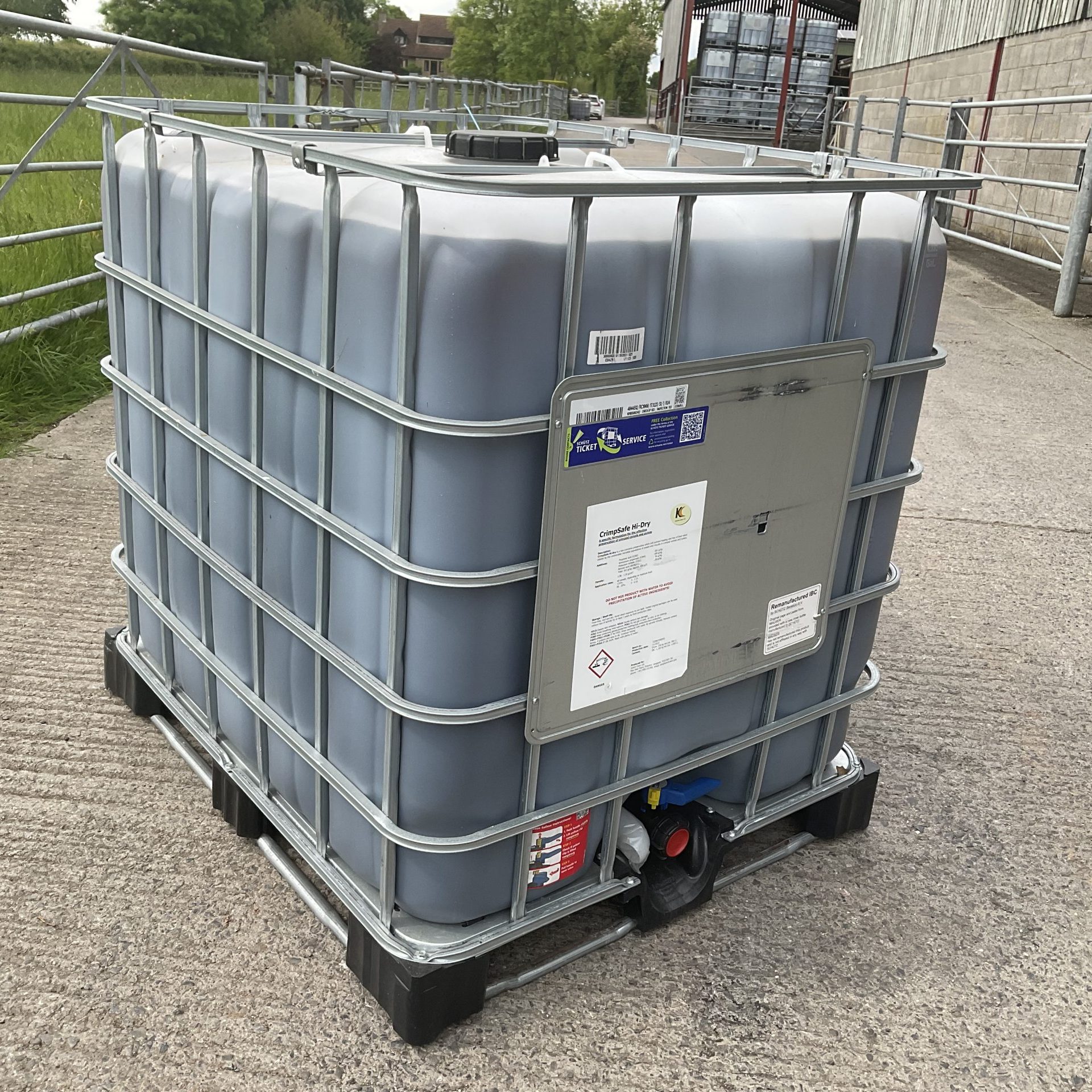
- For crimped grain drier than 30% MC
- Will flow through hoppers
- Can be clamped outside
Crimpmaster Applicator
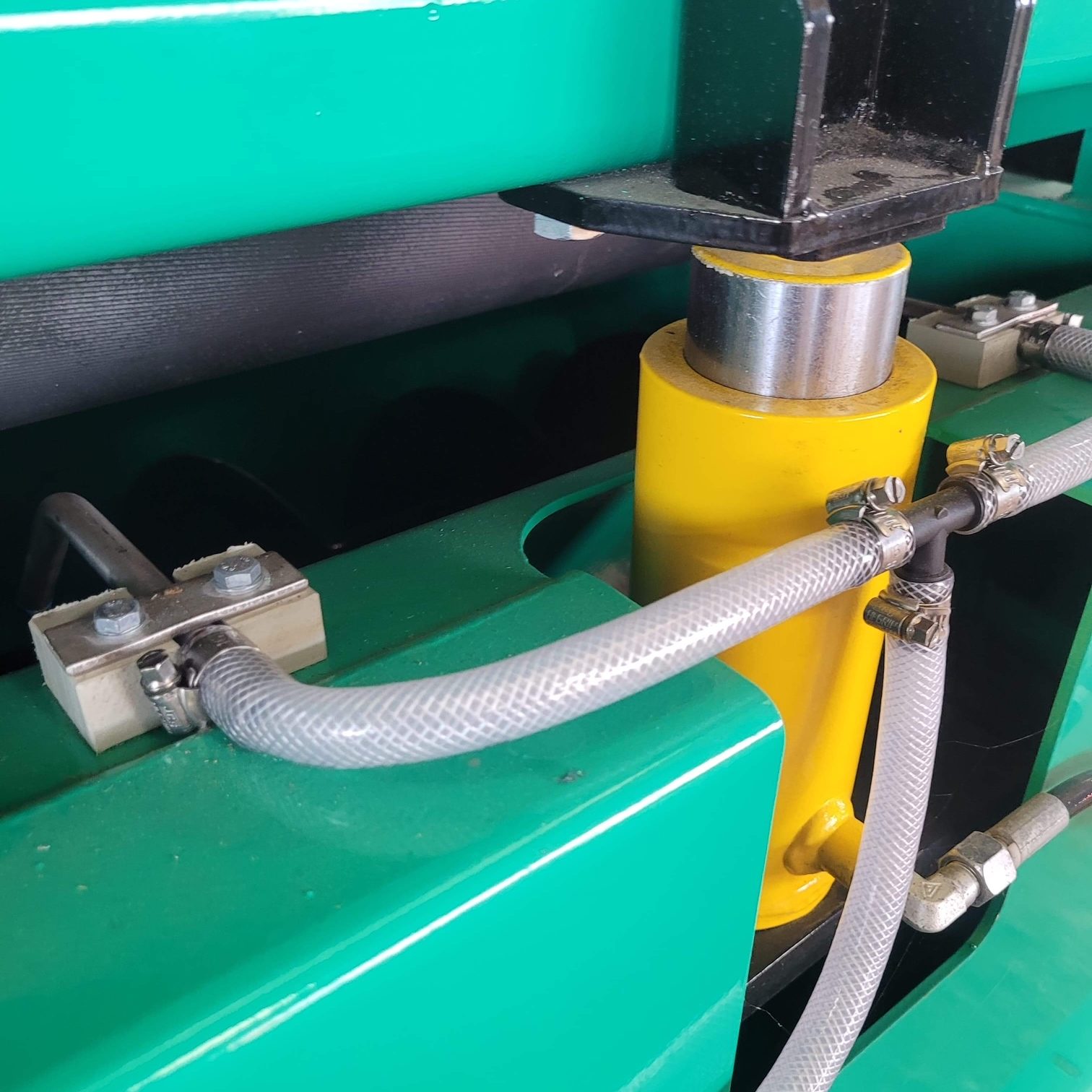
- Stem pump with foot filter
- Controlled flow meter
- Waterproof switch pack
News
Moisture meters for grain and hay
Moisture meters take the guesswork out of grain and hay preservation.
Learn moreStacking haylage in your favour
Pressure to reduce the use of plastic on bales comes from many directions, with wrap costs climbing, disposal often difficult and expensive, and plastic in fields and hedgerows unsightly and potentially damaging to livestock and wildlife. Its use may even incur a tax in future.
Learn moreBespoke KC frame allows quick switch from silage to grain
The Kelvin Cave workshop manufactures, modifies and refurbishes a range of milling and ancillary equipment, often making bespoke adaptations for specific farm requirements. One farmer in Warwickshire requested a quick-release IBC frame and Silaspray which can be used to apply additive to silage and easily switched to treating grain.
Learn moreA new feed on the block
A new bulk feed co-product could soon be available to UK farmers, thanks to innovative R&D by several companies, including Kelvin Cave, a British engineering company and an international waste, water and energy giant. The result will be a nutritionally dense, moist livestock feed.
Learn more