
Ongoing research raises extra concerns over some additives on maize

Preliminary results published earlier this year by independent silage researcher and consultant, Dr Dave Davies, have now been extended. His new data provides more compelling evidence that some silage additives are no better than using no additive at all. He explains his latest findings.
In the last edition of KnowHow (summer 2025), I presented some results from a maize experiment conducted in autumn 2024 (New Research on Silage Additives). Since then, the full data from all time-points up to 180 days of ensiling have been analysed.
Most trials conducted by commercial companies use 90 days as their end-point of ensilage. However, if we consider many farms, they will be feeding maize silage from within a month of ensiling, all the way through to the next maize harvest and possibly beyond. Therefore, if we consider the ensiling time to be 365 days, using 90 days is far too short an ensiling time and 180 days (as in this study) would be nearer an average storage time.
Most silage additive companies have focused on the use of heterofermentative lactic acid bacteria such as L buchneri, L hilgardii, L brevis, L fermentum, L kefira and L diolivorans. They do this to enhance aerobic stability through the conversion of either sugar in the harvested crop or lactic acid produced in the primary, efficient silage fermentation, to acetic acid and propane-1,2-diol. These compounds inhibit the yeasts and moulds which instigate aerobic spoilage when the silage is exposed to air.
However, these companies focus on aerobic stability losses at the expense of ignoring the fermentation losses. Depending on all aspects of crop hygienic quality at harvest, silage management including harvesting, compaction, sheeting and feed-out rates, aerobic spoilage losses can be less than the fermentation/storage losses which are caused by inefficient silage fermentation. When acetic acid and propane-1,2-diol are produced during silage fermentation, CO2 and/or water are also produced as byproducts, which represent dry matter losses. So, whilst these end products may improve aerobic stability, they will undoubtedly increase the fermentation/storage DM losses.
The aforementioned heterofermentative lactic acid bacterial inoculants are also more pH tolerant in the silo than their beneficial homofermentative counterparts. This means they remain biologically active, converting more lactic acid into acetic acid during storage, over and above the initial fermentation period. That’s the theory, now let’s examine the maize trial results.
Aerobic stability
In the summer edition of KnowHow, I showed that after a short, 14-day ensiling period the only additive to significantly improve aerobic stability compared to the untreated silage was Safesil – the additive containing the food grade preservatives sodium benzoate and potassium sorbate. These preservatives directly inhibit the yeasts and moulds which cause heating and aerobic spoilage at feed-out. The other additive treated silages were more or less identical to the untreated silage in their ability to inhibit aerobic spoilage. The data from the experiment, for ensiling times of 28, 60, 90, 120 and 180 days, had similar aerobic stability across all treatments, again showing no benefit of the heterofermentative containing inoculants against the untreated control.
Fermentation/storage
The experiment did reveal some very interesting findings for the extended storage times. Graphs 1-3 show the change in the main fermentation parameters with treatment and ensiling time.
The graph for pH (Graph 1) shows that all silages had fallen below pH 4 by 28 days. The Safesil treated silage was lower than the other treated silages and the other treated silages were no different from the untreated silage. However, as time progressed, all silages, except that treated with Safesil, had an increase in pH, indicating that secondary fermentation (the conversion of lactic acid into other undesirable end-products, mainly acetic acid) was occurring.

By examining the lactic and acetic acid data the story becomes much clearer (see Graphs 2 and 3 below).


The data clearly show that with time the heterofermentative containing, inoculant treated silages are using the lactic acid to produce acetic acid, with the concentrations of lactic acid after day 28 declining and acetic acid increasing. In contrast, in the Safesil treated silages, the lactic acid and acetic acid levels remain relatively constant throughout the storage period after day 28. The Safesil treated silages had significantly higher lactic acid and significantly lower acetic acid at most time points compared to most of the other inoculated silages. In addition, often there are no differences between the heterofermentative containing inoculants and the untreated, and where there are differences, often these differences are in favour of the untreated silage compared to the heterofermentative inoculated silages.
The conversion of lactic acid to acetic acid increases both dry matter losses and energy losses. DM losses are shown in Graph 4.

Yet again, the Safesil treated silages show benefits over the heterofermentative inoculant treated silages, with significantly lower DM losses at all opening times from day 60 onwards. In addition, every molecule of lactic acid has 1366 kJ/mol gross energy whereas every molecule of acetic acid has 877 kJ/mol gross energy. This represents a significant energy loss. The argument that the heterofermentative lactic acid bacteria also produce the high energy compound propane-1,2-diol (also known as propylene glycol) also falls down in this study as only three silage samples contained any propane-1,2-diol and the highest of those only had 0.02% on a DM basis. So as my dear, late friend and colleague Raymond Jones would say, two thirds of bugger all.
Dry matter losses during the storage phase not only eat into the amount of silage you have to feed, but also eat into the energy each mouthful of silage contains, be that energy for milk, meat or biogas! Interestingly, there is a large enough data set from this experiment to begin to examine statistical relationships. The graphs below show two of these.

Graph 5 indicates that there is a direct relationship between the production of acetic acid in silage and dry matter losses. The relationship has an r2 of 0.5094, meaning that 50% of the DM losses in this silage resulted from the production of acetic acid. Put simply, the more acetic acid produced, the less silage there is for feeding.

Graph 6 is sloping the other way, demonstrating an inverse relationship. This graph tells us that the higher the lactic acid to acetic acid ratio (ie the ratio between the two acids), the lower the DM losses and this accounts for 31% of the variability in the data.
Concluding remarks
The data from this experiment clearly indicate that if you want to open your maize after two weeks, then to improve aerobic stability, a chemical additive containing potassium sorbate will ensure the silage remains more stable and reduces the risk of heating after such a quick opening. When silage is going to be stored and fed over many months, then the use of heterofermentative containing silage inoculants increases dry matter losses through the overproduction of acetic acid which is likely to reduce intake as well as energy availability in the silage.
Take home message
Given the effects of climate change on the high variability of weather patterns, be that too wet, too dry or too hot (and often a combination), and how this affects quality and quantity of forage stocks, then using the right silage additive can have a big effect on how much and what quality of silage you have left at feed-out.
The financial benefits
In the last issue of KnowHow (summer 2025), Kelvin Cave Ltd used figures from the maize silage additive trials conducted by Silage Solutions, to calculate the financial value of dry matter losses after 14 days of ensiling. The comparison was made between four inoculants containing heterofermentative bacteria either alone or in combination with homofermentative bacteria and the preservative, Safesil Pro.
Further details from the continuation of this same trial are published in this article, as dry matter losses (and other parameters) continued to be measured for up to 180 days. So, we have taken the opportunity to calculate new financial values for the losses, as measured after 180 days of ensilage in the clamp.
After 180 days, the difference in DM losses between Safesil Pro and the four inoculants tested (using their mean value) was shown to be 6.17%. So, for each 100 tonnes DM of maize silage made, 6.17 tonnes more would be lost if the forage had been preserved with a heterofermentative inoculant, compared with Safesil Pro
Lost energy
Assuming an average maize silage has a metabolisable energy of 11.5MJ/kg DM, this means that from each 100 tonnes DM made, the lost 6.17 tonnes equates to 70,955MJ of lost energy.
Lost milk
Since it takes 5.3MJ to produce 1 litre of milk, this equates to losing 13,388 litres of milk. At a milk price of 46.1ppl this is valued as a £6,171.75 from the 6.17 tonnes lost from each 100 tonnes DM harvested (13,388 litres at 46.1p/litre). To harvest 100 tonnes of DM, approx 300 tonnes fresh weight has to be harvested (assuming silage DM of 33.33%). Safesil is applied on a fresh weight basis, at 1.5 litres per tonne. At a cost of £1.77 per litre, 300t fresh weight (100t DM) would cost £796.50 to preserve with Safesil Pro. This means, an investment of £796.50 returns £6,171.75 worth of milk.
Looked at on the basis of per tonne of fresh weight harvested, this would cost £2.66 (ie £796.50/300) to preserve with Safesil. This means an investment of £2.66 per tonne of fresh weight treated with Safesil Pro returns an extra 44.63 litres of milk (ie 13,388/300) per tonne (fresh weight) of forage. At 46.1ppl, this is worth £20.57.
In Summary:
Each £2.66 investment in Safesil Pro returns an extra £20.57-worth of milk (compared with the average inoculant containing heterofermentative bacteria in this trial).
Lost beef
The value for beef production is of a similar magnitude, with 36MJ required to produce each 1kg of liveweight gain. The 70,955MJ of energy lost from each 100 tonnes DM or from 300 tonnes fresh weight of maize silage treated with an inoculant (instead of Safesil Pro) would have produced 1,971kg beef. At a price of £3.27/kg liveweight, this lost beef is worth £6,445.17. On a per tonne of fresh weight harvested basis, there will be 6.57kg extra beef produced from maize silage treated with Safesil Pro, valued at £21.48.
In Summary:
Each £2.66 investment in Safesil Pro returns an extra £21.48-worth of beef (compared with the average inoculant containing heterofermentative bacteria in this trial).
All of this is in comparison with the four other additives tested after 180 days. It takes no account of the further benefits from Safesil Pro from the reduced heating at feed-out. It also assigns no cost to the inoculants with which Safesil is being compared. If these came at a cost of £1.20/tonne treated, the comparative advantage of Safesil increases to £21.77/t for milk production and £22.68/t for beef production.
You may also be interested in

New research confirms some silage additives are no better than untreated control
New research carried out by an independent silage researcher has shown that silage additives containing heterofermentative bacteria produce maize silage which is no better than that conserved without any additive at all.
Learn more
How much is your free forage analysis really costing you?
NIRS has an important role to play in forage analysis, but its limitations are widely known. Michael Carpenter, Kelvin Cave’s technical director, discusses how industry research is highlighting its shortcomings, and what alternatives should be considered for mixed and novel crops.
Learn more
Wagyu Producer Raises Silage Quality with Safesil
Forage contractor and Wagyu beef producer, David Leighton (pictured), started using Safesil Challenge around two years ago and says he is now advising his customers to do the same.
Learn more
Safesil Challenge
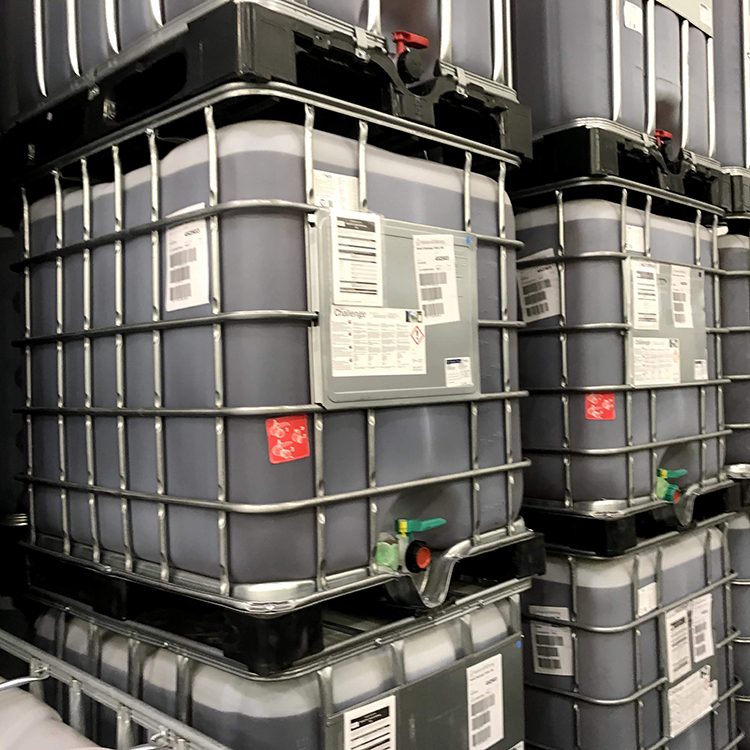
- For lower DM grass silage
- Human food-grade preservative
- Suitable for clamps, bales and ag-bags
SilaPactor: Silage Compactor

- Increase DM density by up to 40%
- Up to 6 tonnes
- Speeds up silage compaction almost four-fold