
Flooded maize crops could be salvaged for livestock or AD
Flooding across north, east and central England has brought the last of the maize harvest to a halt, and reports suggest thousands of acres remain in the ground. While taking the crop as silage becomes increasingly unlikely, feed and forage preservation specialists, Kelvin Cave Ltd, say there may still be options which will salvage maximum feed value from the crop in its current condition.
“Most of the maize across the UK is grown for forage, either as livestock feed or for anaerobic digestion [AD], but much of the crop remaining in the ground has severely decreased in digestibility and feed value, and will be impossible to harvest as silage in the current wet conditions,” says the company’s northern area manager, Michael Carpenter.
“However, by taking only the cob and leaving the stover in the field, the
combine will have a bed of stalks and leaves on which to drive,” he says. “This makes a massive difference to the cleanliness of the harvest, reducing the removal of soil from the field and cutting soil compaction.”
However, the biggest bonus to be gained from the process is by taking the grain, which generally remains in good condition and can be preserved by crimping at moisture contents of between 25 and 35 per cent.

“There’s a widespread misunderstanding that maize is difficult to harvest for grain in the UK and is likely to require drying,” he says. “But by using a crimping preservative instead, it can simply be rolled and treated on the day of harvest and compacted and covered in a clamp.
“The resulting fermented, concentrate feed is of a high value for both livestock and anaerobic digestion, typically analysing at over 70 per cent starch in the dry matter (DM) and with a metabolisable energy (ME) of around 14MJ/kg DM,” he says. “It will also be a good complement to the high forage stocks most producers have been able to secure this year.
“Although we are not advocating waiting longer than necessary, there is also a far larger window of opportunity for a grain harvest,” he adds. “The cob is generally better protected from disease and the elements, and we know of people who have successfully harvested and crimped grain maize beyond the New Year!”
Independent silage consultant, Dr Dave Davies from Silage Solutions reinforces the challenges of preserving maize silage as the crop matures beyond its optimum 32-35 per cent dry matter.
“As wholecrop maize matures, so its dry matter increases while its digestibility, energy content and total harvestable yield go into decline,” he says. “The plant as it dies also becomes more prone to fungal infection in the field, increasing the mycotoxin risk and greatly increasing the challenge of aerobic spoilage of the silage at feed-out.

“The highest harvestable yield for maize silage occurs at around 33 per cent dry matter,” he continues. “But as dry matter increases, harvestable yield rapidly declines, by 10 and 15 per cent at 45 and 50 per cent dry matter respectively.”
Charlie Bowyer who offers independent nutrition advice for AD plants through Biologic Biogas Solutions Ltd, knows growers who are now considering switching from forage to crimped grain maize in view of conditions.
He says: “With this year’s abysmal maize harvest, we are seeing over-mature maize crops with high dry matter, highly lignified stover. Very high DM wholecrop maize silage can create some serious headaches in the clamp with poor compaction leading to poor aerobic stability, losses of biogas yield and potentially problems in the AD tank, such as crusting and depressed performance.
“Crimping means you can negate some of these issues by leaving the stover in the field and get a real bang-for-your-buck by producing feedstock which would be ideal for many biogas plants, particularly those with a short retention time and no maceration.
“Crimped maize grain is a highly digestible feedstock for AD with the potential to yield over 500m3 of biogas per fresh tonne, depending on dry matter and quality,” he says.
In order to preserve maize in optimum condition, Kelvin Cave recommend treating it with Crimpsafe 300, a product containing preservation ingredients which are licensed for use with human food.
“This preservative works by controlling the fermentation of crimped grain, thereby retaining its nutritional value and cutting the losses which would occur in a poorly controlled fermentation,” says Mr Carpenter. “The formulation is designed to give maximum protection against spoilage organisms which could cause deterioration of the feed once the clamp is opened at feedout.
“Independent farm-scale trials have shown that Crimpsafe 300 will keep crimped grain fresh and stable for up to 300 hours after exposure to air, as reflected in its name,” he says.
A contractor’s view
Tim Russon runs an agricultural contracting service across Lincs, Notts and Yorks and says most of the maize in his area has long past the foraging stage, leaving very few alternative options.
“One of these is to harvest and crimp the grain which will salvage the best of the crop, which I am doing for both anaerobic digestion and livestock feed,” he says.
“We have around 1,200 acres of maize left to harvest and a number of our customers have agreed that combining the grain is the best way forward.

“We would ideally do this at the earliest opportunity but the ground is still too wet. But by taking this option, with weather and ground conditions permitting, we can salvage it through till March.”
What is crimping
Crimping involves the rolling of cereals or maize grain through a crimping machine to expose the carbohydrate and protein, and the application of a preservative. This ensures a controlled fermentation and maximum nutrient retention once stored in an airtight clamp (or plastic tube). A range of modern preservatives allows cereals or maize to be crimped at moisture contents of 25%-40%. Crimp must remain sealed for at least three weeks and can then be fed throughout the year.
Why crimp grain maize
- Produces high nutrient density, highly digestible concentrate feed
- The process is simple – crimp, ensile, feed
- Typical grain yield at 30% moisture is 4-5t/acre (10-12t/ha)
- No drying or specialist storage is required
- A wet maize grain harvest causes less soil movement, contamination and damage than maize silage
- Provides high value feedstock for anaerobic digestion
- Can yield about 500m3 of biogas per fresh tonne depending on DM andquality
- Improves animal performance (dairy, beef or sheep) over dry-rolled grain
- Backed by over 40 years successful use in Finland and northern Europe
Request a call back
You may also be interested in

All change in farm contracting in mid-Wales area
Kelvin Cave Ltd is indebted to farm contractor, Peter Holloway, who is retiring from contracting after over 20 years in the business. Peter has been a keen advocate of crimping throughout those years, having introduced the process to his own farm in mid-Wales and spread the word of its benefits throughout the region.
Learn more
An Overview of the Place for Beans – Starting and Finishing with Your Policy
It was, however, CAP reform that started some mixed farmers thinking about how best to make the most of the greening regulations to maximise their home-produced protein and reduce their outgoings. Since then the national crop area of beans, practices of home feeding, and utilisation within the feed industry in general have increased.
Learn more
Arable farmer ditches combine in favour of forage
A Yorkshire farmer has turned a difficult situation following this summer’s drought to everyone’s advantage in a move which could be replicated across the country to help alleviate the forage crisis.
Learn moreRelated Products
Murska 700HD
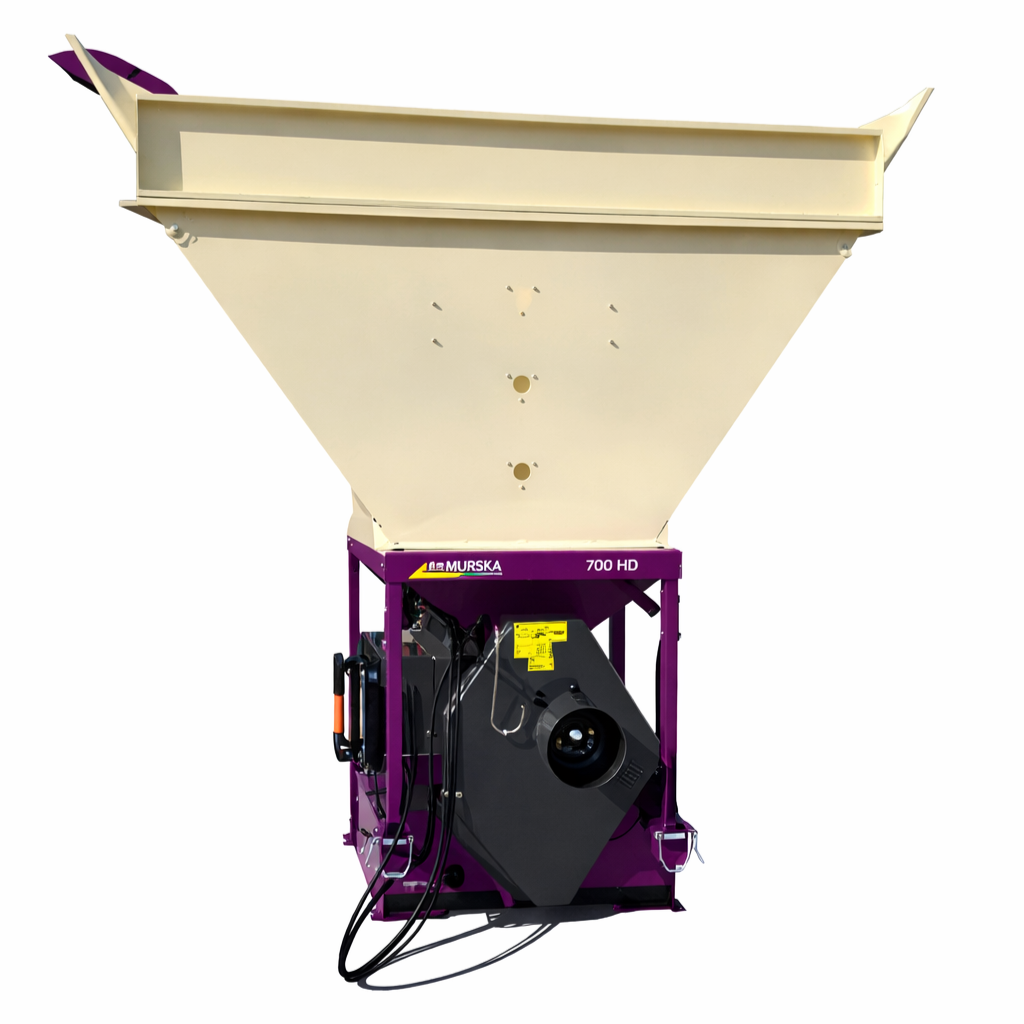
- Output 10-16 tonnes/hour
- 2mm fluted rollers process all cereal and pulses down to 45% moisture
- 3m chain and flight discharge elevator

