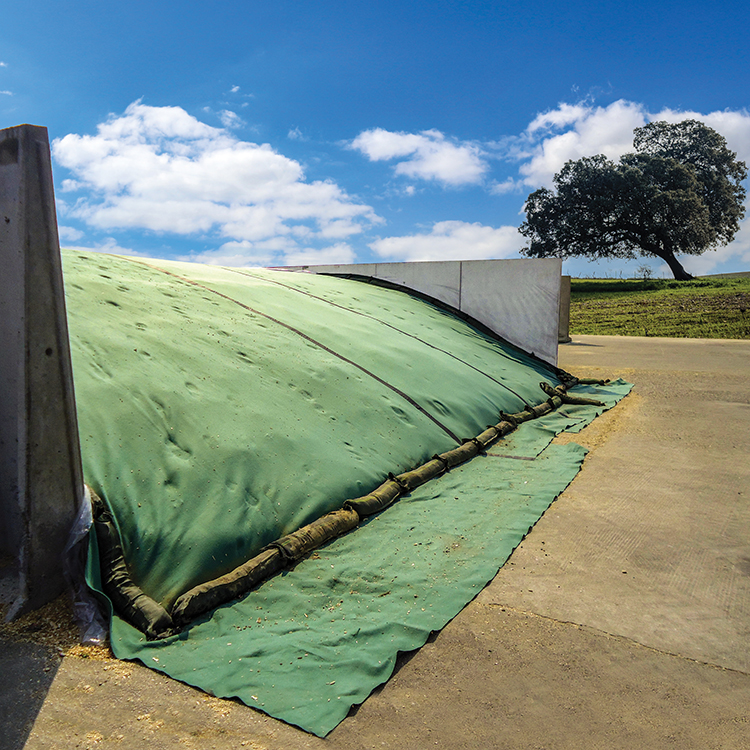
Crimped maize takes its place in major agribusiness

Grain maize has become an important break crop for an 11,000-acre agribusiness just north of London. All sold as feed to dairy and beef producers, we find out why it is best made and traded as crimp, rather than dried.
When you’re running an agribusiness of 11,000 acres (4,452ha), which spans the county of Hertfordshire just north of London, every enterprise must be closely scrutinised to ensure it pays its way.
At A T Bone & Sons – a contract-farming business which grew from a small, family, holding in the 1950s and now includes construction, ground works, commercial lettings, sports/amenities and haulage – Malcolm Pate, farm business manager, is always on the lookout for enterprises to support this drive for sustainable profits.
“Our directors are very forward-thinking and openminded; they’re never afraid to try something new. That’s the reason they have such a successful and varied business,” he says. So, when Malcolm suggested switching from forage to crimped grain maize last year, they were very open to giving it a try.

“We were already growing forage maize as a break crop but as arable farmers, we had to employ contractors for the foraging process,” he says. “And then, the maize had to be moved a long distance to an AD plant, which wasn’t ideal for such a bulky crop.” So, drawing on his earlier experience as a manager of mixed arable and livestock farms on which he had grown and fed crimped wheat and barley, he proposed introducing the crimping process to maize.
“To me, it seemed like a no-brainer,” he says. “I had worked with Kelvin Cave in the past and seen the benefits of feeding crimp, especially its palatability and intakes which compare so well against dry, milled cereals.”

750 acres for crimping
Having only joined the company and taken on his current role around 18 months ago, Malcolm’s first opportunity to grow grain maize was in spring 2024, when around 750 acres (304ha) were planted, all of which was destined for crimping.
With three tracked combine harvesters (Claas Lexion 8700s) on the farm – which are fully employed on cereals over the summer months – they could be put to good use later in the year for an October harvest, when they would otherwise have been idle.
“We also had one maize header on the farm at that time, so we already had the necessary kit to give it a try,” he says. Furthermore, he calculated that crimping would be far most cost-effective than drying the maize, despite having dryers on the farm. “You’re looking at a cost of up to £50 to dry a tonne of grain maize and store it in a shed, compared with about £25 per tonne to crimp and store it as a moist grain in a clamp, which also frees up shed storage space,” he says.
There’s also the saving on energy for the dryer, which chimes with the objectives for the business to lower its carbon footprint.
Late planting in 2024
So, the first maize crop destined for crimping was sown in a wet, cold spring, but despite a late planting, the crop did reasonably well and reached eight tonnes of grain per hectare.
“We chose six different maize varieties from several plant breeders to find one that best suits our soils and to spread the risk,” he says.
And when harvest time came, the benefits were obvious. “Everything about it was good,” says Malcolm. “We did not make any mess in the fields, despite the wet autumn, as the combines on tracks run on the chopped leaves and stems. “Nor did we make any mess on the roads which is a major benefit while farming in such an urban area,” he adds.
Low ground-pressure grain chaser bins were used to collect the grain and take it to the sides of fields where it was transferred into HGVs for carting to the clamp.
Here, the grain was crimped through a roller and the preservative, CrimpSafe 300 was applied.


"The maize treated with CrimpSafe 300 was perfectly preserved. It looked exactly like it did on the day it went in."
Malcolm Pate
“This preservative works by controlling the fermentation of the crimped maize, minimising any nutrient loss which could occur in a poorly controlled fermentation,” explains Michael Carpenter, Kelvin Cave’s technical director who worked with Malcolm through the process. “It is formulated to give maximum protection against spoilage organisms which could cause deterioration of the feed once the clamp is opened for feed-out.”
“We would not have a quality product to sell without it,” adds Malcolm, remarking that with no livestock on the farm, except sheep for winter grazing, every tonne of the crimp is destined for sale.

Opening the clamp
The next assessment was seen when the clamp was opened, which Malcolm said would happen at any time after three weeks of storage.
“It was perfectly preserved,” he says. “It looked exactly like it did on the day it went in. It’s the same colour and has a slightly pickled smell and even today [August 2025], we are still out-loading from the clamp, nine months on, and it’s still as good as on the day it was ensiled.”
As for his customers, who are dairy and beef producers, many in the farm’s immediate area but also stretching across the UK including into Scotland, he says they keep coming back for more. “Instantly, as soon as they start feeding it, they are generally in touch and ordering again,” he says. “Within a matter of weeks they can see milk production increase and liveweight gains go up, whenever it is fed in the place of dried, rolled grain. “Just as I found when I used crimp years ago on mixed arable farms, it is so palatable and increases intakes – the cattle go mad for it!”
Michael confirms the additional reason performance is so good is because of crimp’s superior nutritional value compared with a dry crop. “It’s not just about the extra intakes because of the high palatability of crimped products, but it’s also about the additional nutritional value of the fermented crop,” he says.
Financial viability
Assessing the viability of the enterprise, Malcolm says it all stacks up as long as yields of 10t/ha (4t/acre) are achieved and it is sold ex-farm at £200 per tonne. “We feel that represents good value for the product we are selling,” he says. “This year’s crop got off to a much better start than last year’s so we’re anticipating 10 tonnes/ha, if not more,” he adds. And with a full order book for the 2,000 tonnes he crimped in 2024, he says he hopes there will be 3,000 tonnes to sell from the 2025 harvest. “With such a large arable area the rotation will take more maize,” he says. “We’d be happy to ramp up production if demand continues to rise.”

AT Bone & Son agribusiness facts
- 11,000-acre (4,452ha) Herts based contract farming business
- Grow maize as a break from 2,400ha (5,930 acres) of wheat and barley
- Switched from forage to crimped maize to better suit resources
- Provide year-round supply of concentrate feed for UK livestock farmers
- Crimped maize typically has an ME of 14MJ/kg DM, starch of 70%
- Around 10t/ha (4t/acre) is harvested at a target 35-40% moisture
- Processed for crimp at 40t/hour (300-400t/d) at time of harvest
- Crimped maize typically harvested three weeks earlier than maize for drying
- Earlier harvest reduces weather risk and brings forward autumn cultivations
- Maize leaf and stem on field reduces soil loss and increases organic matter
- Other break crops from wheat and barley include sugar beet, rape, oats
Request a call back
You may also be interested in

No waste on Ship-Shape Scottish Farm
A Scottish dairy producer has lifted yields by 1,000 litres and seen milk from forage peak at 5,000 litres by radically improving his grass and wholecrop silage.
Learn more
Cutting risk in cereal and forage on LFA farm
Using preservatives for cereals and forages on a Scottish farm has made hay-, haylage- and silage-making a completely flexible process, cut the risk from cereal harvest and improved winter feed quality and the performance of stock.
Learn more
Making the most of MAIZE
Harvesting maize as forage is the first priority on most growers’ farms,
and we urge producers to follow our recommended Five Ps:

Crimpmaster Applicator
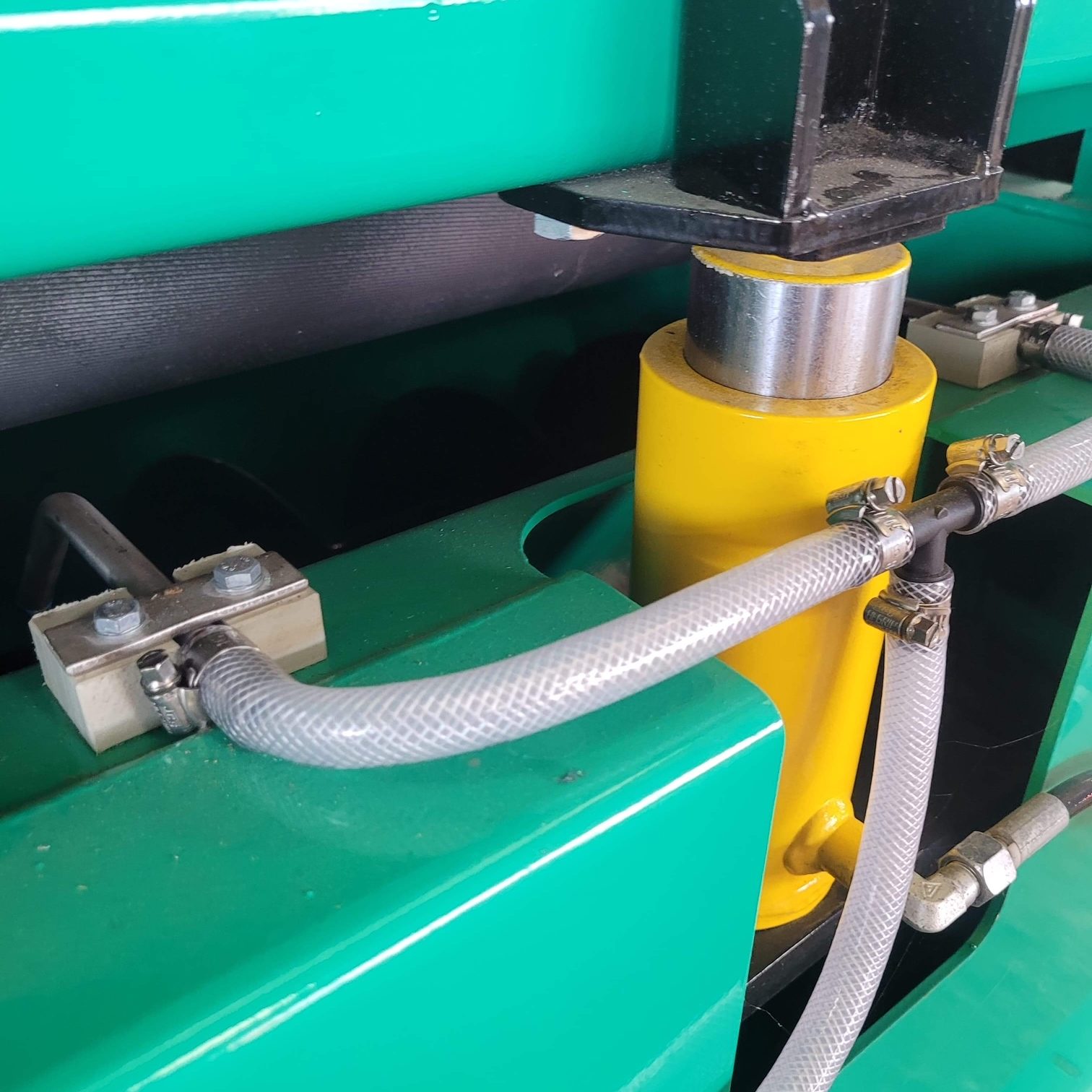
- Stem pump with foot filter
- Controlled flow meter
- Waterproof switch pack